


I have found in my marriage that there are seasons: sweet times, such as vacations together, quiet talks, or laughing with the kids, and difficult times, including arguments, illness, financial distress, and prolonged physical distance. There are times when we feel very close and really sense that “the two become one” and other times when we feel distant, as if we don’t even know who the other is.
As spouses, we are called to give ourselves to each other in each situation, but the way we give of ourselves changes from one time to another. It is easy to give and receive love when we are physically and emotionally close or when things are going well, but more difficult when we feel distant or disagree about something major. Working through a fragile forgiveness and reconciliation takes a different sort of giving and receiving than having a light-hearted conversation.
Marriage models the relationship God invites us to have with Him. We, the Church, are the bride, and Jesus is the Bridegroom. Jesus has given Himself to us in the Incarnation, while walking among us, and through the cross, and He continues to give Himself to us in the Eucharist and in countless other ways. Though we do not experience Jesus in the same way that His disciples did, who physically walked and talked with Him, Jesus continues to give of Himself for us, His bride.
Similarly, we humans are called to not only receive Him but to give ourselves back to Him in a reciprocal way, as spouses receive from the other and give themselves in return. This will look different in times of joy and consolation than it does in times of difficulty and dryness. It also looks different for us now than it did during the time that Jesus physically walked the earth.
Jesus said in today’s reading, “The days will come when the bridegroom is taken away from them, and then they will fast” (Mt 9:15). Just as the cross is a way in which Jesus gives Himself to us, fasting – a sacrifice we make out of love for Him – is a way that we can give ourselves back to Him and unite ourselves with Him. When giving of ourselves is most difficult, when it is sacrificial, is often when it is the most transforming. The gifts that require more of us demonstrate the greatest love and help love to grow the most.
Let us continue to give of ourselves in various ways, including fasting, until we meet the Bridegroom face-to-face and are united with Him in the heavenly banquet.
He descubierto que en mi matrimonio hay diferentes épocas: momentos dulces, como vacaciones juntos, charlas tranquilas o risas con los niños, y momentos difíciles, como discusiones, enfermedades, dificultades económicas y una distancia física prolongada. Hay momentos en los que nos sentimos muy unidos y realmente sentimos que “los dos se convierten en uno” y otros en los que nos sentimos distantes, como si ni siquiera nos conocieramos.
Como esposos, estamos llamados a entregarnos el uno al otro en cada situación, pero la forma en que nos entregamos cambia de un momento a otro. Es fácil dar y recibir amor cuando estamos física y emocionalmente unidos o cuando las cosas van bien, pero es más difícil cuando nos sentimos distantes o discrepamos sobre algo importante. Superar un perdón y una reconciliación frágiles requiere una forma de dar y recibir diferente a la de tener una conversación informal.
El matrimonio modela la relación que Dios nos invita a tener con Él. Nosotros, la Iglesia, somos la novia, y Jesús es el Novio. Jesús se entregó a nosotros en la Encarnación, al caminar entre nosotros y a través de la cruz, y continúa entregándose en la Eucaristía y de innumerables otras formas. Aunque no experimentamos a Jesús de la misma manera que sus discípulos, quienes físicamente caminaron y hablaron con él, Jesús continúa entregándose por nosotros, su novia.
De igual manera, los seres humanos estamos llamados no solo a recibirlo, sino a entregarnos a Él de manera recíproca, como los esposos reciben del otro y se entregan a cambio. Esto se verá diferente en tiempos de alegría y consuelo que en tiempos de dificultad y aridez. También se ve diferente para nosotros ahora que durante el tiempo en que Jesús caminó físicamente sobre la tierra.
Jesús dijo en la lectura de hoy: “vendrán días en que les quitarán al esposo, y entonces sí ayunarán” (Mt 9,15). Así como la cruz es una forma en que Jesús se entrega a nosotros, el ayuno —un sacrificio que hacemos por amor a Él— es una forma de devolvernos a Él y unirnos a Él. Cuando entregarnos es más difícil, cuando es un sacrificio, es a menudo cuando resulta más transformador. Los dones que exigen más de nosotros demuestran el mayor amor y ayudan a que el amor crezca al máximo.
Sigamos entregándonos de diversas maneras, incluyendo el ayuno, hasta que nos encontremos cara a cara con el Novio y nos unamos a Él en el banquete celestial.
 Kimberly Andrich writes from the perspective of having a hidden, chronic illness and experiencing a deep, continuous conversion through being yoked to Jesus in the day-to-day trials and joys of life. She is a wife, mother of 5, and daughter of the King. Kimberly also writes for Catholicmom.com and on fallingonhisgrace.substack.com.
Feature Image Credit: freestocks, unsplash.com/photos/sitting-woman-leaning-on-mans-shoulder-facing-lake-during-golden-hour-a1Fmxesw31g
The views and opinions expressed in the Inspiration Daily blog are solely those of the original authors and contributors. These views and opinions do not necessarily represent those of Diocesan, the Diocesan staff, or other contributors to this blog.
Daily Reading

Friday after Ash Wednesday
Reading 1 Isaiah 58:1-9a Thus says the Lord GOD:Cry out full-throated and unsparingly,lift up your voice like a trumpet blast;Tell my people their wickedness,and the house of Jacob their sins.They…
Saint of the Day
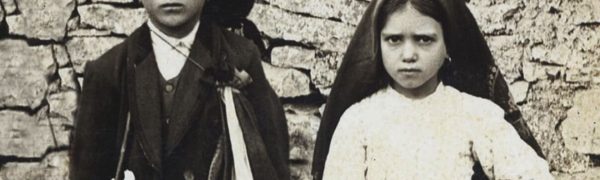
Saints Jacinta and Francisco Marto
In 1917, three young shepherds in Fatima, Portugal, witnessed apparitions of the Virgin Mary, drawing up to 90,000 people to the final vision. The post Saints Jacinta and Francisco Marto