

Christian communities were established in Rome around a dozen years following Jesus’s death, and notably, they were not converts of the “Apostle of the Gentiles” (Romans 15:20). At the time when Paul penned his pivotal letter in 57-58 A.D., he had not yet visited these communities.
Rome boasted a substantial Jewish population at the time. It’s likely that due to escalating disputes between Jews and Jewish Christians, Emperor Claudius decreed the expulsion of all Jews from Rome in 49-50 A.D. Historian Suetonius attributes this mass expulsion to unrest in the city instigated by a figure named “Chrestus,” a probable reference to Christ. It’s plausible that many returned to Rome following Claudius’s death in 54 A.D. Consequently, the Church to which Paul addressed his letter consisted of members with both Jewish and Gentile origins.
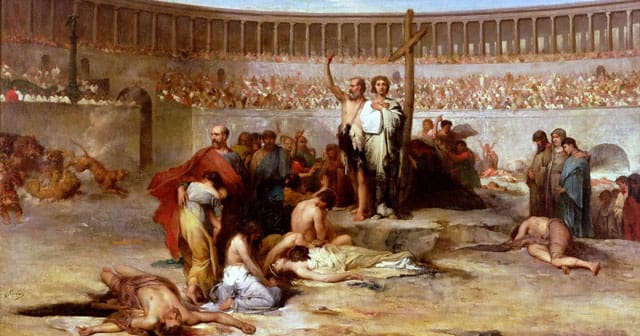
In July of 64 A.D., a devastating fire ravaged more than half of Rome. Rumors circulated that the Emperor Nero, who had plans to expand his palace, was responsible for the catastrophe. In an attempt to deflect blame, Nero accused the Christians. As historian Tacitus documented, numerous Christians faced execution due to perceived “hatred of the human race.” Among these victims were likely the apostles Peter and Paul.
Eventually, faced with the prospect of a military rebellion and having been sentenced to death by the senate, Nero committed suicide in 68 A.D., ending his life at the age of 31.
Photo credit: Public Domain via Wikimedia Commons

The post The First Martyrs of the Church of Rome appeared first on uCatholic.
Daily Reading

Memorial of Saint Gregory the Great, Pope and Doctor of the Church
Readings for the Memorial of Saint Gregory the Great, Pope and Doctor of the Church Reading 1 1 Corinthians 3:18-23 Brothers and sisters:Let no one deceive himself.If anyone among you…
Daily Meditation

Fishers of Men
Listen to this reflection in EnglishEscuchar esta reflexión en español Click here for daily readings These fishermen know what they are doing, and they have had a bad night of…