

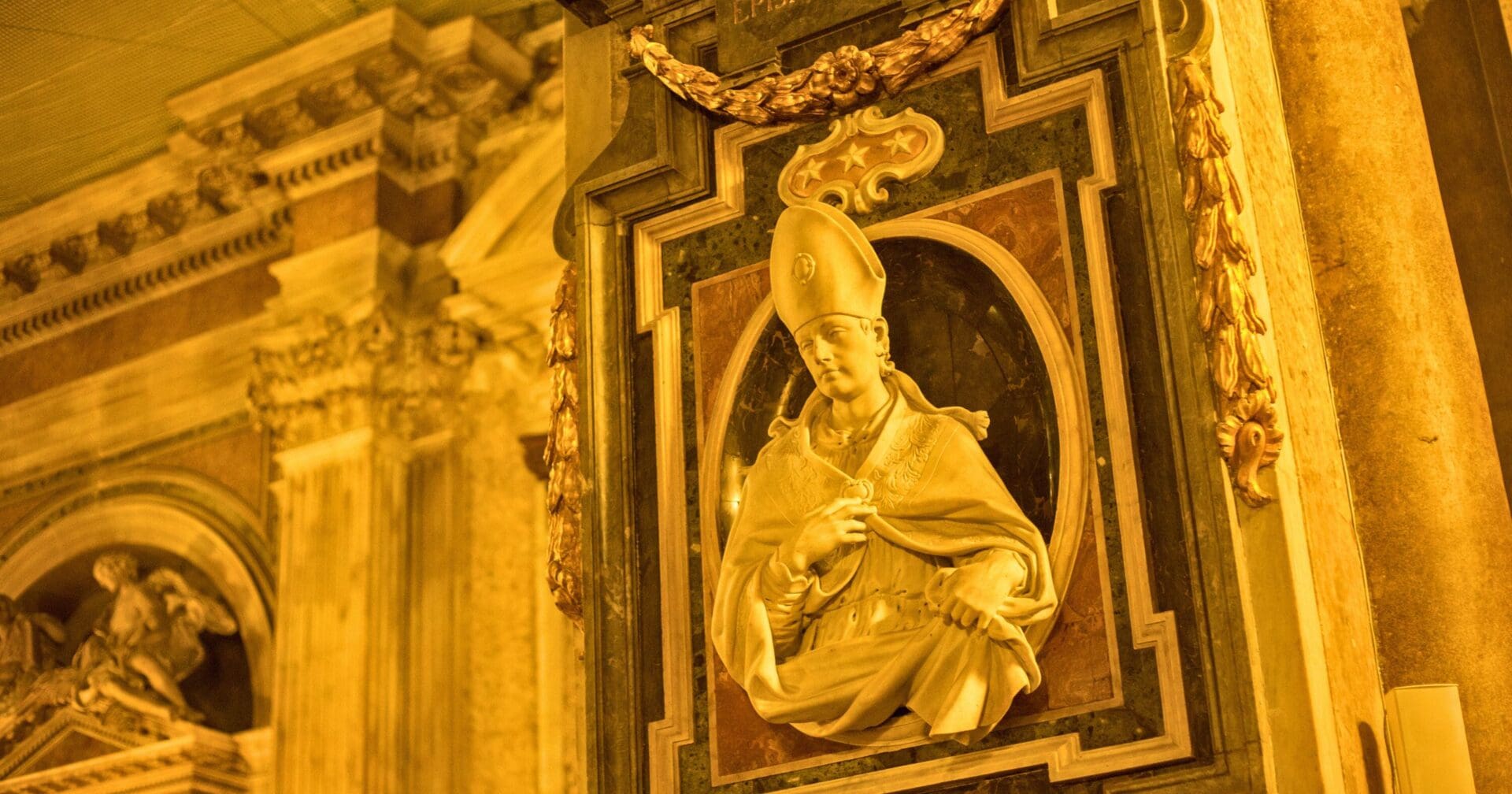
Januarius, the bishop of Beneventum, along with his deacons Socius and Festus, and lector Desiderius, suffered intense torture during the Diocletian persecution around 304 AD. Miraculously, even amidst severe torment, they remained unharmed.
Attempts to unleash wild beasts on them failed as the animals refrained from attacking. They were eventually beheaded at Puteoli, and their remains were respectfully buried in nearby cities. Over time, the relics of St. Januarius found their way to Naples, where he is venerated as the patron saint.
One of the most renowned miracles associated with St. Januarius is the liquefaction of his blood. Stored in a sealed glass vial, the saint’s congealed blood turns liquid and starts to froth and bubble, especially when placed near his skull. This phenomenon is witnessed at least thrice a year: on his feast day, the first Sunday of May, and on other significant occasions. The occurrence is so regular that it’s become a symbol of hope for many, signifying a year free from calamities. Notably, in 1939, marking the onset of World War II, the blood didn’t display its usual activity.
Cardinal Schuster, in his Liber Sacramentorum (vol. 8, p. 233), remarked upon witnessing this phenomenon firsthand. He emphasized that after considering various scientific investigations, it seems challenging to find a natural explanation for this extraordinary event.
Editorial credit: Alexey Pevnev / Shutterstock.com
The post Saint Januarius appeared first on uCatholic.
Daily Reading

Tuesday of the Twenty-eighth Week in Ordinary Time
Reading 1 Galatians 5:1-6 Brothers and sisters:For freedom Christ set us free;so stand firm and do not submit again to the yoke of slavery. It is I, Paul, who am…
Daily Meditation

The Demand for a Sign
Listen to this reflection in EnglishEscuchar esta reflexión en español Click here for daily readings There is something great in our lives. Yes, our Lord and Savior. Sometimes, as humans,…