

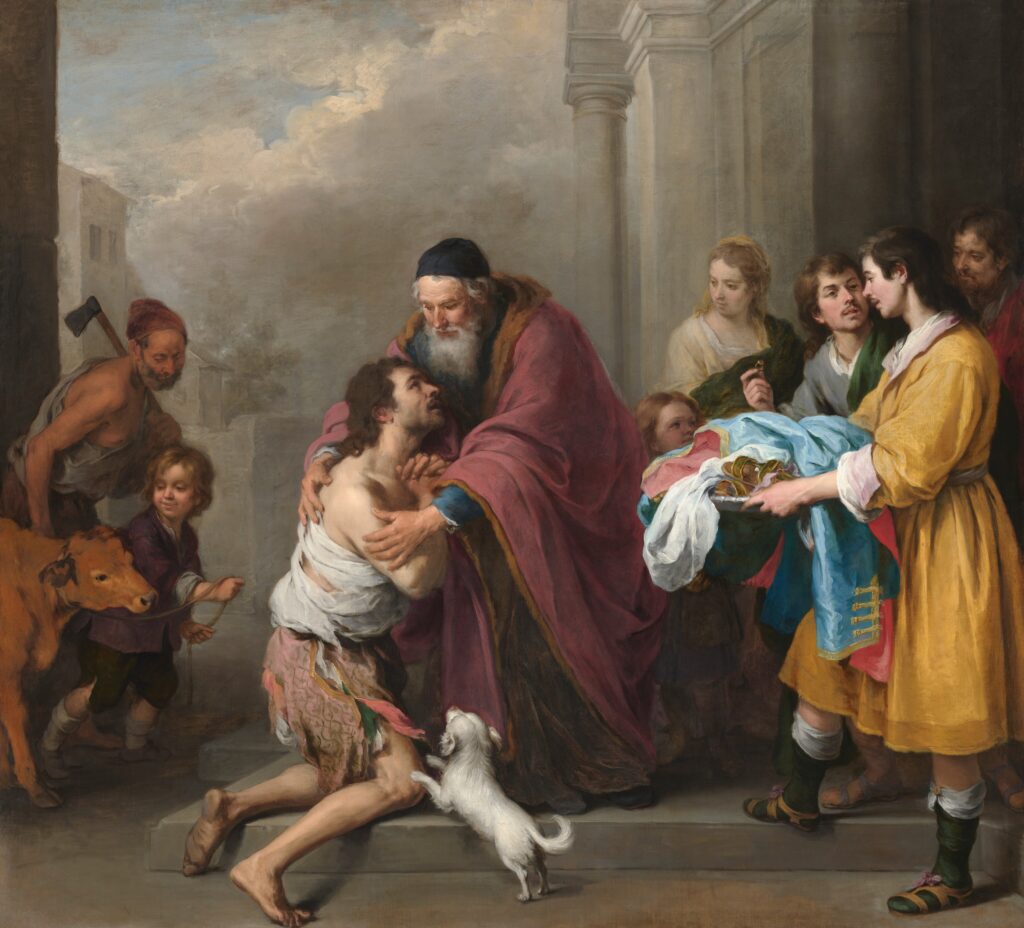
In today’s Gospel, Jesus shares with us the core prayer of our faith, the Our Father. I find it most interesting that of all the different elements of this prayer, Jesus chooses to reiterate the section about forgiveness. He could have explained further what it means to call God Father. He could have provided examples for following God’s will or what consists of our daily bread. Instead, Jesus really hones in on what it means to extend forgiveness and to seek it for ourselves.
Just in case it wasn’t clear to the Apostles, Jesus basically spells this section out. If you forgive others, God will extend that same mercy to you. But if you choose to withhold your forgiveness, God will do likewise.
This understanding of forgiveness is found in the Golden Rule – do unto others as you would have them do unto you. Unfortunately, I think there are times we can be tripped up by the Golden Rule because we can focus too much on the other person. If the other person doesn’t do unto me as I want, then I don’t have to do unto them the right way either. Instead of considering our own actions, we use the rule as an excuse by looking at others’ behavior before our own.
Peter’s question later on in Matthew’s Gospel (Mt 18:21-22) appears to be similar. He asks Jesus how many times we need to forgive someone. Seven times? He is basically asking what’s the limit for forgiveness by considering the other person’s infractions before his own responsibility to forgive. Jesus’ answer to Peter – you must forgive seventy times seven – as well as his additional explanation in today’s Gospel, fully answers Peter’s question.
There is no limit to forgiveness, because there is no limit to God’s forgiveness. There isn’t a line we can cross; there isn’t an amount that is too great; there isn’t a sin too grave. If we repent and reorient our lives to God, He will forgive us. But, if we want this level of forgiveness from God, Jesus explains, we have to be willing to extend it to our neighbors as well. Our responsibility is to forgive. If we want mercy, we must give mercy. If we want peace with God, we must make peace with others.
En el Evangelio de hoy, Jesús comparte con nosotros la oración central de nuestra fe: el Padrenuestro. Me parece muy interesante que, de todos los elementos de esta oración, Jesús elija reiterar la sección sobre el perdón. Podría haber explicado con más detalle lo que significa llamar a Dios Padre. Podría haber dado ejemplos de cómo seguir la voluntad de Dios o en qué consiste nuestro pan de cada día. En cambio, Jesús se centra en lo que significa perdonar y buscar el perdón para nosotros mismos.
Para que no quedara ninguna duda a los Apóstoles, Jesús explica esta sección con claridad. Si perdonas a los demás, Dios te concederá la misma misericordia. Pero si decides no perdonar, Dios hará lo mismo.
Esta comprensión del perdón se encuentra en la Regla de Oro: trata a los demás como quieres que te traten a ti. Desafortunadamente, creo que a veces nos equivocamos con la Regla de Oro porque nos centramos demasiado en la otra persona. Si la otra persona no me trata como yo quiero, entonces yo tampoco tengo que tratarla bien. En lugar de considerar nuestras propias acciones, usamos la regla como excusa, fijándonos en el comportamiento de los demás antes del nuestro.
La pregunta de Pedro más adelante en el Evangelio de Mateo (Mt 18,21-22) parece semejante. Le pregunta a Jesús cuántas veces debemos perdonar a alguien. ¿Siete veces? Básicamente, pregunta cuál es el límite del perdón, considerando las faltas de la otra persona antes que su propia responsabilidad de perdonar. La respuesta de Jesús a Pedro —debes perdonar setenta veces siete— así como su explicación adicional en el Evangelio de hoy, responde completamente a la pregunta de Pedro.
No hay límite para el perdón, porque no hay límite para el perdón de Dios. No hay una línea que podamos cruzar; no hay una cantidad demasiado grande; no hay un pecado demasiado grave. Si nos arrepentimos y reorientamos nuestras vidas hacia Dios, Él nos perdonará. Pero, si queremos este nivel de perdón de Dios, explica Jesús, debemos estar dispuestos a concederlo también al prójimo. Nuestra responsabilidad es perdonar. Si queremos misericordia, debemos dar misericordia. Si queremos paz con Dios, debemos hacer las paces con los demás.

Kate Taliaferro is an Air Force wife and mother. She is blessed to be able to homeschool, bake bread and fold endless piles of laundry. When not planning a school day, writing a blog post or cooking pasta, Kate can be found curled up with a book or working with some kind of fiber craft. Kate blogs at Faith Through a Focolare Focus and the link is https://katetaliaferro.substack.com.
Feature Image Credit: Bartolome Esteban Murillo, nga.gov/artworks/34956-return-prodigal-son
The views and opinions expressed in the Inspiration Daily blog are solely those of the original authors and contributors. These views and opinions do not necessarily represent those of Diocesan, the Diocesan staff, or other contributors to this blog.
Daily Reading

Thursday of the Eleventh Week in Ordinary Time
Reading 1 Sirach 48:1-14 Like a fire there appeared the prophet Elijahwhose words were as a flaming furnace.Their staff of bread he shattered,in his zeal he reduced them to straits;By…
Saint of the Day

Venerable Matt Talbot
Venerable Matt Talbot, born in Dublin, patron of those struggling with alcoholism, was an active alcoholic for nearly 15 years. The post Venerable Matt Talbot appeared first on uCatholic.