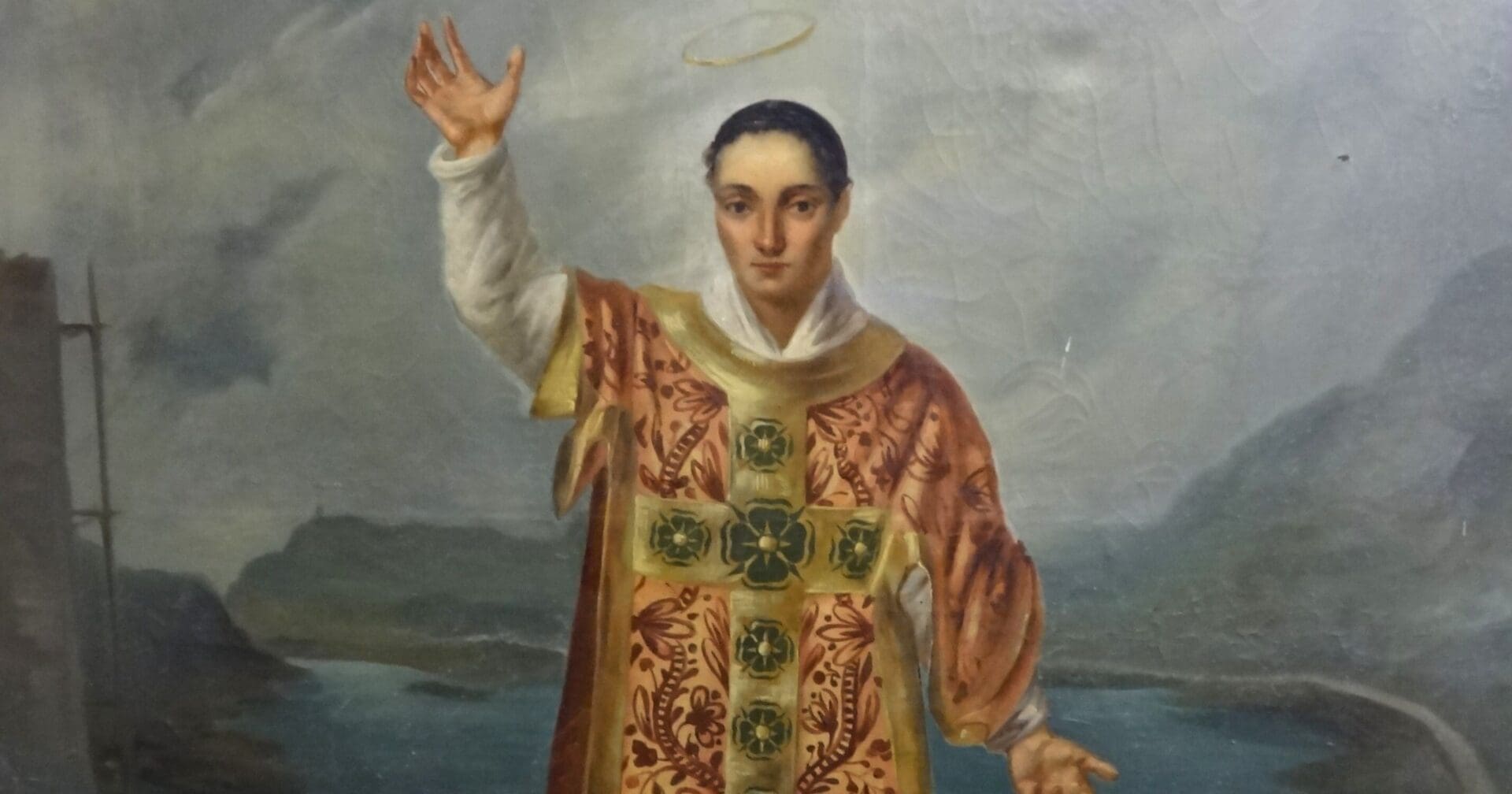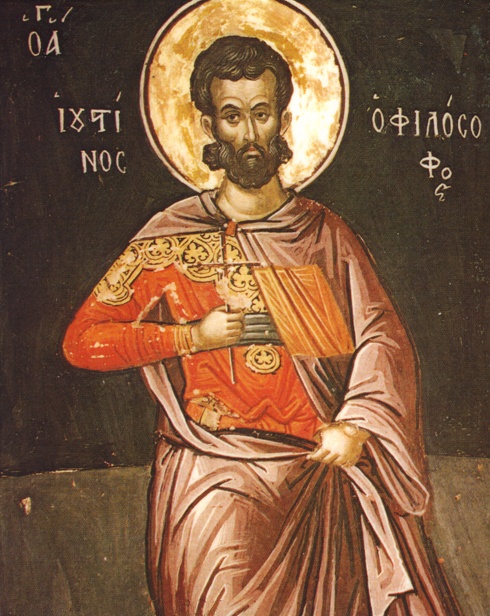

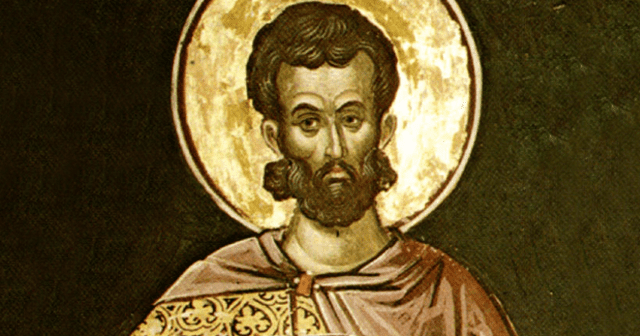
Saint Justin Martyr was born around the year 100 in the Palestinian province of Samaria in modern-day Nablus, the son of Greek-speaking parents whose ancestors were sent as colonists to that area of the Roman Empire. Justin’s father followed the Greek pagan religion and raised his son to do the same, but he also provided Justin with an excellent education in literature and history.

As a young man, Justin became interested in philosophy and looked for truth in the various schools of thought that had spread throughout the empire. But he became frustrated with the professional philosophers’ intellectual conceits and limitations, as well as their apparent indifference to God.

After several years of study, Justin had a life-changing encounter with an old man who urged him to study the Jewish prophets. He told Justin that these authors had not only spoken by God’s inspiration, but also predicted the coming of Christ and the foundation of his Church. The old man was not searching for truth but for some of his family. Nonetheless they began a discussion in which Justin identified himself as a philologian, a lover of reason. The old man challenged him — why was he not a lover of truth, a lover of deeds. Justin told him that reason led to truth, and philosophy led to happiness. This was certainly an interesting thing for Justin to say since he had not found the truth in the study of reason or happiness in his quest among the philosophers! Perhaps the old man sensed this for he asked for Justin’s definition of philosophy and of happiness.

In the long discussion that followed, Justin spoke eloquently to the old man’s searching questions but even Justin had to admit that philosophers may talk about God but had never seen him, may discuss the soul but didn’t really know it. But if the philosophers whom Justin admired and followed couldn’t, then nobody could, right? The old man told him about the ancient prophets, the Hebrew prophets, who had talked not of ideas but of what they had seen and heard, what they knew and experienced. And this was God. The old man ended the conversation by telling Justin to pray that the gates of light be opened to him.

Inflamed by this conversation, Justin sought out the Scriptures and came to love them. Christ words “possess a terrible power in themselves, and are sufficient to inspire those who turn aside from the path of rectitude with awe; while the sweetest rest is afforded those who make a diligent practice of them.”

After his conversion, Justin continued to wear the type of cloak that Greek culture associated with the philosophers. Inspired by the dedicated example of other Catholics whom he had seen put to death for their faith, he embraced a simple and austere lifestyle even after moving to Rome.

Justin was most likely ordained a deacon, since he preached, did not marry, and gave religious instruction in his home. He is best known as the author of early apologetic works which argued for the Catholic faith against the claims of Jews, pagans, and non-Christian philosophers. Several of these works were written to Roman officials, for the purpose of refuting lies that had been told about the Church. Justin sought to convince the rulers of the Roman Empire that they had nothing to gain, and much to lose, by persecuting the Christians.

In order to fulfill this task, Justin gave explicit written descriptions of the early Church’s beliefs and its mode of worship. In modern times, scholars have noted that Justin’s descriptions correspond to the traditions of the Catholic Church on every essential point. Justin describes the weekly Sunday liturgy as a sacrifice, and speaks of the Eucharist as the true body and blood of Christ. He further states that only baptized persons who believe the Church’s teachings, and are free of serious sin, may receive it. Justin also explains in his writings that the Church regards celibacy as a sacred calling, condemns the common practice of killing infants, and looks down on the accumulation of excessive wealth and property.

His first defense of the faith, written to Emperor Antonius Pius around 150, convinced that emperor to regard the Church with tolerance. In 167, however, persecution began again under Emperor Marcus Aurelius. It is not surprising that Justin was arrested during the persecution under Marcus Aurelius. Along with four others (Chariton, Charites, Paeon, and Liberianus) he was brought before the Roman prefect, Rusticus, to be accused under the law that required sacrificing to idols. When Rusticus demanded that they “Obey the gods at once, and submit to the kings,” Justin responded, “To obey the commandments of our Saviour Jesus Christ is worthy neither of blame nor of condemnation.”

When Rusticus asked what doctrines he believed, Justin told him that he had learned all the doctrines available during his quest but finally submitted to the true doctrines of the Christians, even though they didn’t please others. Just before Rusticus sentenced them he asked Justin, “If you are killed do you suppose you will go to heaven?” Justin said, “I do not suppose it, but I know and am fully persuaded of it.” Justin and his fellow martyrs were beheaded in the year 165 and went to be with the Truth Justin had longed for all his life. He is often known as Justin Martyr and his works are still available.

St. Justin Martyr has been regarded as a saint since the earliest centuries of the Church. Eastern Catholics and Eastern Orthodox Christians also celebrate his feast day on June 1.

Photo credit: Public Domain via Wikimedia Commons

Love uCATHOLIC?
Get our inspiring content delivered to your inbox every morning – FREE!

The post Saint Justin Martyr appeared first on uCatholic.

Daily Reading

 

Daily Meditation


Reading 1 Exodus 34:4b-6, 8-9

Early in the morning Moses went up Mount Sinai
as the LORD had commanded him,
taking along the two stone tablets.

Having come down in a cloud, the LORD stood with Moses there
and proclaimed his name, “LORD.”
Thus the LORD passed before him and cried out,
“The LORD, the LORD, a merciful and gracious God,
slow to anger and rich in kindness and fidelity.”
Moses at once bowed down to the ground in worship.
Then he said, “If I find favor with you, O Lord,
do come along in our company.
This is indeed a stiff-necked people; yet pardon our wickedness and sins,
and receive us as your own.”
 

Responsorial Psalm Daniel 3:52, 53, 54, 55, 56

R. (52b) Glory and praise for ever!
Blessed are you, O Lord, the God of our fathers,
praiseworthy and exalted above all forever;
And blessed is your holy and glorious name,
praiseworthy and exalted above all for all ages.
R. Glory and praise for ever!
Blessed are you in the temple of your holy glory,
praiseworthy and glorious above all forever.
R. Glory and praise for ever!
Blessed are you on the throne of your kingdom,
praiseworthy and exalted above all forever.
R. Glory and praise for ever!
Blessed are you who look into the depths
from your throne upon the cherubim,
praiseworthy and exalted above all forever.
R. Glory and praise for ever!
 

Reading 2 2 Corinthians 13:11-13

Brothers and sisters, rejoice. 
Mend your ways, encourage one another,
agree with one another, live in peace,
and the God of love and peace will be with you.
Greet one another with a holy kiss.
All the holy ones greet you.

The grace of the Lord Jesus Christ
and the love of God
and the fellowship of the Holy Spirit be with all of you.
 

Alleluia Cf. Revelation 1:8

R. Alleluia, alleluia.
Glory to the Father, the Son, and the Holy Spirit;
to God who is, who was, and who is to come.
R. Alleluia, alleluia.
 

Gospel John 3:16-18

God so loved the world that he gave his only Son,
so that everyone who believes in him might not perish
but might have eternal life.
For God did not send his Son into the world to condemn the world,
but that the world might be saved through him.
Whoever believes in him will not be condemned,
but whoever does not believe has already been condemned,
because he has not believed in the name of the only Son of God.


– – –

Lectionary for Mass for Use in the Dioceses of the United States, second typical edition, Copyright © 2001, 1998, 1997, 1986, 1970 Confraternity of Christian Doctrine; Psalm refrain © 1968, 1981, 1997, International Committee on English in the Liturgy, Inc. All rights reserved. Neither this work nor any part of it may be reproduced, distributed, performed or displayed in any medium, including electronic or digital, without permission in writing from the copyright owner.

Daily Meditation


Saint of the Day


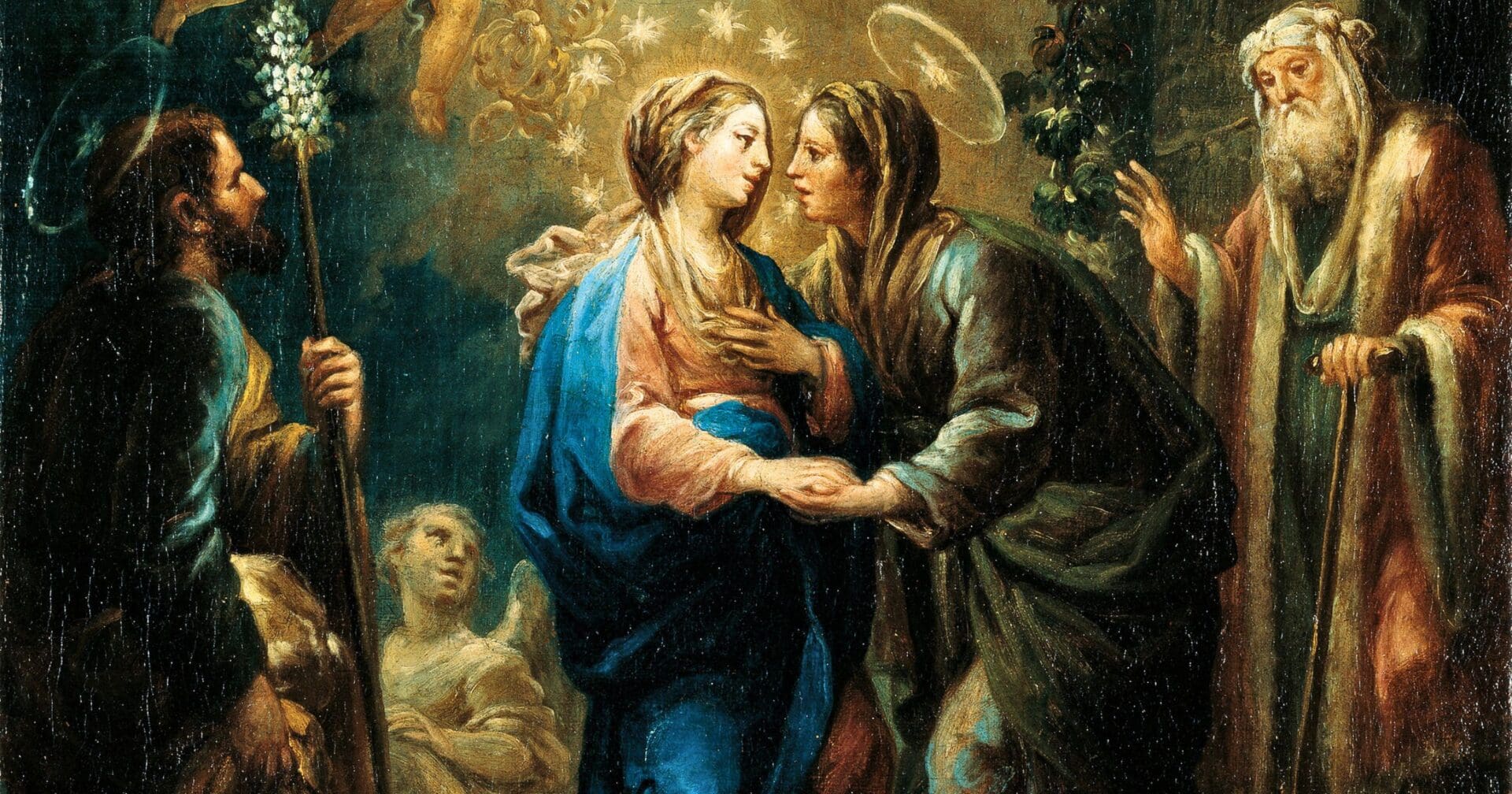
The Feast of the Visitation recalls to us the following great truths and events: The visit of the Blessed Virgin Mary to her cousin Elizabeth shortly after the Annunciation; the cleansing of John the Baptist from original sin in the womb of his mother at the words of Our Lady’s greeting; Elizabeth’s proclaiming of Mary—under the inspiration of the Holy Ghost—as Mother of God and “blessed among women”; Mary’s singing of the sublime hymn, Magnificat (“My soul doth magnify the Lord”) which has become a part of the daily official prayer of the Church. The Visitation is frequently depicted in art, and was the central mystery of St. Francis de Sales’ devotions.

The Mass of today salutes her who in her womb bore the King of heaven and earth, the Creator of the world, the Son of the Eternal Father, the Sun of Justice. It narrates the cleansing of John from original sin in his mother’s womb. Hearing herself addressed by the most lofty title of “Mother of the Lord” and realizing what grace her visit had conferred on John, Mary broke out in that sublime canticle of praise proclaiming prophetically that henceforth she would be venerated down through the centuries:

“My soul doth magnify the Lord, and my spirit hath rejoiced in God my Savior. Because he that is mighty, hath done great things to me, and holy is His name” (Lk. 1:46).

This feast is of medieval origin, it was kept by the Franciscan Order before 1263, and soon its observance spread throughout the entire Church. Previously it was celebrated on July 2. Now it is celebrated between the solemnity of the Annunciation of the Lord and the birth of St. John the Baptist, in conformity with the Gospel accounts. Some places appropriately observe a celebration of the reality and sanctity of human life in the womb. The liturgical color is white.

According to the 1962 Missal of Bl. John XXIII the Extraordinary Form of the Roman Rite, today is the feast of the Queenship of the Blessed Virgin Mary and St. Petronilla. The feast of the Queenship of Mary is now celebrated in the Ordinary Rite on August 22.

Photo credit: Public Domain via Wikimedia Commons

Love uCATHOLIC?
Get our inspiring content delivered to your inbox every morning – FREE!

The post The Feast of the Visitation appeared first on uCatholic.

Daily Reading


Daily Meditation


The Trinity

The TrinityTrinity Sunday, also known as Holy Trinity Sunday, is celebrated a week after Pentecost Sunday in honor of the most fundamental of Christian beliefs—belief in the Holy Trinity.

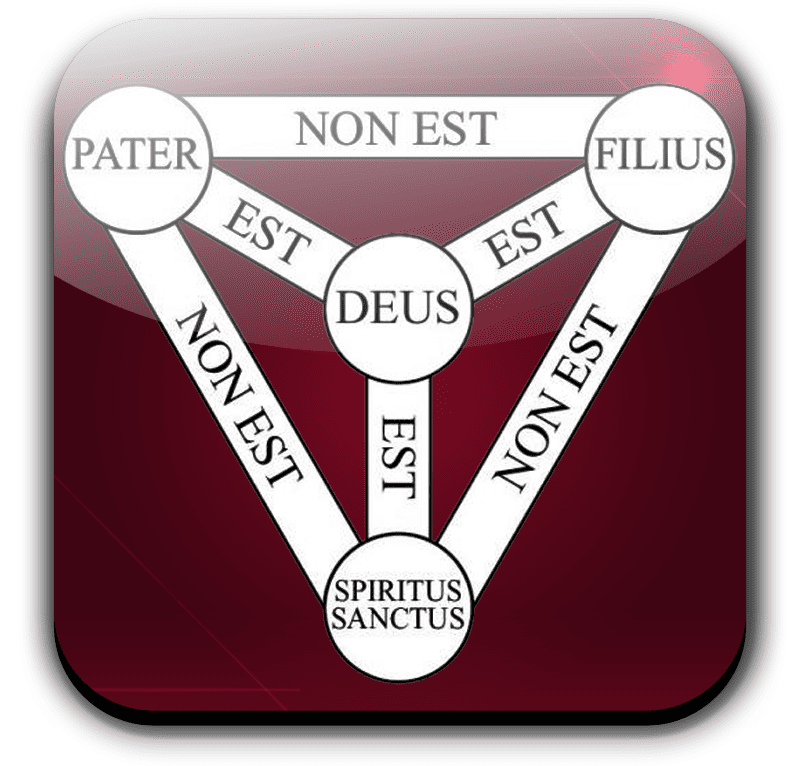
The dogma of faith which forms the object of the feast is this: There is one God and in this one God there are three Divine Persons; the Father is God, the Son is God, the Holy Spirit is God. Yet there are not three Gods, but one, eternal, incomprehensible God! The Father is not more God than the Son, neither is the Son more God than the Holy Spirit. The Father is the first Divine Person; the Son is the second Divine Person, begotten from the nature of the Father from eternity; the Holy Spirit is the third Divine Person, proceeding from the Father and the Son. No mortal can fully fathom this sublime truth.

The feast of the Most Holy Trinity may well be regarded as the Church’s “Te Deum” of gratitude over all the blessings of the Christmas and Easter seasons; for this mystery is a synthesis of Christmas, Epiphany, Easter, Ascension and Pentecost. This feast, which falls on the first Sunday after Pentecost, should make us mindful that actually every Sunday is devoted to the honor of the Most Holy Trinity, that every Sunday is sanctified and consecrated to the triune God. Sunday after Sunday we should recall in a spirit of gratitude the gifts which the Blessed Trinity is bestowing upon us. The Father created and predestined us; on the first day of the week He began the work of creation. The Son redeemed us; Sunday is the “Day of the Lord,” the day of His resurrection. The Holy Spirit sanctified us, made us His temple; on Sunday the Holy Spirit descended upon the infant Church. Sunday, therefore, is the day of the Most Holy Trinity.

The origins of the celebration of Trinity Sunday goes all they way back to the Arian heresy of the fourth century, when Arius denied the divinity of Christ by denying that there are three Persons in God. To stress the doctrine of the Trinity, the Fathers of the Church composed prayers and hymns that were recited on Sundays as part of the Divine Office, the official prayer of the Church. Eventually, a special version of this office began to be celebrated on the Sunday after Pentecost, and the Church in England, at the request of St. Thomas à Becket (1118-1170), was granted permission to celebrate Trinity Sunday. The celebration of Trinity Sunday was made universal by Pope John XXII (1316-34).

For many centuries, the Athanasian Creed was recited at Mass on Trinity Sunday. While seldom read today, the creed can be read privately or recited with your family to revive this ancient tradition.

Love uCATHOLIC?
Get our inspiring content delivered to your inbox every morning – FREE!

The post Solemnity Of The Most Holy Trinity appeared first on uCatholic.

Daily Reading


Daily Meditation


Reading 1 Jude 17, 20b-25

Beloved, remember the words spoken beforehand
by the Apostles of our Lord Jesus Christ.
Build yourselves up in your most holy faith; pray in the Holy Spirit.
Keep yourselves in the love of God
and wait for the mercy of our Lord Jesus Christ
that leads to eternal life.
On those who waver, have mercy; 
save others by snatching them out of the fire;
on others have mercy with fear,
abhorring even the outer garment stained by the flesh.

To the one who is able to keep you from stumbling
and to present you unblemished and exultant,
in the presence of his glory,
to the only God, our savior,
through Jesus Christ our Lord
be glory, majesty, power, and authority
from ages past, now, and for ages to come. Amen.
 

Responsorial Psalm Psalm 63:2, 3-4, 5-6

R. (2b) My soul is thirsting for you, O Lord my God.
O God, you are my God whom I seek;
for you my flesh pines and my soul thirsts 
like the earth, parched, lifeless and without water. 
R. My soul is thirsting for you, O Lord my God.
Thus have I gazed toward you in the sanctuary
to see your power and your glory,
For your kindness is a greater good than life;
my lips shall glorify you.
R. My soul is thirsting for you, O Lord my God.
Thus will I bless you while I live;
lifting up my hands, I will call upon your name.
As with the riches of a banquet shall my soul be satisfied,
and with exultant lips my mouth shall praise you.
R. My soul is thirsting for you, O Lord my God.
 

Alleluia See Colossians 3:16a, 17c

R. Alleluia, alleluia.
Let the word of Christ dwell in you richly;
giving thanks to God the Father through him.
R. Alleluia, alleluia.
 

Gospel Mark 11:27-33

Jesus and his disciples returned once more to Jerusalem.
As he was walking in the temple area,
the chief priests, the scribes, and the elders
approached him and said to him,
“By what authority are you doing these things?
Or who gave you this authority to do them?”
Jesus said to them, “I shall ask you one question.
Answer me, and I will tell you by what authority I do these things. 
Was John’s baptism of heavenly or of human origin? Answer me.”
They discussed this among themselves and said,
“If we say, ‘Of heavenly origin,’ he will say,
‘Then why did you not believe him?’
But shall we say, ‘Of human origin’?”– 
they feared the crowd,
for they all thought John really was a prophet.
So they said to Jesus in reply, “We do not know.”
Then Jesus said to them,
“Neither shall I tell you by what authority I do these things.”
 

– – –

Lectionary for Mass for Use in the Dioceses of the United States, second typical edition, Copyright © 2001, 1998, 1997, 1986, 1970 Confraternity of Christian Doctrine; Psalm refrain © 1968, 1981, 1997, International Committee on English in the Liturgy, Inc. All rights reserved. Neither this work nor any part of it may be reproduced, distributed, performed or displayed in any medium, including electronic or digital, without permission in writing from the copyright owner.

Daily Meditation


Saint of the Day


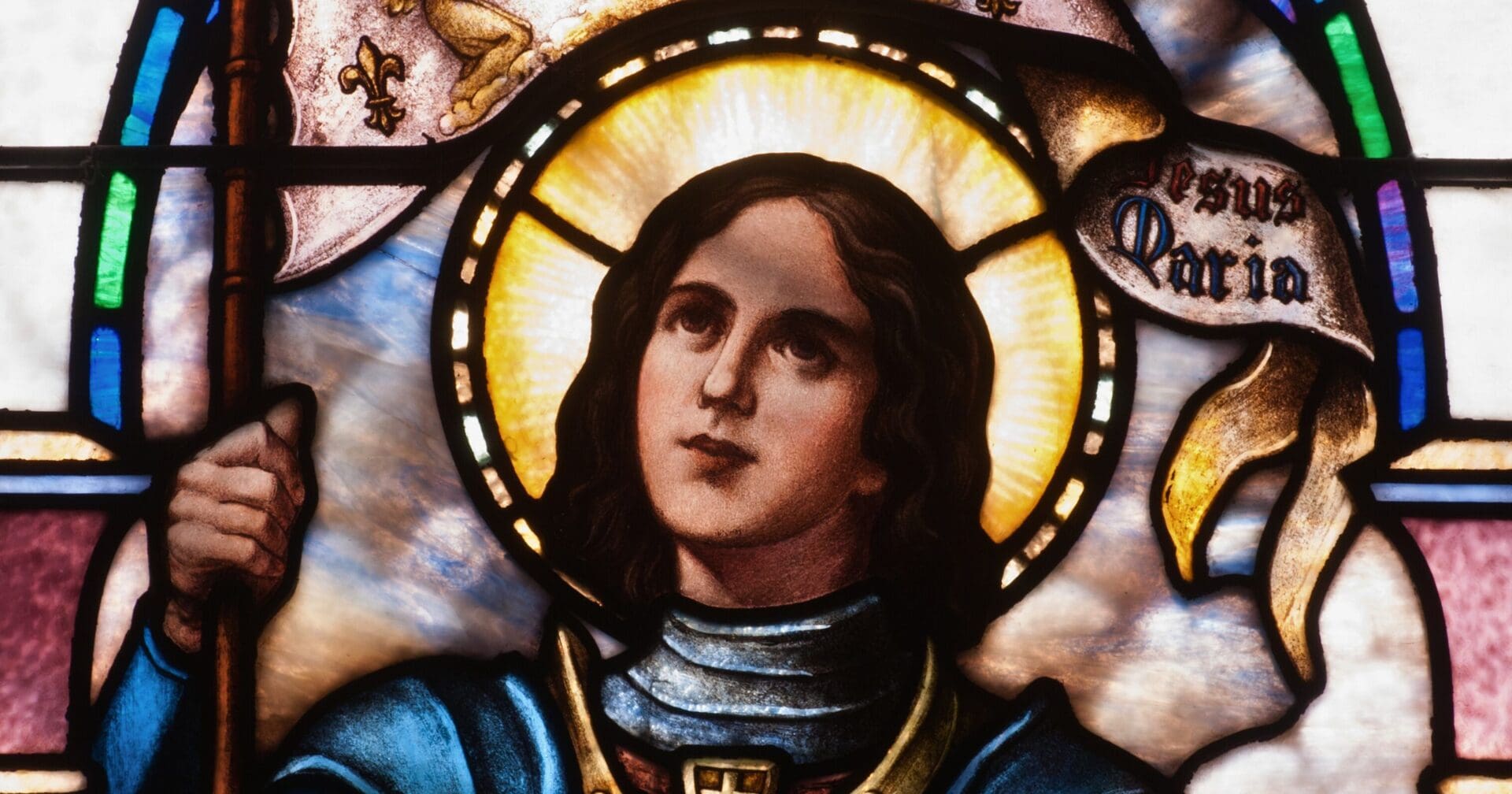
Saint Joan of Arc is the patroness of soldiers and of France. On January 6, 1412, Joan of Arc was born to pious parents of the French peasant class, at the obscure village of Domremy, near the province of Lorraine. At a very early age, she heard voices: those of St. Michael, St. Catherine and St. Margaret.

At first the messages were personal and general. Then at last came the crowning order. In May, 1428, her voices “of St. Michael, St. Catherine, and St. Margaret” told Joan to go to the King of France and help him reconquer his kingdom. For at that time the English king was after the throne of France, and the Duke of Burgundy, the chief rival of the French king, was siding with him and gobbling up evermore French territory.

After overcoming opposition from churchmen and courtiers, the seventeen year old girl was given a small army with which she raised the seige of Orleans on May 8, 1429. She then enjoyed a series of spectacular military successes, during which the King was able to enter Rheims and be crowned with her at his side.

In May 1430, as she was attempting to relieve Compiegne, she was captured by the Burgundians and sold to the English when Charles and the French did nothing to save her. After months of imprisonment, she was tried at Rouen by a tribunal presided over by the infamous Peter Cauchon, Bishop of Beauvais, who hoped that the English would help him to become archbishop.

Through her unfamiliarity with the technicalities of theology, Joan was trapped into making a few damaging statements. When she refused to retract the assertion that it was the saints of God who had commanded her to do what she had done, she was condemned to death as a heretic, sorceress, and adulteress, and burned at the stake on May 30, 1431. She was nineteen years old. Some thirty years later, she was exonerated of all guilt and she was ultimately canonized in 1920, making official what the people had known for centuries. Her feast day is May 30.

St. Joan was canonized in 1920 by Pope Benedict XV.

Editorial credit: Nancy Bauer / Shutterstock.com

Love uCATHOLIC?
Get our inspiring content delivered to your inbox every morning – FREE!

The post Saint Joan of Arc appeared first on uCatholic.

Daily Reading


Daily Meditation


Reading 1 1 Peter 4:7-13

Beloved:
The end of all things is at hand.
Therefore be serious and sober-minded
so that you will be able to pray.
Above all, let your love for one another be intense,
because love covers a multitude of sins.
Be hospitable to one another without complaining.
As each one has received a gift, use it to serve one another
as good stewards of God’s varied grace.
Whoever preaches, let it be with the words of God;
whoever serves, let it be with the strength that God supplies,
so that in all things God may be glorified through Jesus Christ,
to whom belong glory and dominion forever and ever. Amen.

Beloved, do not be surprised that a trial by fire is occurring among you,
as if something strange were happening to you.
But rejoice to the extent that you share in the sufferings of Christ,
so that when his glory is revealed
you may also rejoice exultantly.
 

Responsorial Psalm Psalm 96:10, 11-12, 13

R. (13b) The Lord comes to judge the earth.
Say among the nations: The LORD is king.
He has made the world firm, not to be moved;
he governs the peoples with equity.
R. The Lord comes to judge the earth.
Let the heavens be glad and the earth rejoice;
let the sea and what fills it resound;
let the plains be joyful and all that is in them!
Then shall all the trees of the forest exult.
R. The Lord comes to judge the earth.
Before the LORD, for he comes;
for he comes to rule the earth.
He shall rule the world with justice
and the peoples with his constancy.
R. The Lord comes to judge the earth.
 

Alleluia See John 15:16

R. Alleluia, alleluia.
I chose you from the world,
to go and bear fruit that will last, says the Lord.
R. Alleluia, alleluia.
 

Gospel Mark 11:11-26

Jesus entered Jerusalem and went into the temple area.
He looked around at everything and, since it was already late,
went out to Bethany with the Twelve.

The next day as they were leaving Bethany he was hungry.
Seeing from a distance a fig tree in leaf,
he went over to see if he could find anything on it.
When he reached it he found nothing but leaves;
it was not the time for figs.
And he said to it in reply, “May no one ever eat of your fruit again!”
And his disciples heard it.

They came to Jerusalem,
and on entering the temple area
he began to drive out those selling and buying there.
He overturned the tables of the money changers
and the seats of those who were selling doves.
He did not permit anyone to carry anything through the temple area.
Then he taught them saying, “Is it not written:

My house shall be called a house of prayer for all peoples?
But you have made it a den of thieves.

The chief priests and the scribes came to hear of it
and were seeking a way to put him to death,
yet they feared him
because the whole crowd was astonished at his teaching.
When evening came, they went out of the city.

Early in the morning, as they were walking along,
they saw the fig tree withered to its roots.
Peter remembered and said to him, “Rabbi, look!
The fig tree that you cursed has withered.”
Jesus said to them in reply, “Have faith in God.
Amen, I say to you, whoever says to this mountain,
‘Be lifted up and thrown into the sea,’
and does not doubt in his heart
but believes that what he says will happen,
it shall be done for him.
Therefore I tell you, all that you ask for in prayer,
believe that you will receive it and it shall be yours.
When you stand to pray,
forgive anyone against whom you have a grievance,
so that your heavenly Father may in turn
forgive you your transgressions.”
 

– – –

Lectionary for Mass for Use in the Dioceses of the United States, second typical edition, Copyright © 2001, 1998, 1997, 1986, 1970 Confraternity of Christian Doctrine; Psalm refrain © 1968, 1981, 1997, International Committee on English in the Liturgy, Inc. All rights reserved. Neither this work nor any part of it may be reproduced, distributed, performed or displayed in any medium, including electronic or digital, without permission in writing from the copyright owner.

Daily Meditation


Saint of the Day


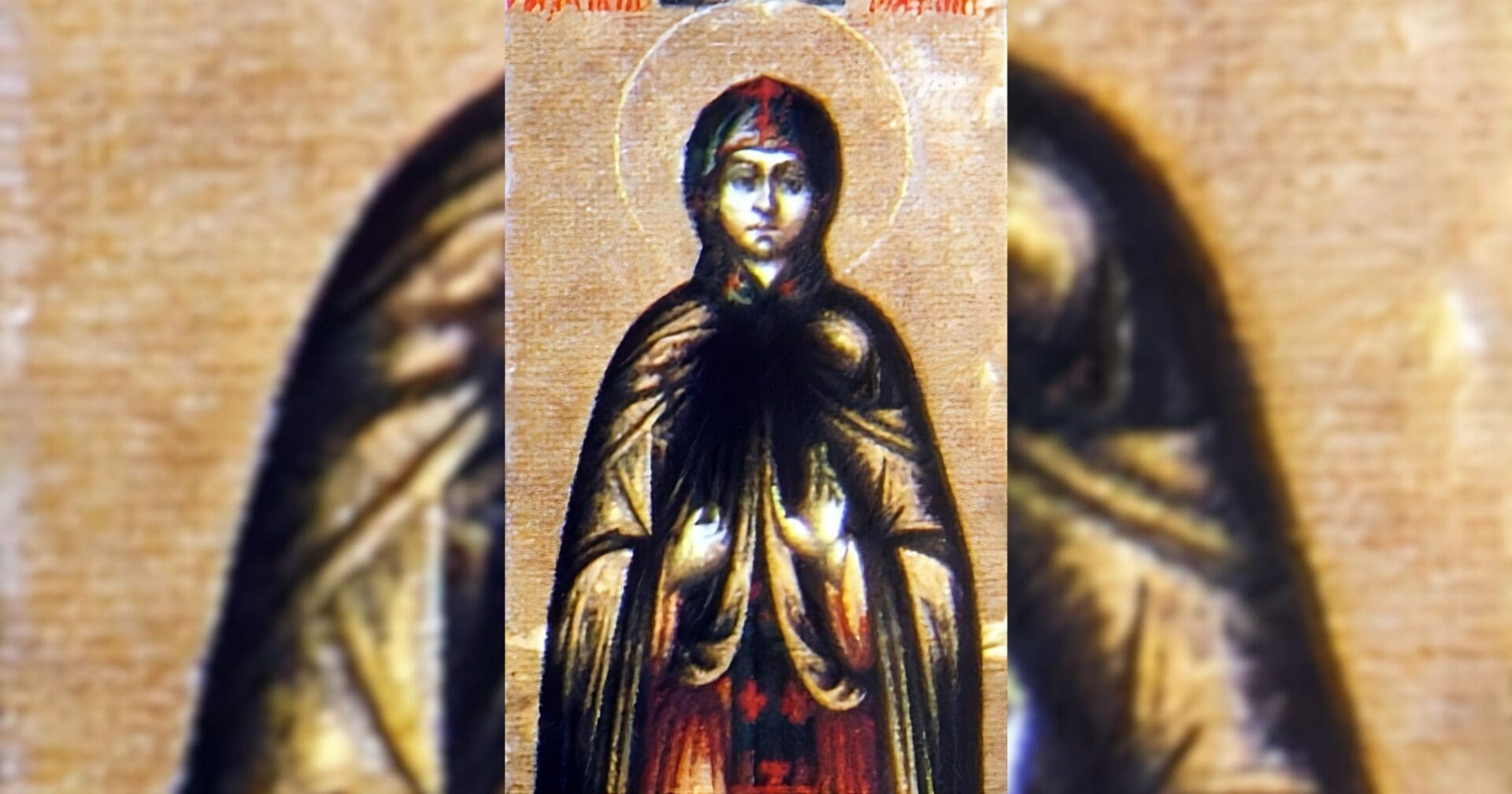
Saint Theodosia of Constantinople lived during the eighth century and was born in answer to the fervent prayers of her parents. After their deaths, she was raised at the women’s monastery of the Holy Martyr Anastasia in Constantinople. After distributing what remained of her parental inheritance to the poor, she became a nun. She also used part of the money to commission gold and silver icons of the Savior, the Theotokos, and St. Anastasia.

When Leo the Isaurian ascended the throne, he issued an edict that holy icons be destroyed everywhere. Above the Bronze Gates at Constantinople was a bronze icon of the Savior, which had been there for more than 400 years. In 730, the iconoclast Patriarch Anastasius ordered that the icon be destroyed.

The Virgin Martyr Theodosia and other women rushed to protect the icon and toppled the ladder with the soldier who was carrying out the command. The women then stoned Patriarch Anastasius.

Emperor Leo ordered the women to be beheaded. St. Theodosia, an ardent defender of icons, was thrown in prison. She was given one hundred lashes a day for over one week. On the eighth day, she was led through the city, being beaten along the way. Ultimately, one of the soldiers stabbed her in the throat with a ram’s horn, and she received the crown of martyrdom.

Following the Triumph of Orthodoxy over iconoclasm she was recognized as a martyr and saint, and The body of the holy virgin martyr was reverently buried by Christians in the St. Euphemia Monastery in Constantinople, near a place called Dexiokratis. The tomb of St. Theodosia was glorified by numerous healings of the sick.

Photo credit: Public Domain via Wikimedia Commons

Love uCATHOLIC?
Get our inspiring content delivered to your inbox every morning – FREE!

The post Saint Theodosia of Constantinople appeared first on uCatholic.

Daily Reading


Daily Meditation


Reading 1 1 Peter 2:2-5, 9-12

Beloved:
Like newborn infants, long for pure spiritual milk
so that through it you may grow into salvation,
for you have tasted that the Lord is good.
Come to him, a living stone, rejected by human beings
but chosen and precious in the sight of God,
and, like living stones,
let yourselves be built into a spiritual house
to be a holy priesthood to offer spiritual sacrifices
acceptable to God through Jesus Christ.

You are a chosen race, a royal priesthood, 
a holy nation, a people of his own,
so that you may announce the praises of him
who called you out of darkness into his wonderful light.

Once you were no people
but now you are God’s people;
you had not received mercy
but now you have received mercy.

Beloved, I urge you as aliens and sojourners
to keep away from worldly desires that wage war against the soul.
Maintain good conduct among the Gentiles,
so that if they speak of you as evildoers,
they may observe your good works
and glorify God on the day of visitation.
 

Responsorial Psalm Psalm 100:2, 3, 4, 5

R. (2c) Come with joy into the presence of the Lord.
Sing joyfully to the LORD, all you lands;
serve the LORD with gladness;
come before him with joyful song.
R. Come with joy into the presence of the Lord.
Know that the LORD is God;
he made us, his we are;
his people, the flock he tends.
R. Come with joy into the presence of the Lord.
Enter his gates with thanksgiving,
his courts with praise;
Give thanks to him;
bless his name.
R. Come with joy into the presence of the Lord.
The LORD is good:
his kindness endures forever,
and his faithfulness, to all generations.
R. Come with joy into the presence of the Lord.
 

Alleluia John 8:12

R. Alleluia, alleluia.
I am the light of the world, says the Lord;
whoever follows me will have the light of life.
R. Alleluia, alleluia.
 

Gospel Mark 10:46-52

As Jesus was leaving Jericho with his disciples and a sizable crowd,
Bartimaeus, a blind man, the son of Timaeus,
sat by the roadside begging.
On hearing that it was Jesus of Nazareth,
he began to cry out and say,
“Jesus, son of David, have pity on me.” 
And many rebuked him, telling him to be silent.
But he kept calling out all the more, “Son of David, have pity on me.”
Jesus stopped and said, “Call him.”
So they called the blind man, saying to him,
“Take courage; get up, Jesus is calling you.”
He threw aside his cloak, sprang up, and came to Jesus.
Jesus said to him in reply, “What do you want me to do for you?”
The blind man replied to him, “Master, I want to see.”
Jesus told him, “Go your way; your faith has saved you.”
Immediately he received his sight
and followed him on the way.
 

– – –

Lectionary for Mass for Use in the Dioceses of the United States, second typical edition, Copyright © 2001, 1998, 1997, 1986, 1970 Confraternity of Christian Doctrine; Psalm refrain © 1968, 1981, 1997, International Committee on English in the Liturgy, Inc. All rights reserved. Neither this work nor any part of it may be reproduced, distributed, performed or displayed in any medium, including electronic or digital, without permission in writing from the copyright owner.

Daily Meditation


Saint of the Day


Saint Bernard of Montjoux was probably born in Italy. He became a priest, was made Vicar General of Aosta, and spent more than four decades doing missionary work in the Alps. He built schools and churches in the diocese but is especially remembered for two Alpine hospices he built to aid lost travelers in the mountain passes named Great and Little Bernard, after him.

The men who ran them in time became Augustinian canons regular and built a monastery. The Order continued into the twentieth century. He was proclaimed the patron saint of Alpinists and mountain climbers by Pope Pius XI in 1923. He is sometimes fallaciously referred to as Bernard of Menthon and the son of Count Richard of Menthon, which he was not. His feast day is May 28th.

Bernard became patron and protector of skiers because of his four decades spent in missionary work throughout the Alps. The dog breed known as “St. Bernards” get their name from the Great St Bernard Hospice which our Saint founded.

Photo credit: Jpvoutaz / Shutterstock.com

Love uCATHOLIC?
Get our inspiring content delivered to your inbox every morning – FREE!

The post Saint Bernard of Montjoux appeared first on uCatholic.

Daily Reading


Daily Meditation