
Reading 1 1 Peter 1:18-25

Beloved:
Realize that you were ransomed from your futile conduct,
handed on by your ancestors,
not with perishable things like silver or gold
but with the precious Blood of Christ
as of a spotless unblemished Lamb.
He was known before the foundation of the world
but revealed in the final time for you,
who through him believe in God
who raised him from the dead and gave him glory,
so that your faith and hope are in God.

Since you have purified yourselves
by obedience to the truth for sincere brotherly love,
love one another intensely from a pure heart.
You have been born anew,
not from perishable but from imperishable seed,
through the living and abiding word of God, for:

“All flesh is like grass,
and all its glory like the flower of the field;
the grass withers,
and the flower wilts;
but the word of the Lord remains forever.”
This is the word that has been proclaimed to you.
 

Responsorial Psalm Psalm 147:12-13, 14-15, 19-20

R. (12a) Praise the Lord, Jerusalem.
or:
R. Alleluia.
Glorify the LORD, O Jerusalem;
praise your God, O Zion.
For he has strengthened the bars of your gates;
he has blessed your children within you.
R. Praise the Lord, Jerusalem.
or:
R. Alleluia.
He has granted peace in your borders;
with the best of wheat he fills you.
He sends forth his command to the earth;
swiftly runs his word!
R. Praise the Lord, Jerusalem.
or:
R. Alleluia.
He has proclaimed his word to Jacob,
his statutes and his ordinances to Israel.
He has not done thus for any other nation;
his ordinances he has not made known to them. Alleluia.
R. Praise the Lord, Jerusalem.
or:
R. Alleluia.
 

Alleluia Mark 10:45

R. Alleluia, alleluia.
The Son of Man came to serve,
and to give his life as a ransom for many.
R. Alleluia, alleluia.
 

Gospel Mark 10:32-45

The disciples were on the way, going up to Jerusalem,
and Jesus went ahead of them.
They were amazed, and those who followed were afraid.
Taking the Twelve aside again, he began to tell them
what was going to happen to him.
“Behold, we are going up to Jerusalem, and the Son of Man
will be handed over to the chief priests and the scribes, 
and they will condemn him to death
and hand him over to the Gentiles who will mock him,
spit upon him, scourge him, and put him to death,
but after three days he will rise.”

Then James and John, the sons of Zebedee,
came to Jesus and said to him,
“Teacher, we want you to do for us whatever we ask of you.”
He replied, “What do you wish me to do for you?”
They answered him,
“Grant that in your glory
we may sit one at your right and the other at your left.”
Jesus said to them, “You do not know what you are asking.
Can you drink the chalice that I drink
or be baptized with the baptism with which I am baptized?”
They said to him, “We can.”
Jesus said to them, “The chalice that I drink, you will drink,
and with the baptism with which I am baptized, you will be baptized;
but to sit at my right or at my left is not mine to give
but is for those for whom it has been prepared.”
When the ten heard this, they became indignant at James and John.
Jesus summoned them and said to them,
“You know that those who are recognized as rulers over the Gentiles
lord it over them,
and their great ones make their authority over them felt.
But it shall not be so among you.
Rather, whoever wishes to be great among you will be your servant;
whoever wishes to be first among you will be the slave of all.
For the Son of Man did not come to be served but to serve
and to give his life as a ransom for many.”
 

– – –

Lectionary for Mass for Use in the Dioceses of the United States, second typical edition, Copyright © 2001, 1998, 1997, 1986, 1970 Confraternity of Christian Doctrine; Psalm refrain © 1968, 1981, 1997, International Committee on English in the Liturgy, Inc. All rights reserved. Neither this work nor any part of it may be reproduced, distributed, performed or displayed in any medium, including electronic or digital, without permission in writing from the copyright owner.

Daily Meditation
 

Saint of the Day


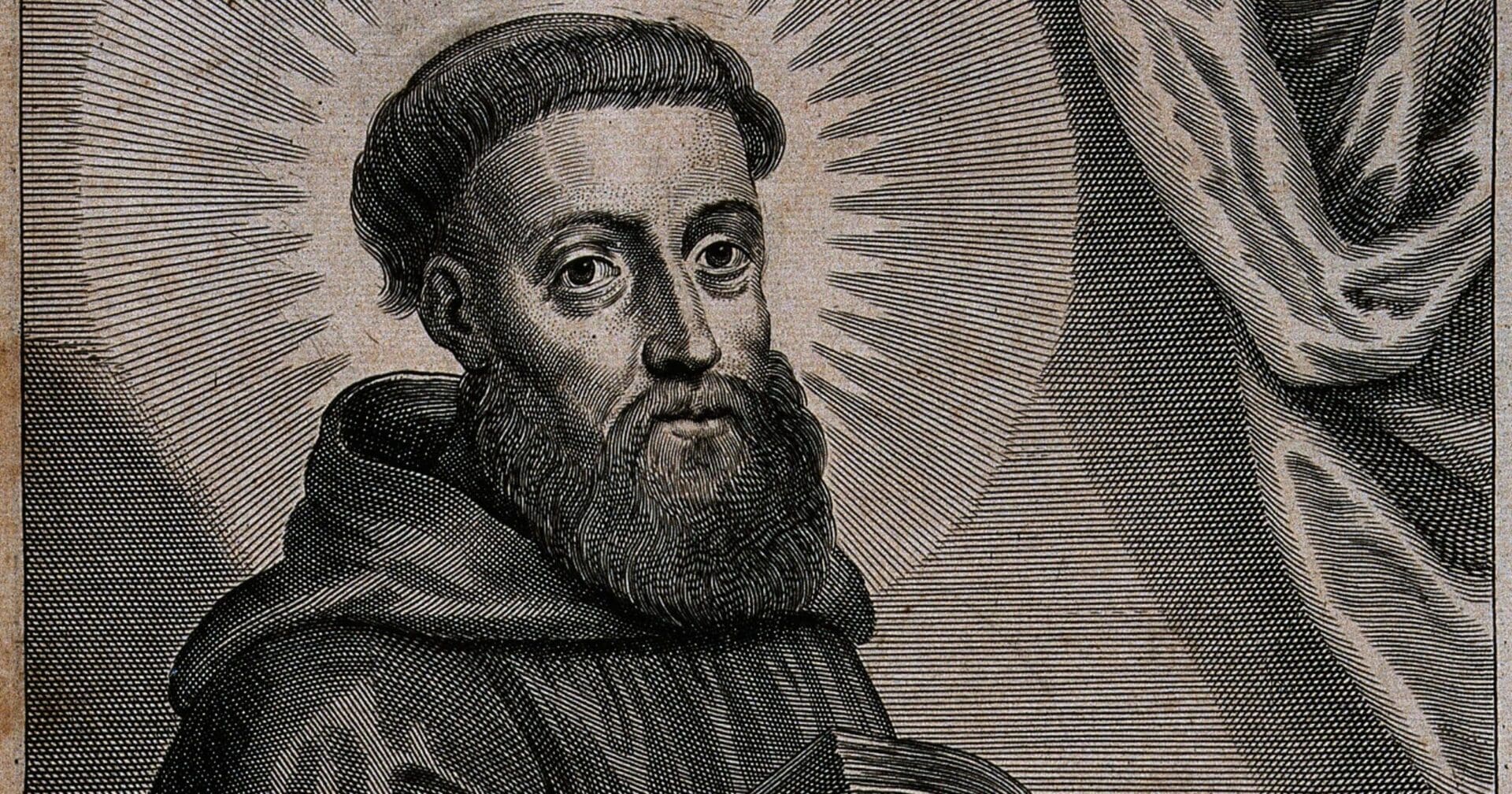
In the year 596, some 40 monks set out from Rome to evangelize the Anglo-Saxons in England. Leading the group was Saint Augustine of Canterbury, the prior of their monastery in Rome. Hardly had he and his men reached Gaul (France) when they heard stories of the ferocity of the Anglo-Saxons and of the treacherous waters of the English Channel. Augustine returned to Rome and to the pope who had sent them— Pope St. Gregory the Great —only to be assured by him that their fears were groundless.

Augustine again set out and this time the group crossed the English Channel and landed in the territory of Kent, ruled by King Ethelbert, a pagan married to a Christian. Ethelbert received them kindly, set up a residence for them in Canterbury and within the year, on Pentecost Sunday, 597, was himself baptized. After being consecrated a bishop in France, Augustine returned to Canterbury, where he founded his see. He constructed a church and monastery near where the present cathedral, begun in 1070, now stands. As the faith spread, additional sees were established at London and Rochester.

Work was sometimes slow and Augustine did not always meet with success. Attempts to reconcile the Anglo-Saxon Christians with the original Briton Christians (who had been driven into western England by Anglo-Saxon invaders) ended in dismal failure. Augustine failed to convince the Britons to give up certain Celtic customs at variance with Rome and to forget their bitterness, helping him evangelize their Anglo-Saxon conquerors

Laboring patiently, Augustine wisely heeded the missionary principles—quite enlightened for the times—suggested by Pope Gregory the Great: purify rather than destroy pagan temples and customs; let pagan rites and festivals be transformed into Christian feasts; retain local customs as far as possible. The limited success Augustine achieved in England before his death in 605, a short eight years after he arrived in England, would eventually bear fruit long after in the conversion of England. Truly Augustine of Canterbury can be called the “Apostle of England.”

Photo credit: Fae via Wikimedia Commons

Love uCATHOLIC?
Get our inspiring content delivered to your inbox every morning – FREE!

The post Saint Augustine of Canterbury appeared first on uCatholic.

Daily Reading


Daily Meditation


Reading 1 1 Peter 1:10-16

Beloved:
Concerning the salvation of your souls
the prophets who prophesied about the grace that was to be yours
searched and investigated it
investigating the time and circumstances
that the Spirit of Christ within them indicated
when it testified in advance
to the sufferings destined for Christ
and the glories to follow them.
It was revealed to them that they were serving not themselves but you
with regard to the things that have now been announced to you
by those who preached the Good News to you
through the Holy Spirit sent from heaven,
things into which angels longed to look.

Therefore, gird up the loins of your mind, live soberly,
and set your hopes completely on the grace to be brought to you
at the revelation of Jesus Christ.
Like obedient children,
do not act in compliance with the desires of your former ignorance
but, as he who called you is holy,
be holy yourselves in every aspect of your conduct,
for it is written, Be holy because I am holy.
 

Responsorial Psalm Psalm 98:1, 2-3ab, 3cd-4

R. (2a) The Lord has made known his salvation.
Sing to the LORD a new song,
for he has done wondrous deeds;
His right hand has won victory for him, 
his holy arm.
R. The Lord has made known his salvation.
The LORD has made his salvation known:
in the sight of the nations he has revealed his justice.
He has remembered his kindness and his faithfulness
toward the house of Israel.
R. The Lord has made known his salvation.
All the ends of the earth have seen
the salvation by our God.
Sing joyfully to the LORD, all you lands;
break into song; sing praise.
R. The Lord has made known his salvation.
 

Alleluia See Matthew 11:25

R. Alleluia, alleluia.
Blessed are you, Father, Lord of heaven and earth;
you have revealed to little ones the mysteries of the Kingdom.
R. Alleluia, alleluia.
 

Gospel Mark 10:28-31

Peter began to say to Jesus,
“We have given up everything and followed you.”
Jesus said, “Amen, I say to you,
there is no one who has given up house or brothers or sisters
or mother or father or children or lands
for my sake and for the sake of the Gospel
who will not receive a hundred times more now in this present age:
houses and brothers and sisters
and mothers and children and lands,
with persecutions, and eternal life in the age to come.
But many that are first will be last, and the last will be first.”
 

– – –

Lectionary for Mass for Use in the Dioceses of the United States, second typical edition, Copyright © 2001, 1998, 1997, 1986, 1970 Confraternity of Christian Doctrine; Psalm refrain © 1968, 1981, 1997, International Committee on English in the Liturgy, Inc. All rights reserved. Neither this work nor any part of it may be reproduced, distributed, performed or displayed in any medium, including electronic or digital, without permission in writing from the copyright owner.

Daily Meditation


Saint of the Day


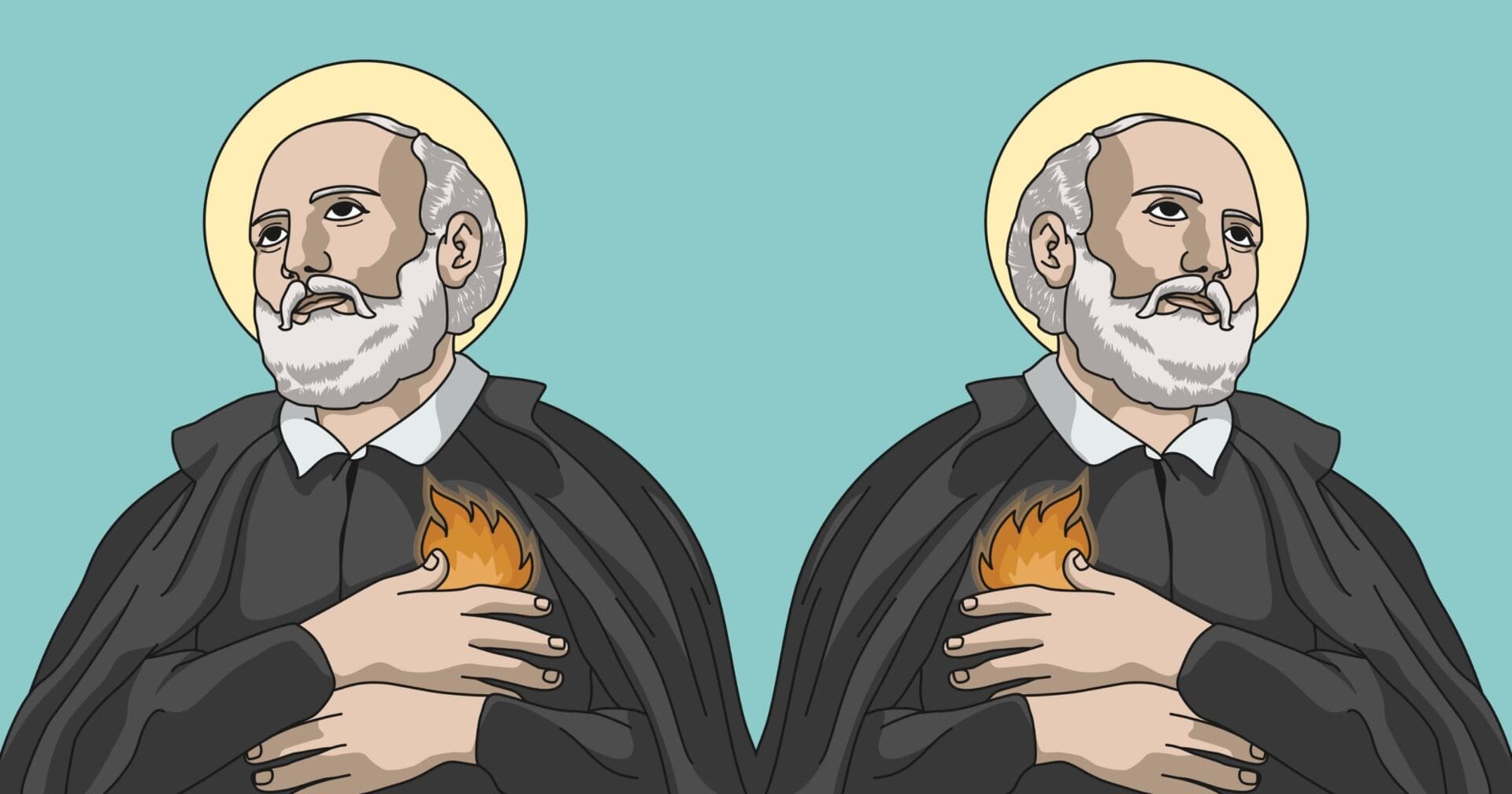
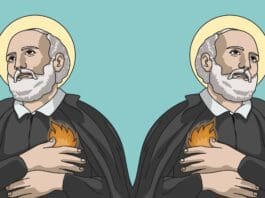
Saint Philip Neri (1515-1595) is known as the Apostle of Rome. With his distinctly joyous and personal manner, he was one of the influential figures of the Catholic Reformation. His special contribution was the creation of the Congregation of the Oratory.

Philip Neri was born in Florence on July 21, 1515, the son of a lawyer. As a boy, Philip befriended the Dominicans at the convent of S. Marco. In 1532 or 1533 he went to San Germano (Cassino) to learn business under the tutelage of an uncle, but, repelled by commercial affairs and feeling a pronounced desire for a life of close union with God, he left San Germano after a few months and went to Rome. There he studied philosophy and theology at Sapienza University and Sant’Agostino. He made friends easily and met regularly with some of them at the church of S. Girolamo della Carità for discussion, prayer, and the reception of Holy Communion. S. Girolamo became his home for 32 years. On May 23, 1551, after 18 years in Rome, Philip was ordained a priest. His room, the center for the intimate and prayerful meetings, became known about 1554 as the “Oratory.”

Philip, who dreaded formalism and loved spontaneity, gave his little groups a definite character. Scripture readings, short commentaries, brief prayers, and hymns were the usual program. Giovanni Palestrina wrote much of the musical setting for the scriptural texts, the motets, and the laudi spirituali, which gave rise to the term “oratorio.” This kind of apostolate suffered under the stern pontificates of Paul IV and Pius V. But Philip numbered among his friends some of the great saints of the age: Charles Borromeo, Francis de Sales, Felix of Cantalice, Camillus de Lellis, and Ignatius of Loyola. As more priests became his followers, Philip, who did not wish a tightly organized group united by religious vows, created a congregation of secular priests living in community. In 1575 Pope Gregory XIII approved the Congregation of the Oratory.

Philip’s famous walks especially won him the title Apostle of Rome. Surrounded by a laughing and joking group, he penetrated all corners of the city, radiating gaiety by his simple friendship and playful wit. Beneath his external life were the deep foundations of an intense spirit of prayer and love for the priestly offices of hearing confessions and offering the Mass. For hours at a time, he received an abundance of unusual supernatural gifts when he was wrapped in ecstasy. In 1575 S. Maria in. Vallicella became the Oratorians’ church. Philip moved there in 1583, and there he died on May 26, 1595.

Photo credit: Luis Fraga / Shutterstock.com

Love uCATHOLIC?
Get our inspiring content delivered to your inbox every morning – FREE!

The post Saint Philip Neri appeared first on uCatholic.

Daily Reading


Daily Meditation


Reading I Genesis 3:9-15, 20

After Adam had eaten of the tree,
            the LORD God called to him and asked him, “Where are you?”
He answered, “I heard you in the garden;
            but I was afraid, because I was naked,
            so I hid myself.”
Then he asked, “Who told you that you were naked?
You have eaten, then,
            from the tree of which I had forbidden you to eat!”
The man replied, “The woman whom you put here with me—
            she gave me fruit from the tree, and so I ate it.”
The LORD God then asked the woman,
            “Why did you do such a thing?”
The woman answered, “The serpent tricked me into it, so I ate it.”

Then the LORD God said to the serpent:
            “Because you have done this, you shall be banned
                        from all the animals
                        and from all the wild creatures;
            On your belly shall you crawl,
                        and dirt shall you eat
                        all the days of your life.
            I will put enmity between you and the woman,
                        and between your offspring and hers;
            He will strike at your head,
                        while you strike at his heel.”
The man called his wife Eve,
            because she became the mother of all the living.

OR:

Acts 1:12-14

After Jesus had been taken up to heaven,
            the Apostles returned to Jerusalem
            from the mount called Olivet, which is near Jerusalem,
            a sabbath day’s journey away.

When they entered the city
            they went to the upper room where they were staying,
            Peter and John and James and Andrew,
            Philip and Thomas, Bartholomew and Matthew,
            James son of Alphaeus, Simon the Zealot,
            and Judas son of James.
All these devoted themselves with one accord to prayer,
            together with some women,
            and Mary the mother of Jesus, and his brothers.
 

Responsorial Psalm Psalm 87:1-2, 3 and 5, 6-7

R. (3) Glorious things are said of you, O city of God!
His foundation upon the holy mountains
            the
LORD loves:
The gates of Zion,
            more than any dwelling of Jacob.
R. Glorious things are said of you, O city of God!
Glorious things are said of you,
            O city of God!
And of Zion they shall say:
            “One and all were born in her;
And he who has established her
            is the Most High
LORD.”
R. Glorious things are said of you, O city of God!
They shall note, when the peoples are enrolled:
            “This man was born there.”
And all shall sing, in their festive dance:
            “My home is within you.”

R. Glorious things are said of you, O city of God!

Alleluia

R. Alleluia, alleluia.
O joyful Virgin, who gave birth to the Lord;
O blessed Mother of the Church,
who nurture in us the 
Spirit
of your Son Jesus Christ!

R. Alleluia, alleluia.

Gospel John 19:25-34

Standing by the cross of Jesus were his mother
            and his mother’s sister, Mary the wife of Clopas,
            and Mary of Magdala.
When Jesus saw his mother and the disciple there whom he loved,
            he said to his mother, “Woman, behold, your son.”
Then he said to the disciple,
            “Behold, your mother.”
And from that hour the disciple took her into his home.
After this, aware that everything was now finished,
            in order that the Scripture might be fulfilled,
            Jesus said, “I thirst.”
There was a vessel filled with common wine.
So they put a sponge soaked in wine on a sprig of hyssop
            and put it up to his mouth.
When Jesus had taken the wine, he said,
            “It is finished.”
And bowing his head, he handed over the spirit.

Now since it was preparation day,
            in order that the bodies might not remain on the cross on the sabbath,
            for the sabbath day of that week was a solemn one,
            the Jews asked Pilate that their legs be broken
            and they be taken down.
So the soldiers came and broke the legs of the first
            and then of the other one who was crucified with Jesus.
But when they came to Jesus and saw that he was already dead,
            they did not break his legs,
            but one soldier thrust his lance into his side,
            and immediately Blood and water flowed out.

– – –

Lectionary for Mass for Use in the Dioceses of the United States, second typical edition, Copyright © 2001, 1998, 1997, 1986, 1970 Confraternity of Christian Doctrine; Psalm refrain © 1968, 1981, 1997, International Committee on English in the Liturgy, Inc. All rights reserved. Neither this work nor any part of it may be reproduced, distributed, performed or displayed in any medium, including electronic or digital, without permission in writing from the copyright owner.

Daily Meditation


Saint of the Day


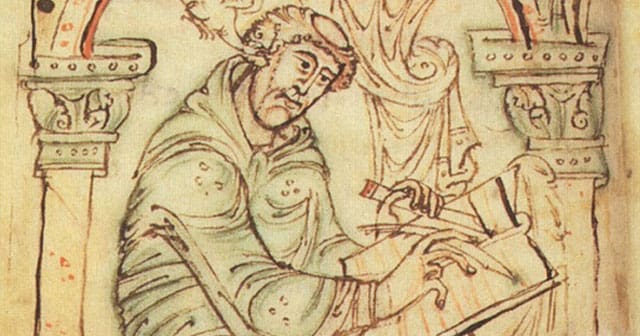
Saint Bede the Venerable was the first great English scholar. He was born in Northumbria (according to tradition, at Monkton, Durham, east of Newcastle) 672 or 673 and died at the monastery of Jarrow on May 25, 735. Almost all that is known of his life is contained in a notice added by himself to his great work Historia ecclesiastica (v, 24), which states that he was placed in the monastery at Wearmouth at the age of seven, that he became deacon in his nineteenth year, and priest in his thirtieth.

He was trained by the abbots Benedict Biscop and Ceolfrid, and probably accompanied the latter to Jarrow in 682. There he spent his life, finding his chief pleasure in being always occupied in learning, teaching, or writing, and zealous in the performance of monastic duties.

His works show that he had at his command all the learning of his time. He was proficient in patristic literature, and quotes from Puny the Younger, Vergil, Lucretius, Ovid, Horace, and other classical writers, but with some disapproval. He knew Greek and a little Hebrew. His Latin is clear and without affectation, and he is a skilful story-teller.

His works were so widely spread throughout Europe and so much esteemed that he won the name of “the teacher of the Middle Ages.”

Bede became known as Venerable Bede soon after his death, but this was not linked to consideration for sainthood by the Roman Catholic Church. His scholarship and importance to Catholicism were recognized in 1899 when he was declared a Doctor of the Church.

Photo credit: Public Domain via Wikimedia Commons

Love uCATHOLIC?
Get our inspiring content delivered to your inbox every morning – FREE!

The post Saint Bede the Venerable appeared first on uCatholic.

Daily Reading


Daily Meditation


Reading I Genesis 11:1-9

The whole world spoke the same language, using the same words.
While the people were migrating in the east,
they came upon a valley in the land of Shinar and settled there.
They said to one another,
“Come, let us mold bricks and harden them with fire.”
They used bricks for stone, and bitumen for mortar.
Then they said, “Come, let us build ourselves a city
and a tower with its top in the sky,
and so make a name for ourselves;
otherwise we shall be scattered all over the earth.”

The LORD came down to see the city and the tower
that the people had built.
Then the LORD said: “If now, while they are one people,
all speaking the same language,
they have started to do this,
nothing will later stop them from doing whatever they presume to do.
Let us then go down there and confuse their language,
so that one will not understand what another says.”
Thus the LORD scattered them from there all over the earth,
and they stopped building the city.
That is why it was called Babel,
because there the LORD confused the speech of all the world.
It was from that place that he scattered them all over the earth.

OR:

Exodus 19:3-8a, 16-20b

Moses went up the mountain to God.
Then the LORD called to him and said,
“Thus shall you say to the house of Jacob;

tell the Israelites:
You have seen for yourselves how I treated the Egyptians
and how I bore you up on eagle wings
and brought you here to myself.
Therefore, if you hearken to my voice and keep my covenant,
you shall be my special possession,
dearer to me than all other people,
though all the earth is mine.
You shall be to me a kingdom of priests, a holy nation.
That is what you must tell the Israelites.”
So Moses went and summoned the elders of the people.
When he set before them
all that the LORD had ordered him to tell them,
the people all answered together,
“Everything the LORD has said, we will do.”

On the morning of the third day
there were peals of thunder and lightning,
and a heavy cloud over the mountain,
and a very loud trumpet blast,
so that all the people in the camp trembled.
But Moses led the people out of the camp to meet God,
and they stationed themselves at the foot of the mountain.
Mount Sinai was all wrapped in smoke,
for the LORD came down upon it in fire.
The smoke rose from it as though from a furnace,
and the whole mountain trembled violently.
The trumpet blast grew louder and louder, while Moses was speaking,
and God answering him with thunder.

When the LORD came down to the top of Mount Sinai,
he summoned Moses to the top of the mountain.

OR:

Ezekiel 37:1-14

The hand of the LORD came upon me,
and he led me out in the spirit of the LORD
and set me in the center of the plain,
which was now filled with bones.
He made me walk among the bones in every direction
so that I saw how many they were on the surface of the plain.
How dry they were!
He asked me:

Son of man, can these bones come to life?
I answered, “Lord GOD, you alone know that.”
Then he said to me:
Prophesy over these bones, and say to them:
Dry bones, hear the word of the LORD!
Thus says the Lord GOD to these bones:
See!  I will bring spirit into you, that you may come to life.
I will put sinews upon you, make flesh grow over you,
cover you with skin, and put spirit in you
so that you may come to life and know that I am the LORD.
I, Ezekiel, prophesied as I had been told,
and even as I was prophesying I heard a noise;
it was a rattling as the bones came together, bone joining bone.
I saw the sinews and the flesh come upon them,
and the skin cover them, but there was no spirit in them.
Then the LORD said to me:
Prophesy to the spirit, prophesy, son of man,
and say to the spirit:  Thus says the Lord GOD:
From the four winds come, O spirit,
and breathe into these slain that they may come to life.
I prophesied as he told me, and the spirit came into them;
they came alive and stood upright, a vast army.
Then he said to me:
Son of man, these bones are the whole house of Israel.
They have been saying,
“Our bones are dried up,
our hope is lost, and we are cut off.”
Therefore, prophesy and say to them: Thus says the Lord GOD:
O my people, I will open your graves
and have you rise from them,
and bring you back to the land of Israel.
Then you shall know that I am the LORD,
when I open your graves and have you rise from them,
O my people!
I will put my spirit in you that you may live,
and I will settle you upon your land;
thus you shall know that I am the LORD.
I have promised, and I will do it, says the LORD.

OR:    

Joel 3:1-5

Thus says the LORD:
I will pour out my spirit upon all flesh.
Your sons and daughters shall prophesy,
    your old men shall dream dreams,
    your young men shall see visions;
even upon the servants and the handmaids,
    in those days, I will pour out my spirit.
And I will work wonders in the heavens and on the earth,
    blood, fire, and columns of smoke;
the sun will be turned to darkness,
    and the moon to blood,
at the coming of the day of the LORD,
    the great and terrible day.
Then everyone shall be rescued
    who calls on the name of the LORD;
for on Mount Zion there shall be a remnant,
    as the LORD has said,
and in Jerusalem survivors
    whom the LORD shall call.

Responsorial Psalm Psalm 104:1-2, 24, 35, 27-28, 29, 30

R. (cf. 30) Lord, send out your Spirit, and renew the face of the earth.
or:
R. Alleluia.
Bless the LORD, O my soul!
    O LORD, my God, you are great indeed!
You are clothed with majesty and glory,
    robed in light as with a cloak.
R. Lord, send out your Spirit, and renew the face of the earth.
or:
R. Alleluia.
How manifold are your works, O LORD!
    In wisdom you have wrought them all —
the earth is full of your creatures;
    bless the LORD, O my soul!  Alleluia.
R. Lord, send out your Spirit, and renew the face of the earth.
or:
R. Alleluia.
Creatures all look to you
    to give them food in due time.
When you give it to them, they gather it;
    when you open your hand, they are filled with good things.
R. Lord, send out your Spirit, and renew the face of the earth.
or:
R. Alleluia.
If you take away their breath, they perish
    and return to their dust.
When you send forth your spirit, they are created,
    and you renew the face of the earth.
R. Lord, send out your Spirit, and renew the face of the earth.
or:
R. Alleluia.

Reading II Romans 8:22-27

Brothers and sisters:
We know that all creation is groaning in labor pains even until now;
and not only that, but we ourselves,
who have the firstfruits of the Spirit,
we also groan within ourselves
as we wait for adoption, the redemption of our bodies.
For in hope we were saved.
Now hope that sees is not hope.
For who hopes for what one sees?
But if we hope for what we do not see, we wait with endurance.

In the same way, the Spirit too comes to the aid of our weakness;
for we do not know how to pray as we ought,
but the Spirit himself intercedes with inexpressible groanings.
And the one who searches hearts
knows what is the intention of the Spirit,
because he intercedes for the holy ones
according to God’s will.

Alleluia

R. Alleluia, alleluia.
Come, Holy Spirit, fill the hearts of the faithful
and kindle in them the fire of your love.
R. Alleluia, alleluia.

Gospel John 7:37-39

On the last and greatest day of the feast,
Jesus stood up and exclaimed,
“Let anyone who thirsts come to me and drink.
As Scripture says:
    Rivers of living water will flow from within him who believes in me.”

He said this in reference to the Spirit
that those who came to believe in him were to receive.
There was, of course, no Spirit yet,
because Jesus had not yet been glorified.

– – –

Lectionary for Mass for Use in the Dioceses of the United States, second typical edition, Copyright © 2001, 1998, 1997, 1986, 1970 Confraternity of Christian Doctrine; Psalm refrain © 1968, 1981, 1997, International Committee on English in the Liturgy, Inc. All rights reserved. Neither this work nor any part of it may be reproduced, distributed, performed or displayed in any medium, including electronic or digital, without permission in writing from the copyright owner.

Daily Meditation


Saint of the Day


Reading 1 Acts 2:1-11

When the time for Pentecost was fulfilled,
they were all in one place together.
And suddenly there came from the sky
a noise like a strong driving wind,
and it filled the entire house in which they were.
Then there appeared to them tongues as of fire,
which parted and came to rest on each one of them.
And they were all filled with the Holy Spirit
and began to speak in different tongues,
as the Spirit enabled them to proclaim.

Now there were devout Jews from every nation under heaven
staying in Jerusalem.
At this sound, they gathered in a large crowd,
but they were confused
because each one heard them speaking in his own language.
They were astounded, and in amazement they asked,
“Are not all these people who are speaking Galileans?
Then how does each of us hear them in his native language?
We are Parthians, Medes, and Elamites,
inhabitants of Mesopotamia, Judea and Cappadocia,
Pontus and Asia, Phrygia and Pamphylia,
Egypt and the districts of Libya near Cyrene,
as well as travelers from Rome,
both Jews and converts to Judaism, Cretans and Arabs,
yet we hear them speaking in our own tongues
of the mighty acts of God.”

Responsorial Psalm Psalm 104:1, 24, 29-30, 31, 34 

R. (cf. 30) Lord, send out your Spirit, and renew the face of the earth.
or:
R. Alleluia.
Bless the LORD, O my soul!
O LORD, my God, you are great indeed!
How manifold are your works, O LORD!
the earth is full of your creatures;
R. Lord, send out your Spirit, and renew the face of the earth.
or:
R. Alleluia.
May the glory of the LORD endure forever;
may the LORD be glad in his works!
Pleasing to him be my theme;
I will be glad in the LORD.
R. Lord, send out your Spirit, and renew the face of the earth.
or:
R. Alleluia.
If you take away their breath, they perish
and return to their dust.
When you send forth your spirit, they are created,
and you renew the face of the earth.
R. Lord, send out your Spirit, and renew the face of the earth.
or:
R. Alleluia.

Reading 2 1 Corinthians 12:3b-7, 12-13

Brothers and sisters:
No one can say, “Jesus is Lord,” except by the Holy Spirit.

There are different kinds of spiritual gifts but the same Spirit;
there are different forms of service but the same Lord;
there are different workings but the same God
who produces all of them in everyone.
To each individual the manifestation of the Spirit
is given for some benefit.

As a body is one though it has many parts,
and all the parts of the body, though many, are one body,
so also Christ.
For in one Spirit we were all baptized into one body,
whether Jews or Greeks, slaves or free persons,
and we were all given to drink of one Spirit.

Sequence — Veni, Sancte Spiritus

Come, Holy Spirit, come!
And from your celestial home
Shed a ray of light divine!

Come, Father of the poor!
Come, source of all our store!
Come, within our bosoms shine.

You, of comforters the best;
You, the soul’s most welcome guest;
Sweet refreshment here below;

In our labor, rest most sweet;
Grateful coolness in the heat;
Solace in the midst of woe.

O most blessed Light divine,
Shine within these hearts of yours,
And our inmost being fill!

Where you are not, we have naught,
Nothing good in deed or thought,
Nothing free from taint of ill.

Heal our wounds, our strength renew;
On our dryness pour your dew;
Wash the stains of guilt away:

Bend the stubborn heart and will;
Melt the frozen, warm the chill;
Guide the steps that go astray.

On the faithful, who adore
And confess you, evermore
In your sevenfold gift descend;

Give them virtue’s sure reward;
Give them your salvation, Lord;
Give them joys that never end. Amen.
Alleluia.
 

Alleluia

R. Alleluia, alleluia.
Come, Holy Spirit, fill the hearts of your faithful
and kindle in them the fire of your love.
R. Alleluia, alleluia.

Gospel John 20:19-23

On the evening of that first day of the week,
when the doors were locked, where the disciples were,
for fear of the Jews,
Jesus came and stood in their midst
and said to them, “Peace be with you.”
When he had said this, he showed them his hands and his side.
The disciples rejoiced when they saw the Lord.
Jesus said to them again, “Peace be with you.
As the Father has sent me, so I send you.”
And when he had said this, he breathed on them and said to them,
“Receive the Holy Spirit.
Whose sins you forgive are forgiven them,
and whose sins you retain are retained.”

– – –

Lectionary for Mass for Use in the Dioceses of the United States, second typical edition, Copyright © 2001, 1998, 1997, 1986, 1970 Confraternity of Christian Doctrine; Psalm refrain © 1968, 1981, 1997, International Committee on English in the Liturgy, Inc. All rights reserved. Neither this work nor any part of it may be reproduced, distributed, performed or displayed in any medium, including electronic or digital, without permission in writing from the copyright owner.

Daily Meditation


Saint of the Day


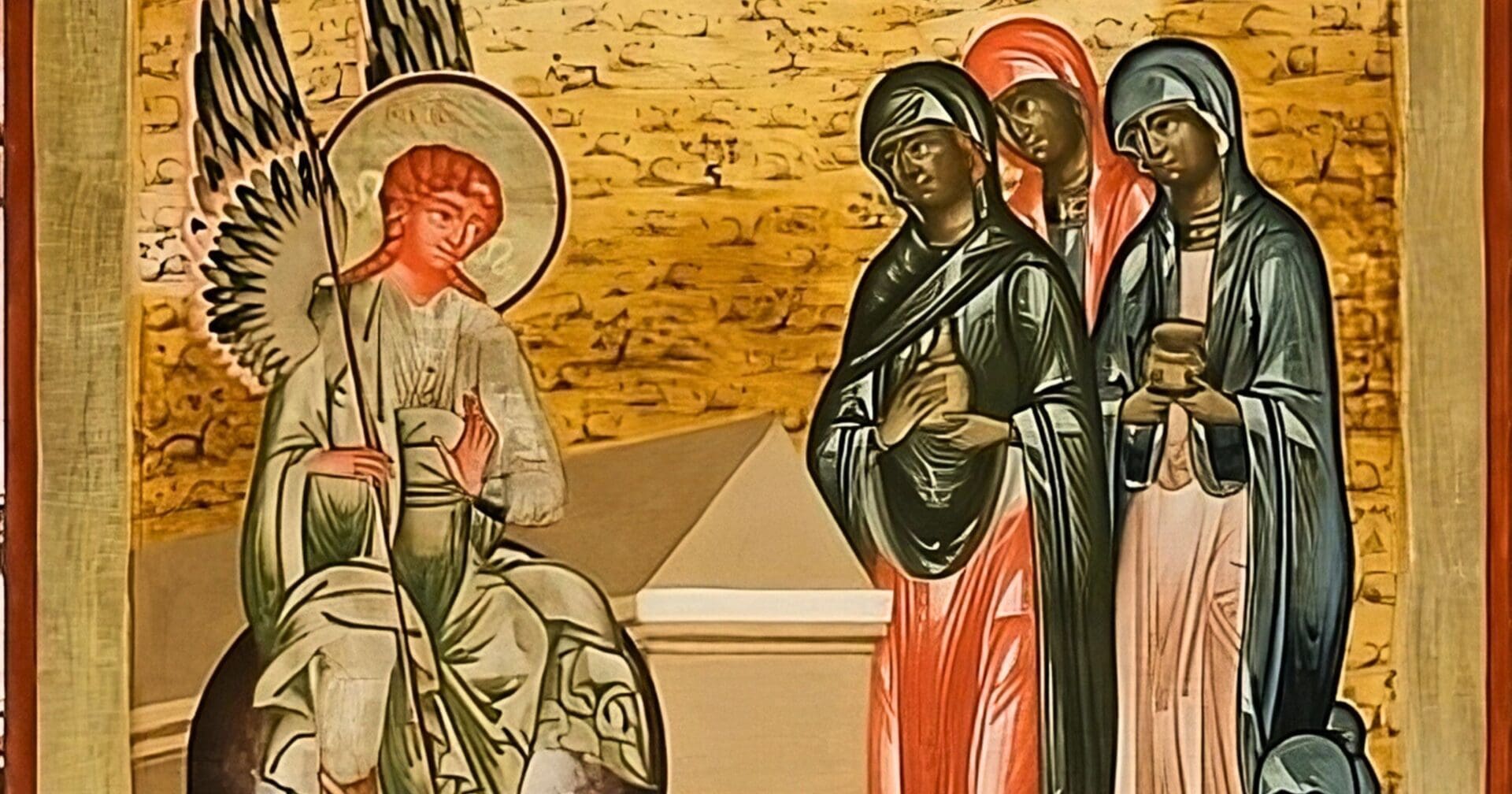
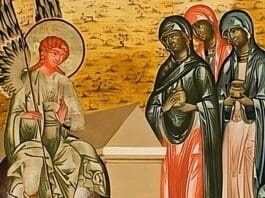
Saint Joanna was the wife of Chuza, Herod’s steward (Lk. 8:3) and a disciple of Jesus, and mentioned in Luke (8.3) as providing for Jesus and the Apostles. According to Eastern tradition, when Herod had John the Baptist beheaded, he cast the head out into an unclean place. Joanna took the head and buried it with honour on the Mount of Olives, on Herod’s land. Later, in the reign of Constantine the Great, the head was found.

St. Joanna is also remembered because she was present at both the Passion and Resurrection of Christ. St. Joanna is one of the women Luke says (24.10) discovered the empty tomb on the first Easter when she went to anoint the body. She is especially venerated by the Jesuits.

Photo credit: Public Domain via Wikimedia Commons

Love uCATHOLIC?
Get our inspiring content delivered to your inbox every morning – FREE!

The post Saint Joanna appeared first on uCatholic.

Daily Reading


Daily Meditation


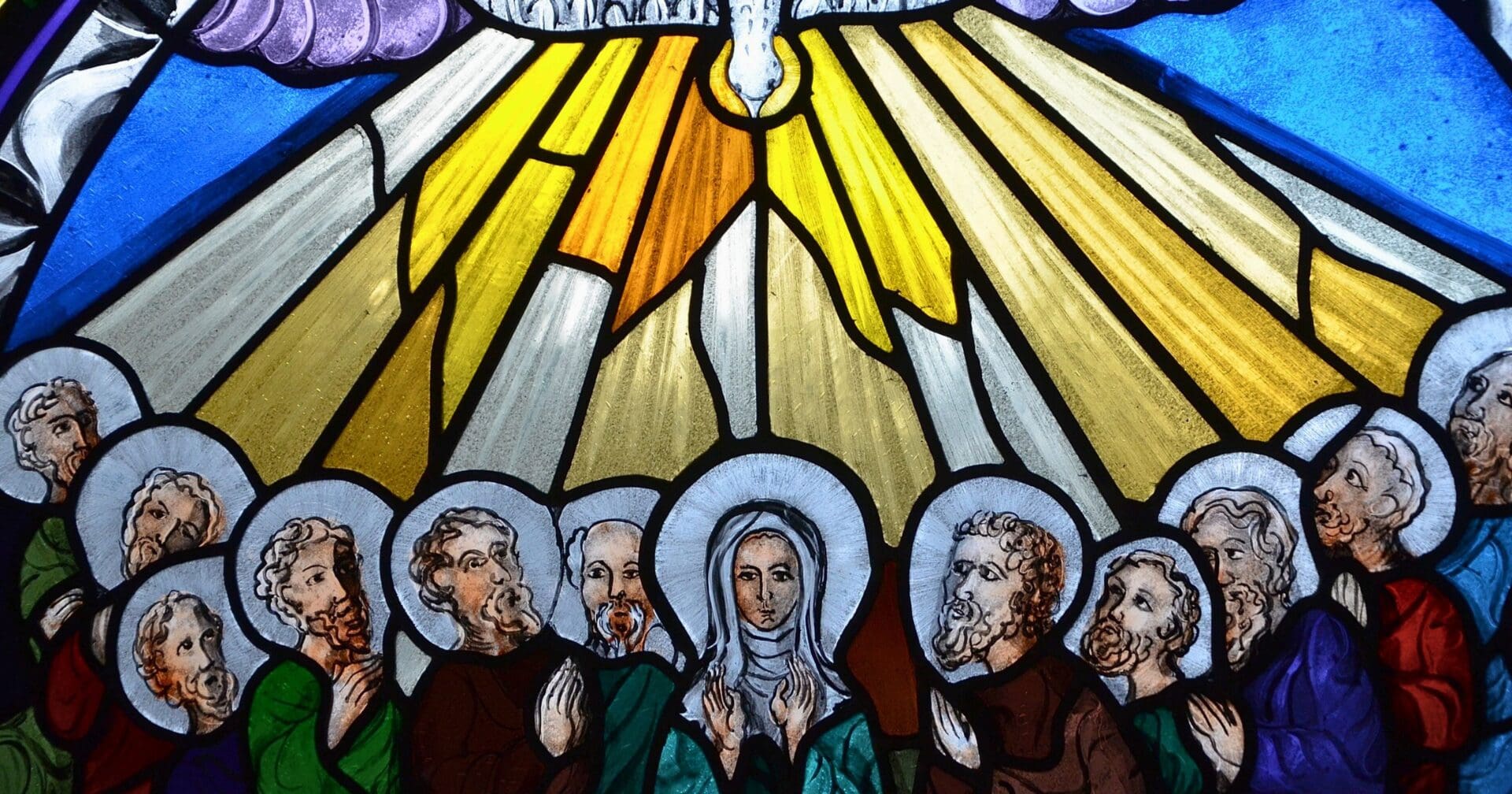
Pentecost Sunday is one of the most ancient feasts of the Church, celebrated early enough to be mentioned in the Acts of the Apostles (20:16) and St. Paul’s First Letter to the Corinthians (16:8). It is the 50th day after Easter (if we count both Easter and Pentecost), and it supplants the Jewish feast of Pentecost, which took place 50 days after the Passover and which celebrated the sealing of the Old Covenant on Mount Sinai.

The Acts of the Apostles recounts the story of the original Pentecost as well (Acts 2). Jews from all over were gathered in Jerusalem to celebrate the Jewish feast. On that Sunday, ten days after our Lord’s Ascension, the Apostles and the Blessed Virgin Mary were gathered in the Upper Room, where they had seen Christ after His Resurrection:

And suddenly there came a sound from heaven, as of a mighty wind coming, and it filled the whole house where they were sitting. And there appeared to them parted tongues as it were of fire, and it sat upon every one of them: And they were all filled with the Holy Ghost, and they began to speak with divers tongues, according as the Holy Ghost gave them to speak. [Acts 2:2-4]

Christ had promised His Apostles that He would sent His Holy Spirit, and, on Pentecost, they were granted the gifts of the Spirit. The Apostles began to preach the Gospel in all of the languages that the Jews who were gathered there spoke, and about 3,000 people were converted and baptized that day.

That is why Pentecost is often called “the birthday of the Church.” On this day, with the descent of the Holy Spirit, Christ’s mission is completed, and the New Covenant is inaugurated. It’s interesting to note that St. Peter, the first pope, was already the leader and spokesman for the Apostles on Pentecost Sunday (see Acts 2:14ff).

In years past, Pentecost was celebrated with greater solemnity than it is today. In fact, the entire period between Easter and Pentecost Sunday was known as Pentecost (and it still is called Pentecost in the Eastern churches, both Catholic and Orthodox). During those 50 days, both fasting and kneeling were strictly forbidden, because this period was supposed to give us a foretaste of the life of Heaven. In more recent times, parishes celebrated the approach of Pentecost with the public recitation of the Novena to the Holy Ghost.

Editorial credit: piosi / Shutterstock.com

Love uCATHOLIC?
Get our inspiring content delivered to your inbox every morning – FREE!

The post The Solemnity of Pentecost appeared first on uCatholic.

Daily Reading


Daily Meditation