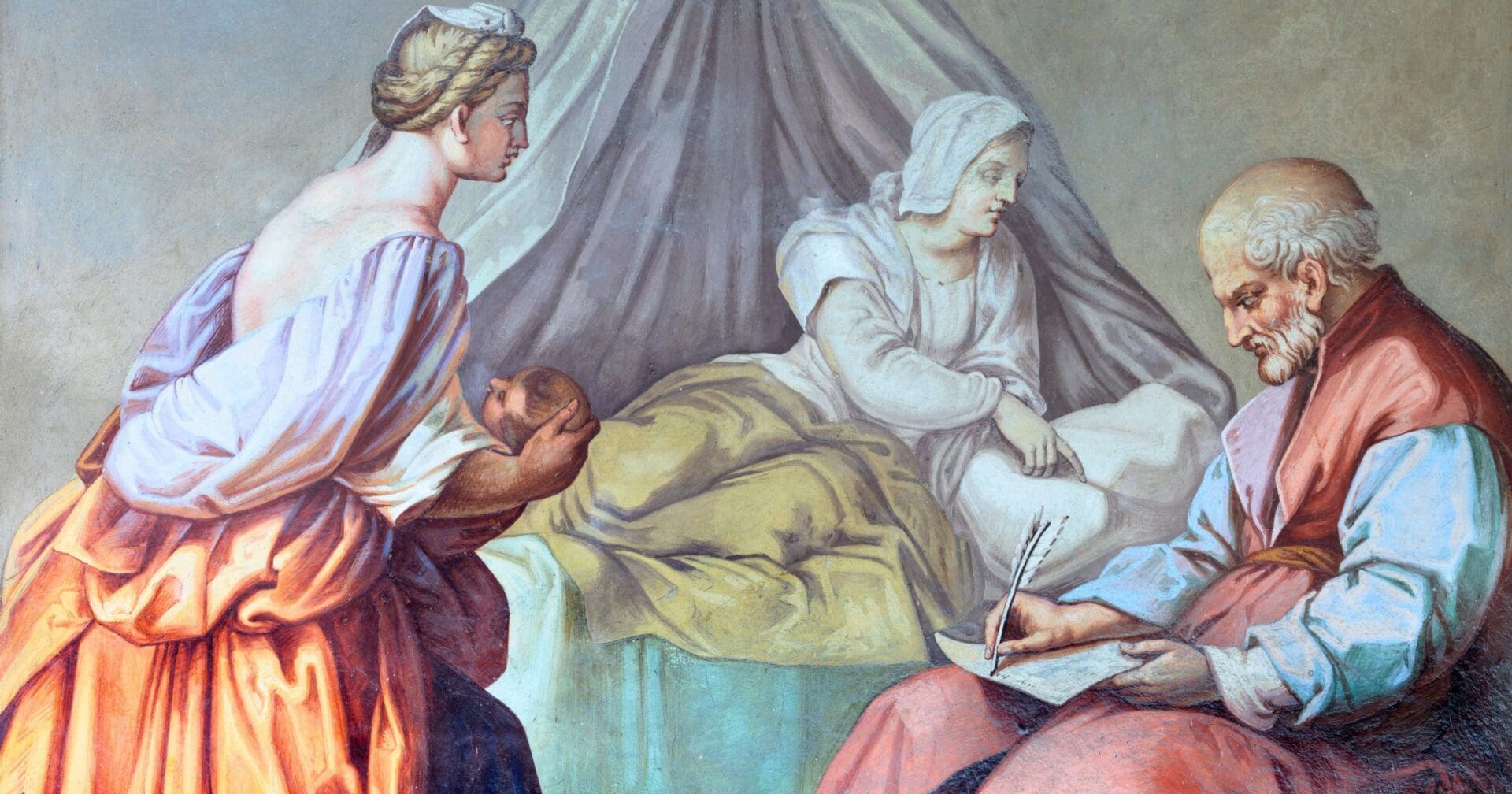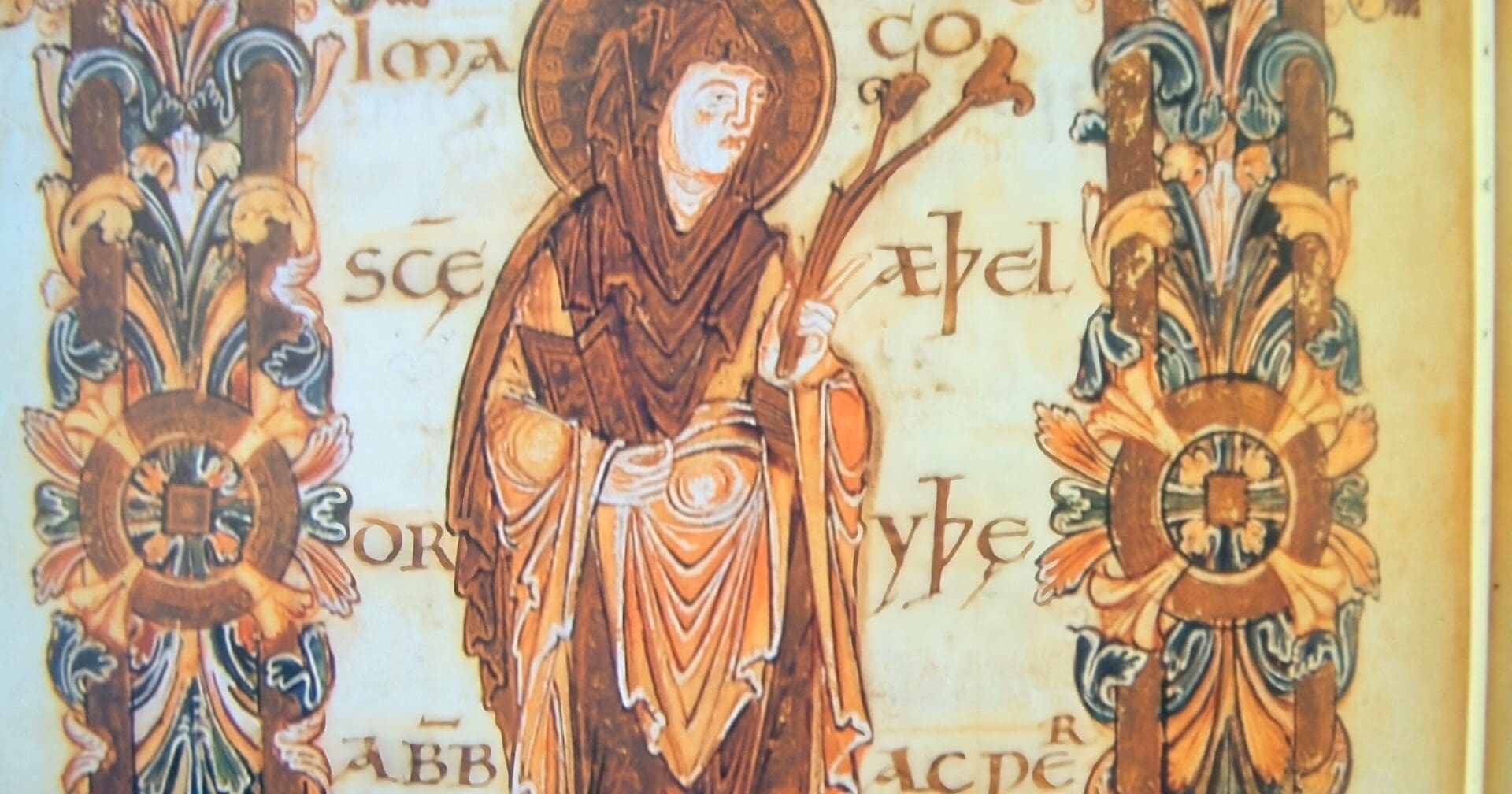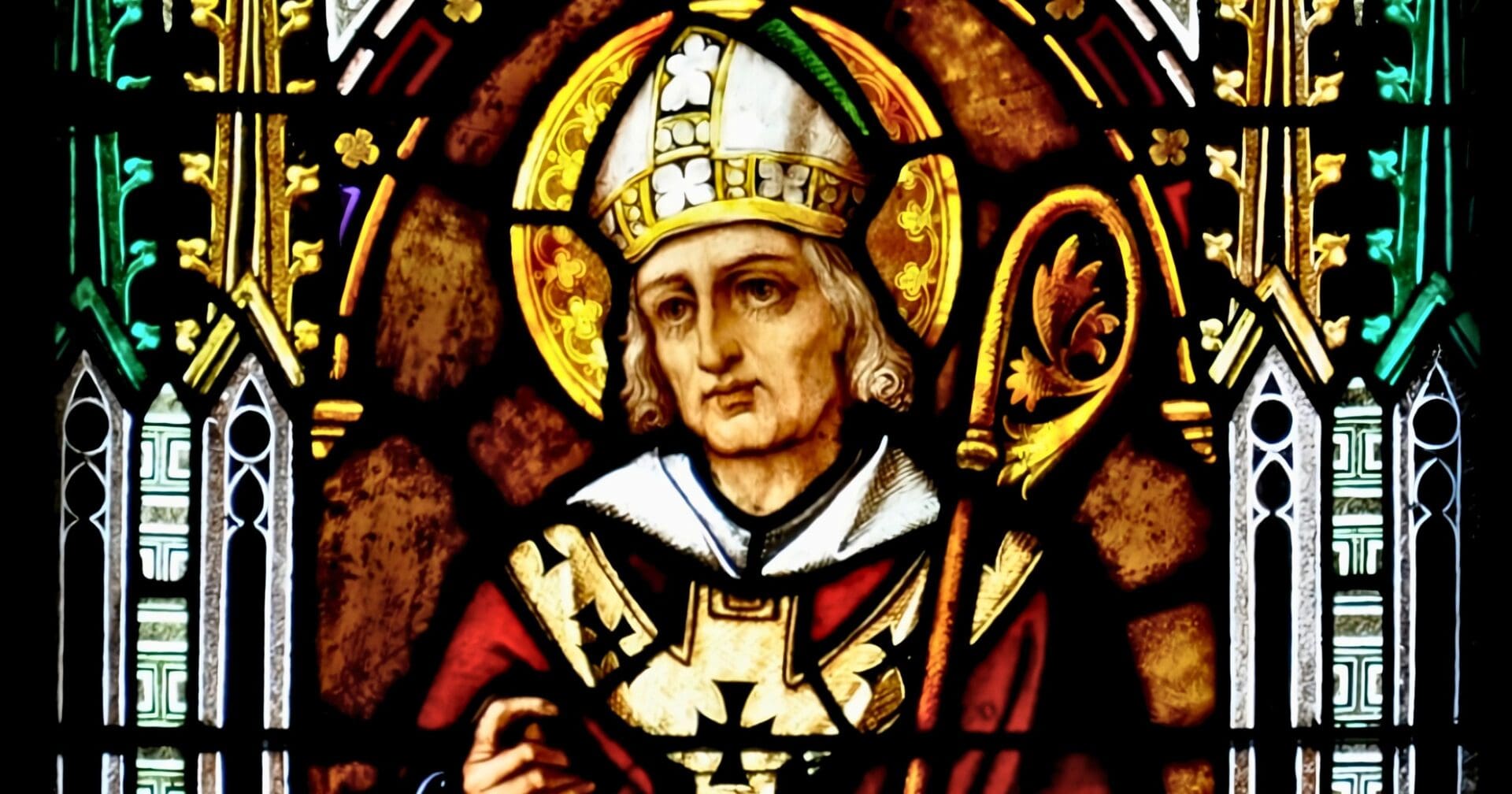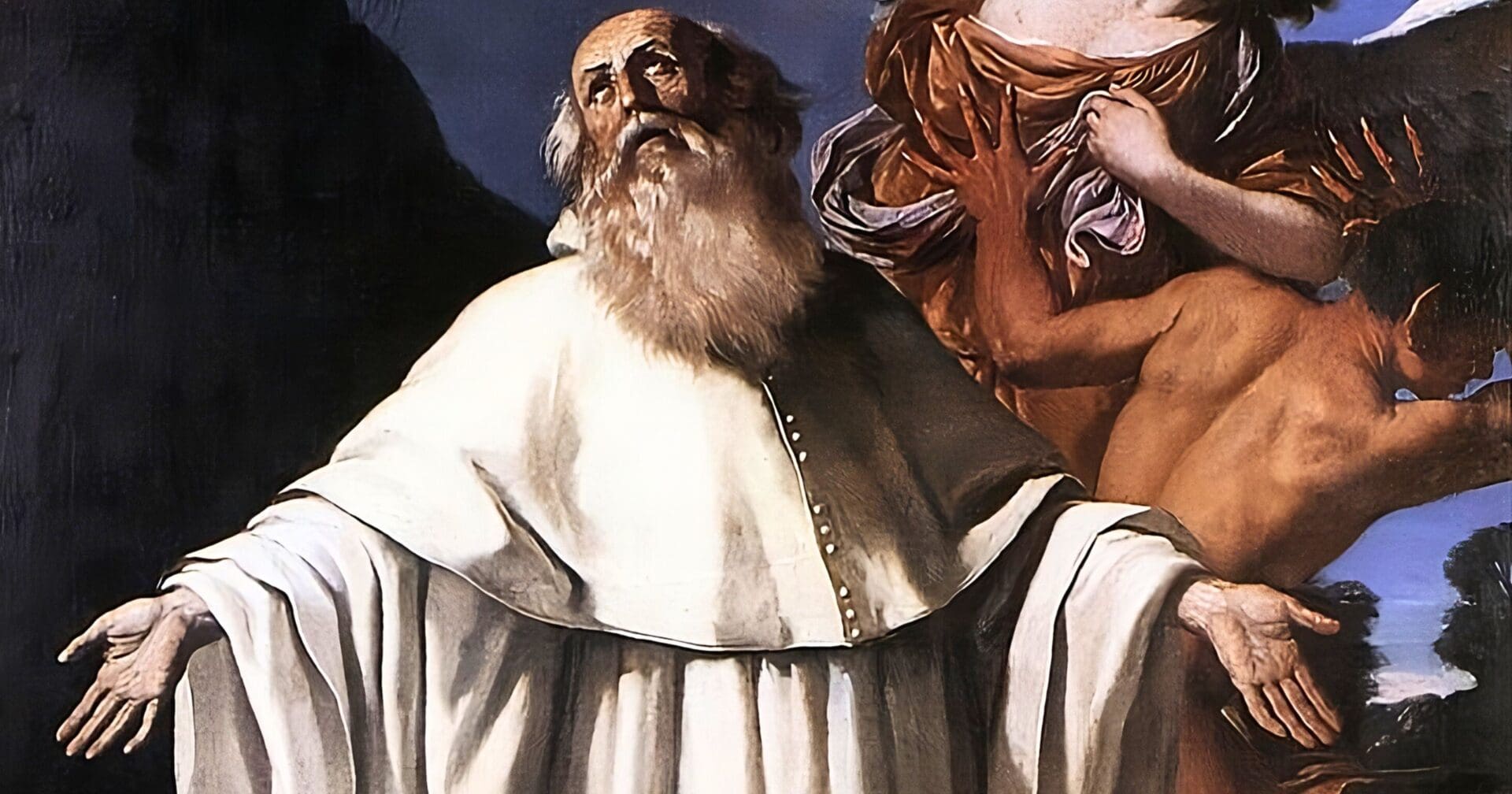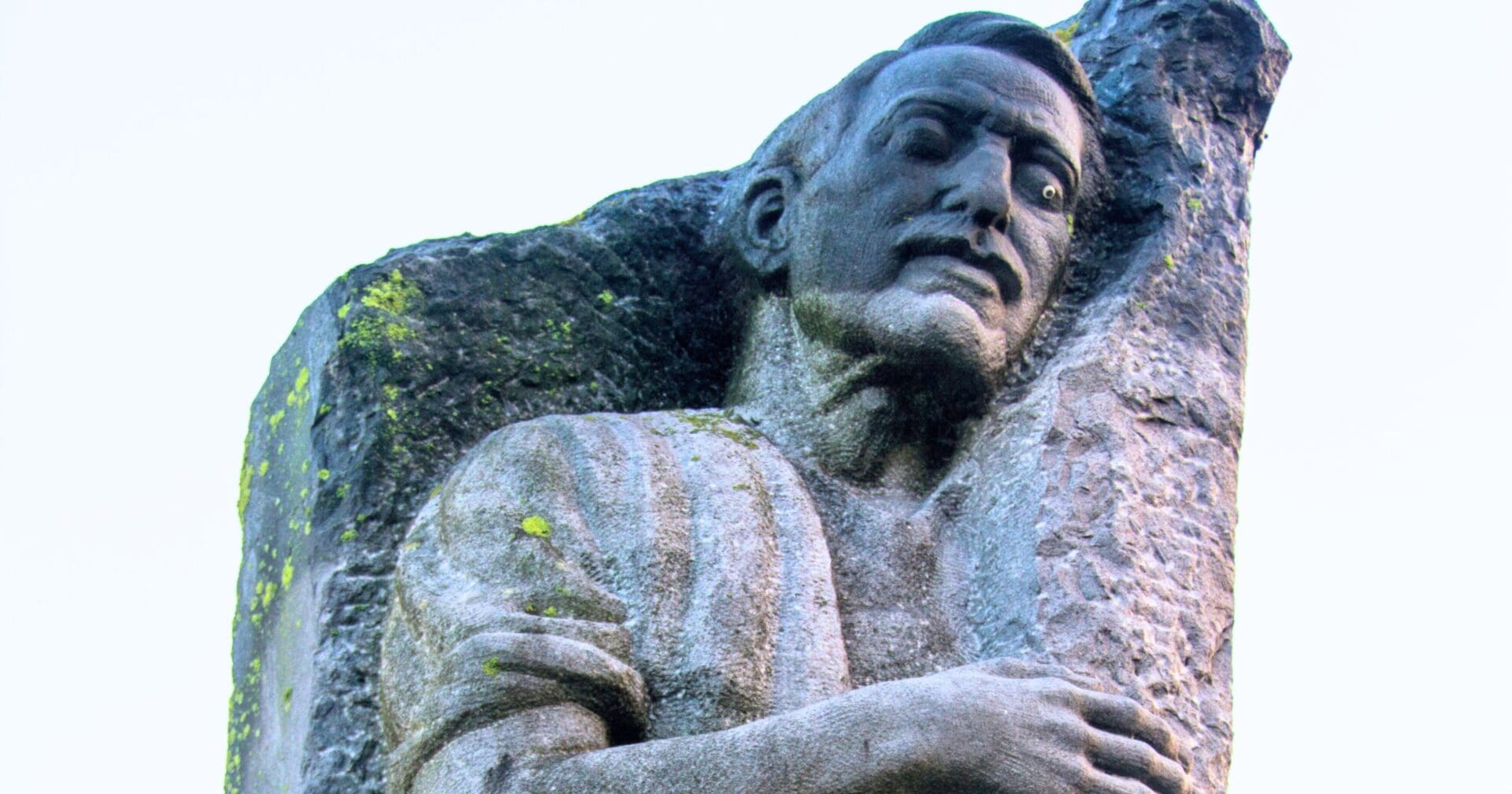

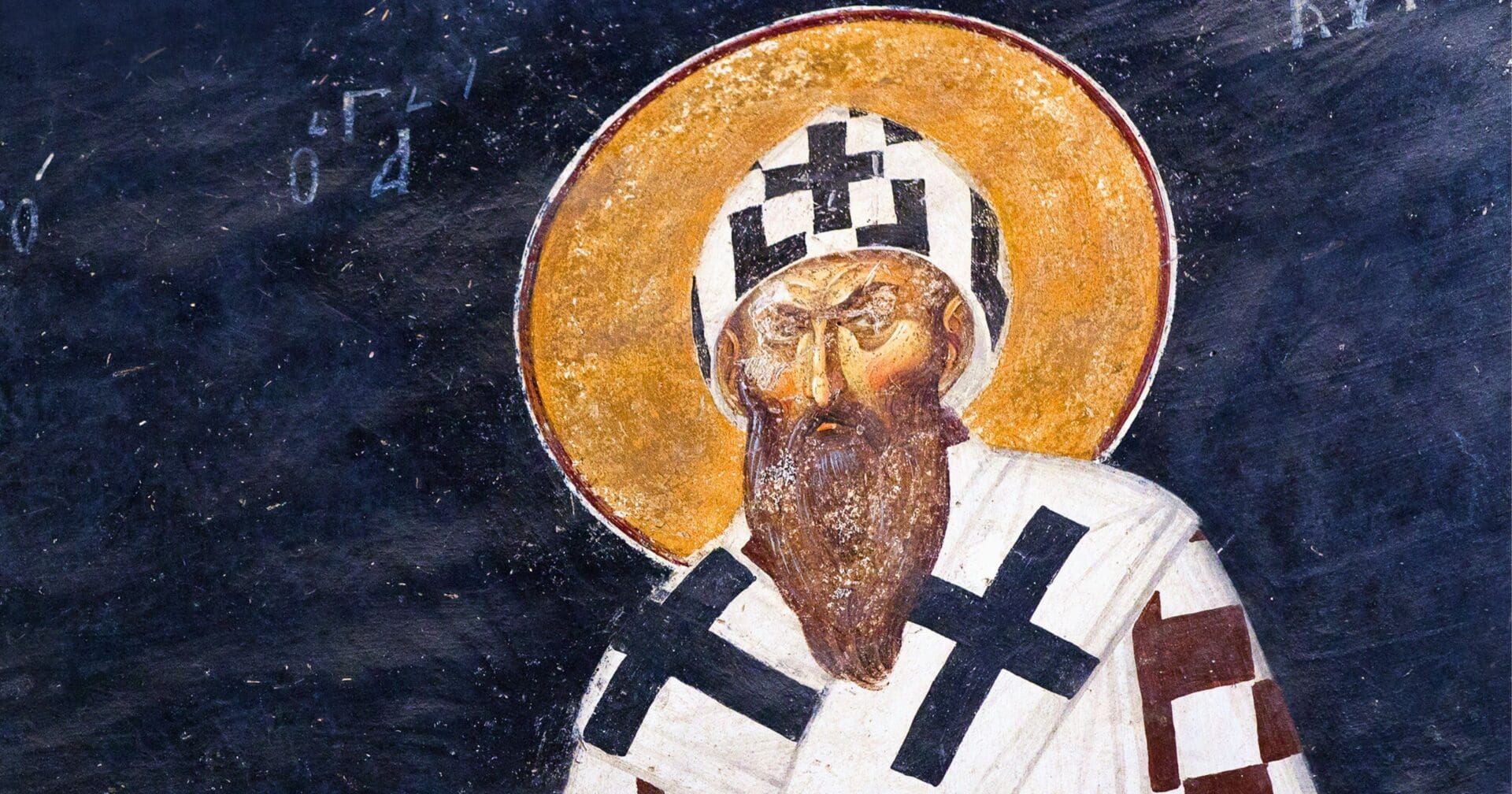
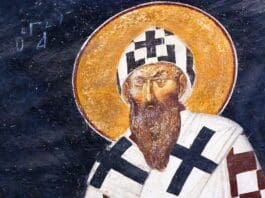
Saint Mary Cleophas, among the trio known as the “three Marys,” played a crucial role in the narratives of the New Testament. She was a steadfast follower of Christ, present during His crucifixion at Calvary and later visiting His tomb. Married to Saint Cleophas, who was Saint Joseph’s brother, she was also the mother of Saint James the Less.

In 47 AD, Saint Mary of Cleophas, along with several others, was forcibly placed on a boat by the Jews, deprived of sails and oars, and cast adrift at sea. Her voyage concluded in France, where she is said to have passed away. This extraordinary odyssey from Jerusalem to the French coast led to the naming of the landing spot as les Saintes-Maries-de-la-Mer, translating to “the Holy Marys of the Sea.” This name commemorates not only Saint Mary of Cleophas but also Saint Mary Magdalen and Saint Mary Salome, marking their shared legacy.

Photo credit: Public domain via Wikimedia Commons

Love uCATHOLIC?
Get our inspiring content delivered to your inbox every morning – FREE!

The post Saint Mary Cleophas appeared first on uCatholic.

Daily Reading

 

Daily Meditation


Marie Rose Julia Billiart, born to affluent farmers in Cuvilly, France, developed a fervent interest in religion and aiding the less fortunate from an early age. Early tranquility gave way to hardship when her family’s fortunes dwindled, propelling young Julie into manual labor while she continued to impart religious teachings to the youth and farmhands in her spare moments.

At around 30, a life-altering illness struck Julie following a traumatic incident aimed at her father, leaving her paralyzed and bedridden. From her bed, she continued her catechism teachings, dispensed spiritual guidance, and welcomed visitors drawn by her reputed sanctity.

The outbreak of the French Revolution in 1789 marked a perilous time for Julie, known for her support of persecuted priests. Friends smuggled her out of Cuvilly, concealed in a haycart. She endured years of concealment and pain in Compiegne, moving stealthily from one refuge to another and even temporarily losing her speech.

Despite these trials, Julie experienced profound spiritual growth, envisioning a future where she would lead a community of religious women dedicated to the cross. Her path crossed with Francoise Blin de Bourdon, an aristocratic woman with similar educational aspirations. Together, in 1803, they founded the Institute of Notre Dame, focusing on the education of the impoverished, Christian youth, and catechist training. The subsequent year, the institute’s first vows were taken, coinciding remarkably with Julie’s miraculous recovery from her decades-long paralysis.

Julie, while prioritizing aid for the impoverished, recognized the need for Christian education across all societal levels. From the inception of the Sisters of Notre Dame to her demise, Julie tirelessly established schools across France and Belgium for diverse groups, including the indigent and the affluent, vocational learners, and educators. The motherhouse eventually found its home in Namur, Belgium, where Julie passed away in 1816, leaving a legacy of compassion and education. Her sanctity was formally recognized in 1969 with her canonization.

Photo credit: Nheyob via Wikimedia Commons

Love uCATHOLIC?
Get our inspiring content delivered to your inbox every morning – FREE!

The post Saint Julie Billiart appeared first on uCatholic.

Daily Reading


Daily Meditation


Saint John Baptist de La Salle’s life was a testament to his unwavering commitment to what he believed was his divine calling. In 1950, his pioneering efforts in education earned him the title of patron of schoolteachers by Pope Pius XII. Born into privilege in 17th century France—equipped with intellect, looks, noble lineage, wealth, and a refined upbringing—John seemed destined for a comfortable, prestigious life within the Church. At 11, he embarked on his clerical journey with the tonsure, leading to priesthood at 27.

However, destiny had a different path. A serendipitous encounter with M. Nyel of Raven sparked an interest in educating poor boys in Raven, igniting a passion that would redefine his life. Initially repelled by the work, his dedication deepened, eventually seeing it as his divine duty. This realization prompted him to forsake his wealth, status, and comfort to live among and serve the impoverished, marking a dramatic pivot in his life’s direction.

John’s legacy is inseparable from the Brothers of the Christian Schools, a religious community he founded, which flourished under his guidance. They revolutionized education for the poor, established the first teacher training college, and provided for juvenile delinquents from affluent backgrounds. His drive was fueled by a desire to cultivate devout Christians.

Despite his achievements, John’s journey was marred by challenges: he faced disillusionment and desertions within his ranks, encountered fierce resistance from traditional educators threatened by his innovative methods, and battled against the Jansenists’ austere outlook on morality and human nature—a battle he fought tirelessly.

In his final years, plagued by asthma and rheumatism, John passed away on Good Friday at the age of 68. His canonization in 1900 was a fitting tribute to a life of profound impact and selfless dedication to education and faith.

Photo credit: SVpellicom via Wikimedia Commons

Love uCATHOLIC?
Get our inspiring content delivered to your inbox every morning – FREE!

The post Saint John Baptist de La Salle appeared first on uCatholic.

Daily Reading


Daily Meditation


In 1682, within a modest town near Augsburg, Crescentia Hoess was born to a humble weaver. Her childhood was marked by an unusual devotion; she found solace in prayer at her parish church, offered assistance to those less fortunate, and displayed such an understanding of her faith that she was granted the rare privilege of receiving Holy Communion at the age of seven. Her saintly demeanor earned her the moniker “the little angel” among townsfolk.

With age, Crescentia’s aspiration to join the Tertiaries of St. Francis convent grew, despite her lack of a dowry making her admission seem impossible. The intervention of the town’s Protestant mayor, to whom the convent was indebted, reluctantly secured her entry. Initially, her presence was deemed a nuisance, and she was relegated to menial chores, her buoyant spirit mistaken for insincerity.

A pivotal change occurred four years later with the election of a new superior who recognized Crescentia’s virtues. Her elevation to mistress of novices was a testament to her character, and her eventual unanimous election as superior following the predecessor’s death highlighted her profound impact. Under her guidance, the convent’s financial woes were alleviated, and her spiritual counsel became sought after by high-ranking individuals, reflecting her humble yet influential nature.

Crescentia’s life, however, was a testament to endurance through physical sufferings, from relentless headaches and toothaches to a crippling condition that contorted her body. Yet, she embraced her afflictions with a Franciscan spirit, finding in them a reason to praise. Her death on Easter Sunday in 1744 was a peaceful conclusion to a life of joy amidst suffering.

Beatified in 1900 and canonized in 2001 by Pope John Paul II.

Photo credit: Public Domain via Wikimedia Commons

Love uCATHOLIC?
Get our inspiring content delivered to your inbox every morning – FREE!

The post Saint Crescentia Hoess appeared first on uCatholic.

Daily Reading


Daily Meditation


Easter Sunday

Christ is risen from the dead! Dying, he conquered death; To the dead, he has given life!

Easter is the principal feast of the ecclesiastical year. Leo I (Sermo xlvii in Exodum) calls it the greatest feast (festum festorum), and says that Christmas is celebrated only in preparation for Easter. It is the center of the greater part of the ecclesiastical year.

Photo credit: Public Domain via Wikimedia Commons

Love uCATHOLIC?
Get our inspiring content delivered to your inbox every morning – FREE!

The post Easter Sunday appeared first on uCatholic.

Daily Reading


Daily Meditation


Vincent Ferrer, born on January 23, 1357, in Valencia, Spain, emerged as a cornerstone in the Church’s edifice, renowned for his dynamic contribution to its reinforcement. His entry into the Dominican Order in 1374 marked the beginning of a life dedicated to spiritual austerity and ecclesiastical leadership, quickly ascending to the role of prior in Valencia post-ordination.

Ferrer’s early years were marked by a dual commitment to academia and evangelism. After taking vows, he ventured into philosophy, teaching in Barcelona before earning his doctorate in Lerida, Catalonia’s esteemed university town. This period in Valencia honed his spiritual discipline, setting the stage for a broader mission field that would define his legacy.

The Western Schism, splitting the Christian world between two, later three, Popes, tested Ferrer’s allegiances. Initially siding with Avignon’s Clement VII over Rome’s Urban VI, Ferrer’s convictions mirrored the schism’s divisive spirit. His tenure under Cardinal Pedro de Luna, who ascended as Pope Benedict XIII at Avignon, deepened his involvement in the ecclesiastical maelstrom. Despite efforts, Ferrer’s attempts to mend the schism under Benedict’s papacy fell short, leading to a poignant estrangement from his one-time mentor and friend.

Ferrer’s apostolic zeal flourished post-schism, dedicating two decades to missionary work across Western Europe. His preaching, marked by fervor and urgency, underscored repentance and the imminence of judgment. Dubbed the “Angel of the Judgment,” Ferrer’s ministry catalyzed countless conversions, underpinned by miraculous signs. Witnessing the schism’s resolution and Martin V’s election, Ferrer’s journey concluded on April 5, 1419, leaving a legacy celebrated annually on his feast day, April 5.

Editorial credit: Renata Sedmakova / Shutterstock.com

Love uCATHOLIC?
Get our inspiring content delivered to your inbox every morning – FREE!

The post Saint Vincent Ferrer appeared first on uCatholic.

Daily Reading


Daily Meditation


“What is happening? Today there is a great silence over the earth, a great silence, and stillness, a great silence because the King sleeps; the earth was in terror and was still, because God slept in the flesh and raised up those who were sleeping from the ages. God has died in the flesh, and the underworld has trembled.

Truly he goes to seek out our first parent like a lost sheep; he wishes to visit those who sit in darkness and in the shadow of death. He goes to free the prisoner Adam and his fellow-prisoner Eve from their pains, he who is God, and Adam’s son.

The Lord goes in to them holding his victorious weapon, his cross. When Adam, the first created man, sees him, he strikes his breast in terror and calls out to all: ‘My Lord be with you all.’ And Christ in reply says to Adam: ‘And with your spirit.’ And grasping his hand he raises him up, saying: ‘Awake, O sleeper, and arise from the dead, and Christ shall give you light.

‘I am your God, who for your sake became your son, who for you and your descendants now speak and command with authority those in prison: Come forth, and those in darkness: Have light, and those who sleep: Rise.

‘I command you: Awake, sleeper, I have not made you to be held a prisoner in the underworld. Arise from the dead; I am the life of the dead. Arise, O man, work of my hands, arise, you who were fashioned in my image. Rise, let us go hence; for you in me and I in you, together we are one undivided person.

‘For you, I your God became your son; for you, I the Master took on your form; that of slave; for you, I who am above the heavens came on earth and under the earth; for you, man, I became as a man without help, free among the dead; for you, who left a garden, I was handed over to Jews from a garden and crucified in a garden.

‘Look at the spittle on my face, which I received because of you, in order to restore you to that first divine inbreathing at creation. See the blows on my cheeks, which I accepted in order to refashion your distorted form to my own image.

‘See the scourging of my back, which I accepted in order to disperse the load of your sins which was laid upon your back. See my hands nailed to the tree for a good purpose, for you, who stretched out your hand to the tree for an evil one.

`I slept on the cross and a sword pierced my side, for you, who slept in paradise and brought forth Eve from your side. My side healed the pain of your side; my sleep will release you from your sleep in Hades; my sword has checked the sword which was turned against you.

‘But arise, let us go hence. The enemy brought you out of the land of paradise; I will reinstate you, no longer in paradise, but on the throne of heaven. I denied you the tree of life, which was a figure, but now I myself am united to you, I who am life. I posted the cherubim to guard you as they would slaves; now I make the cherubim worship you as they would God.

“The cherubim throne has been prepared, the bearers are ready and waiting, the bridal chamber is in order, the food is provided, the everlasting houses and rooms are in readiness; the treasures of good things have been opened; the kingdom of heaven has been prepared before the ages.”

A reading from an ancient homily for Holy Saturday – http://www.vatican.va/spirit/documents/spirit_20010414_omelia-sabato-santo_en.html

Photo credit: Zvonimir Atletic / Shutterstock

Love uCATHOLIC?
Get our inspiring content delivered to your inbox every morning – FREE!

The post Holy Saturday appeared first on uCatholic.

Daily Reading


Daily Meditation


Benedict the Moor, born into slavery near Messina, Italy, in 1526, embarked on an extraordinary life journey that led him from bondage to sainthood. The son of African slaves, Benedict gained his freedom at 18 and initially took up farming, proudly owning a pair of oxen he acquired through his savings. His life took a turn towards spirituality as he chose solitude, eventually joining a community of hermits on Montepellegrino.

Despite his humble beginnings and lack of formal education, Benedict’s leadership qualities shone through, leading to his appointment as the superior of his hermit community. However, a decree from Pope Pius IV saw him transition into a Franciscan lay brother, where he humbly served as a cook at St. Mary’s convent near Palermo.

Benedict’s life took another unexpected turn when he was named the convent’s superior during a period of reform, a position he accepted reluctantly. Later, he served as a novice master, a role he requested to be relieved from to return to his preferred duty in the kitchen.

Despite his desire for a simple life, Benedict’s reputation for sanctity and miracles made him a sought-after figure, attracting countless visitors. His death at the convent marked the end of a life characterized by humility, devotion, and miraculous deeds. Canonized in 1807, Benedict the Moor is venerated as a patron saint of African-Americans, leaving behind a legacy that continues to inspire. King Philip III of Spain, recognizing his sanctity, funded a special tomb for this revered friar.

Photo credit: Luis Fraga / Shutterstock.com

Love uCATHOLIC?
Get our inspiring content delivered to your inbox every morning – FREE!

The post Saint Benedict the Moor appeared first on uCatholic.

Daily Reading


Daily Meditation


Good Friday sits solemnly within Holy Week, a day marked by fasting and penance, reflecting on Christ’s crucifixion and death. For believers, this day isn’t merely a historical remembrance but a profound contemplation on the sacrifice of Christ, central to Christian faith. The Catholic Catechism encapsulates this, attributing our justification to Christ’s Passion, where he, as a living sacrifice, pleasing to God, atones for humanity’s sins with his blood (CCC 1992), echoing St. Paul’s words on grace, redemption, and faith in Christ’s expiation (Romans 3:24-25).

This day’s customs and prayers deeply engage with the theme of Christ’s sacrificial love. From sunset on Good Friday, the Paschal Triduum’s second day begins. The primary services occur in the afternoon, around 3:00 PM, symbolizing the hour of Jesus’ passing. Western traditions for observing Good Friday include the Passion reading or singing from St. John’s gospel, particularly covering John 18:1-19:42 in the Catholic Church. Another widespread practice is the Veneration of the Cross, where the faithful show reverence to a wooden cross through kneeling or kissing.

The day also observes the “Mass of the Pre-Sanctified,” since no Masses are celebrated on Good Friday or Holy Saturday. Thus, the Eucharist from Maundy Thursday’s Mass is used. The Stations of the Cross, or the “Way of the Cross,” is a devotion commemorating fourteen events leading up to Jesus’ death, marked by stations throughout many Catholic churches.

Less common now, the “Tre Ore” or “Three Hours” service reflects on the seven last words of Christ, a tradition initiated by Jesuit Alphonso Messia in 1732 and embraced by many Protestant churches. Good Friday, alongside Ash Wednesday, remains a day of official fast in the Catholic Church.

The Eastern Churches observe “the Great Friday” with distinctive customs. The day starts with Matins, featuring the “Twelve Gospels” reading. The “Little Hours” follow, culminating in Vespers with the veneration of the epitaphion and concluding with Compline’s lamentation.

A symbolic burial of Christ is performed on Good Friday night. In some traditions, the customary greeting of “peace be with you” is replaced due to its association with Judas’ betrayal. In Russia, a silver coffin with a painted image of Christ is venerated by the faithful.

The practice of Good Friday observance traces back to ancient times, with some customs documented as early as the 4th century by Egeria. Its evolution into a day of penance and fasting commemorates Christ’s death, with the name “Good Friday” possibly originating from “God’s Friday.” The veneration of the cross likely began in Jerusalem between the 7th and 8th centuries, with references to pre-sanctified Masses dating back to the Quinisext Council in AD 692.

Good Friday’s observance transcends Catholic and Eastern Orthodox Christians, with Anglicans, Methodists, and Lutherans also marking the day in reverence and reflection.

Photo credit: jorisvo / Shutterstock.com

Love uCATHOLIC?
Get our inspiring content delivered to your inbox every morning – FREE!

The post Good Friday appeared first on uCatholic.

Daily Reading


Daily Meditation


On April 3, 304, in Thessalonica, Macedonia, the world witnessed the martyrdom of Saints Agape, Chionia, and Irene, three sisters who paid the ultimate price for their unwavering faith. A document from that era narrates their story, preserving their legacy.

The backdrop to their martyrdom was a decree by Emperor Diocletian in 303, criminalizing the possession of Christian scriptures. This decree placed the sisters in dire straits. Agape, Chionia, and Irene, daughters of pagan parents in Salonika, had hidden several sacred texts. Their devotion to these texts was profound; they lamented the lost opportunity to engage with them freely.

Their arrest wasn’t for the hidden scriptures but for their refusal to consume food sacrificed to pagan gods. Brought before Governor Dulcetius, they were interrogated. Agape spoke, embodying their steadfast faith: “I believe in the living God, and will not by an evil action lose all the merit of my past life.”

Agape and Chionia faced the death sentence, condemned to be burned alive. Irene, due to her youth, initially received a sentence of imprisonment. The execution of her sisters led to a search of their residence, uncovering the concealed scriptures.

Irene’s fate took a dark turn. Sent to a brothel for soldiers, she was subjected to indignities but remained untouched, a testament to her protected state. Her refusal to renounce her faith led to her execution, believed to be either by self-immolation or more likely, an arrow to the throat. The scriptures she and her sisters cherished were destroyed in a public spectacle.

Their feast is April 3rd.

Photo credit: Public Domain via Wikimedia Commons

Love uCATHOLIC?
Get our inspiring content delivered to your inbox every morning – FREE!

The post Saints Agape, Chionia, and Irene appeared first on uCatholic.

Daily Reading


Daily Meditation