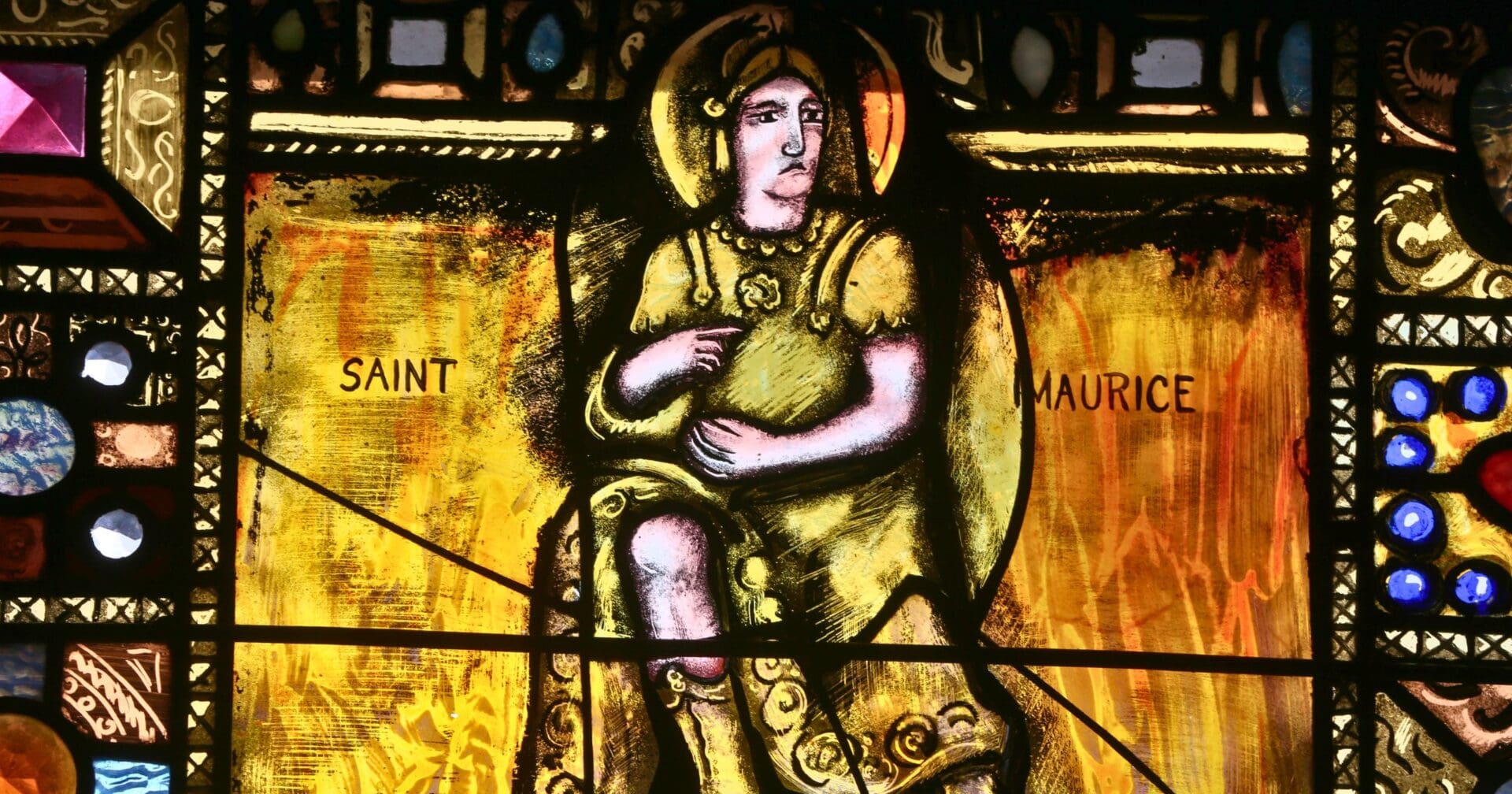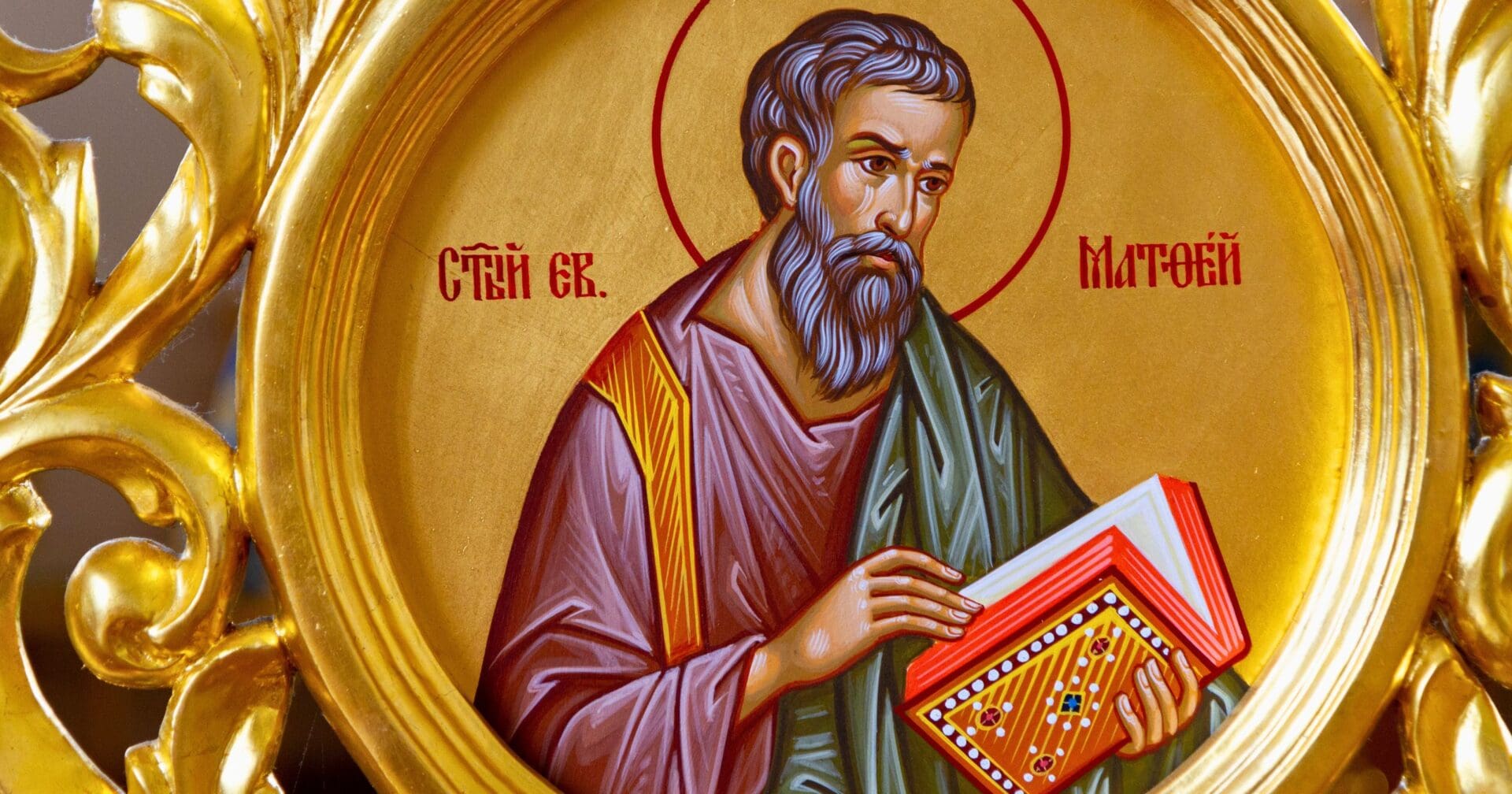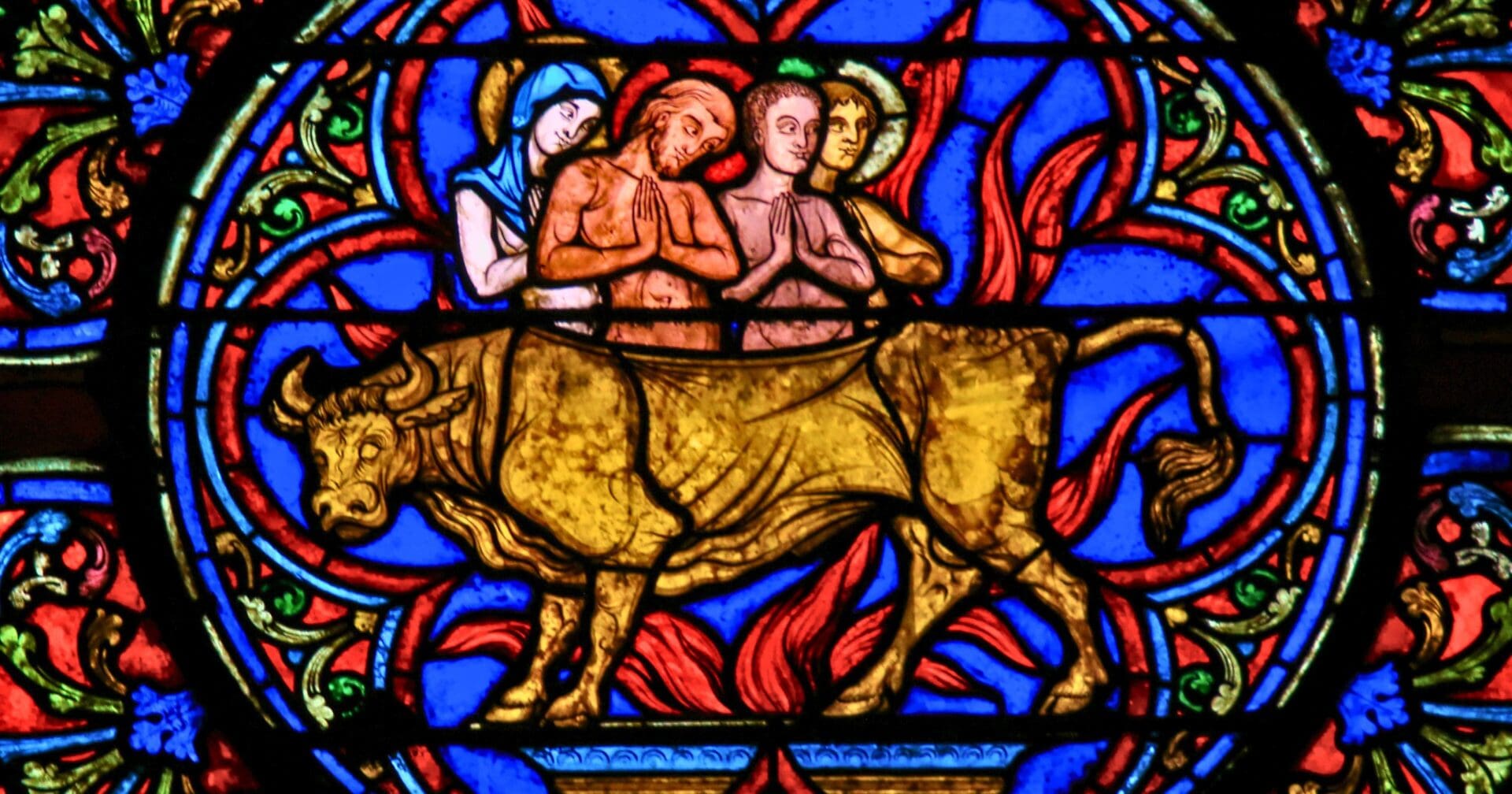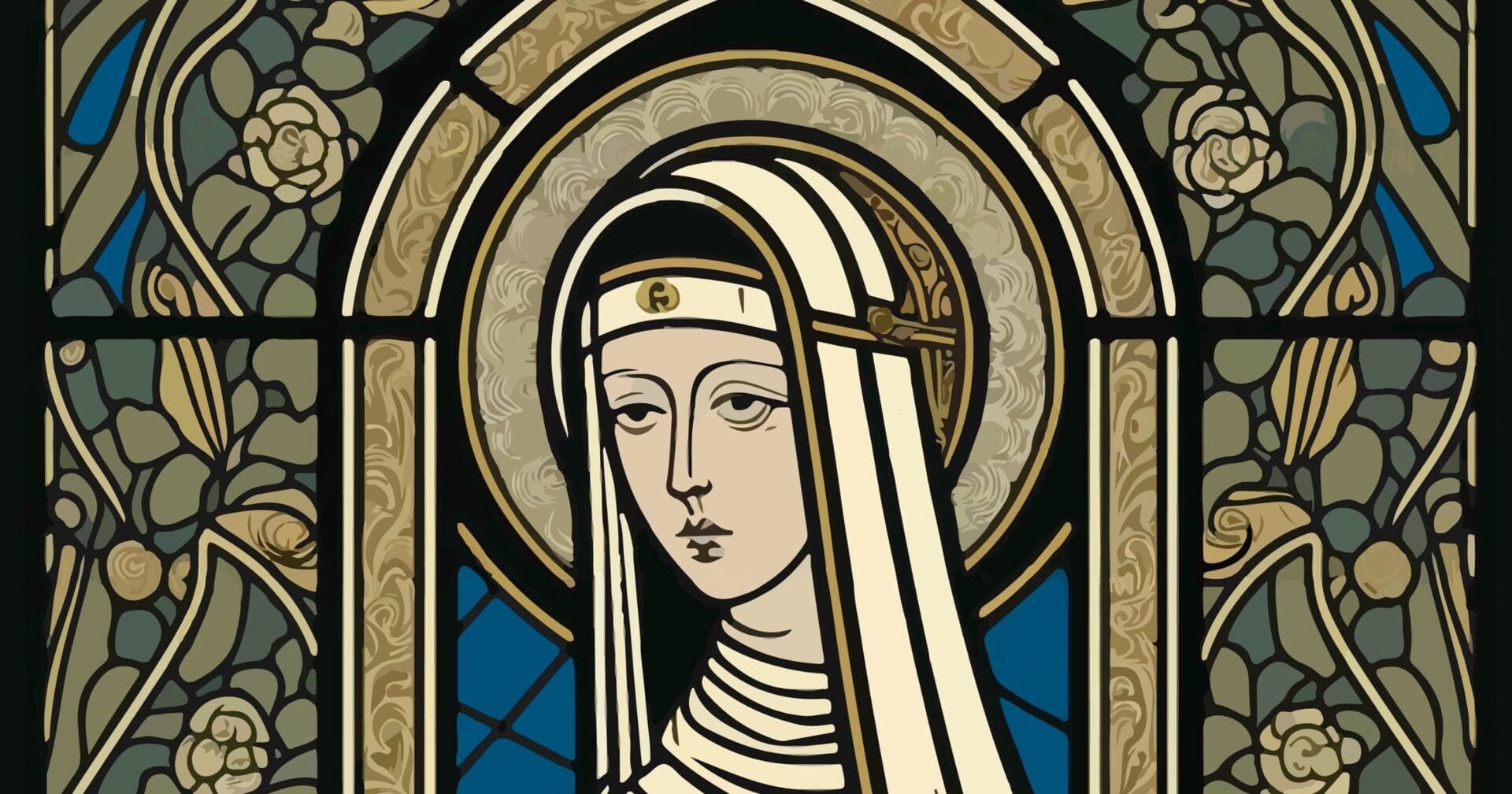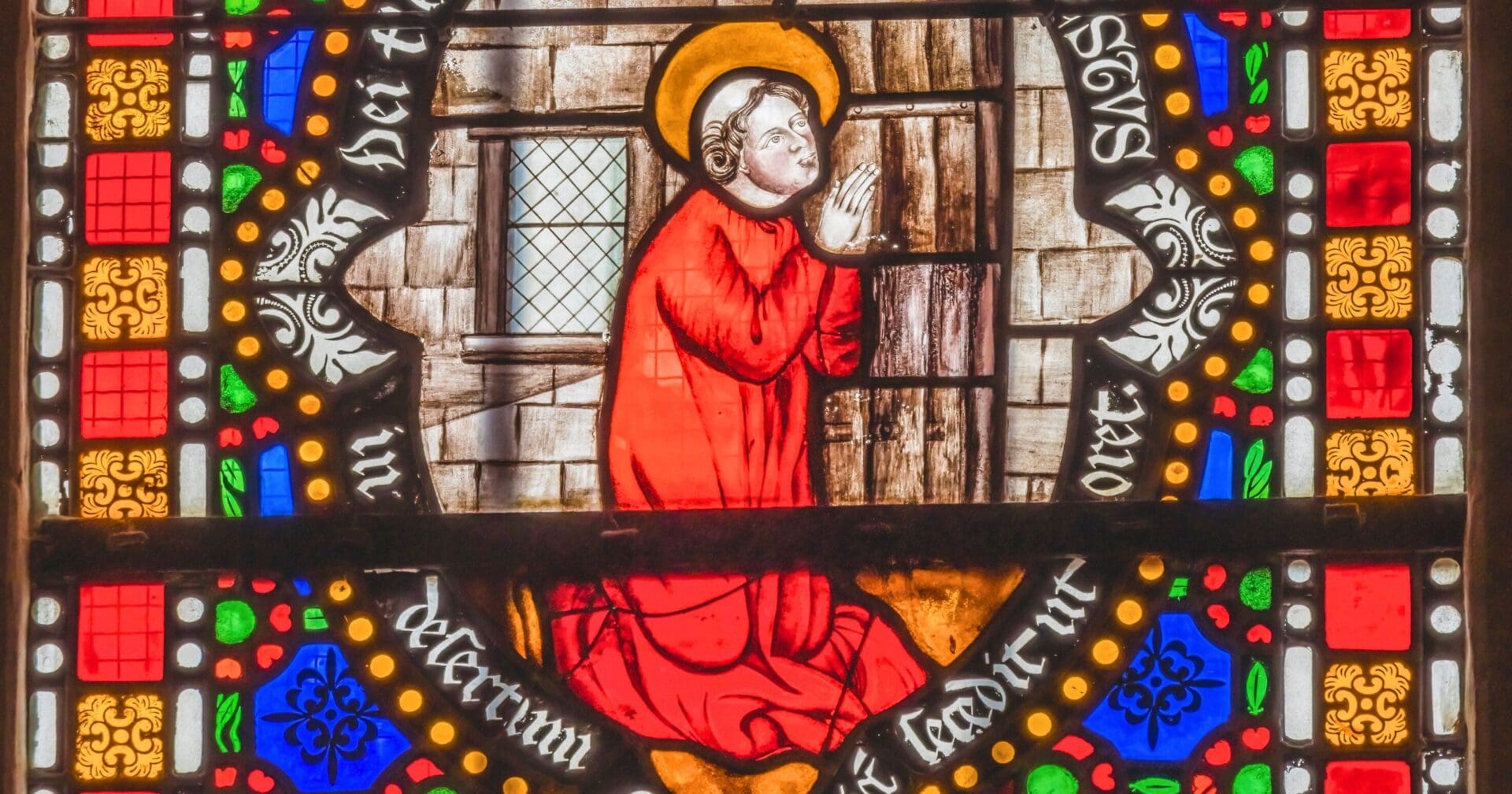

Saint Joanna was the wife of Chuza, Herod’s steward (Lk. 8:3) and a disciple of Jesus, and mentioned in Luke (8.3) as providing for Jesus and the Apostles. According to Eastern tradition, when Herod had John the Baptist beheaded, he cast the head out into an unclean place. Joanna took the head and buried it with honour on the Mount of Olives, on Herod’s land. Later, in the reign of Constantine the Great, the head was found.

St. Joanna is also remembered because she was present at both the Passion and Resurrection of Christ. St. Joanna is one of the women Luke says (24.10) discovered the empty tomb on the first Easter when she went to anoint the body. She is especially venerated by the Jesuits.

Photo credit: Public Domain via Wikimedia Commons

Love uCATHOLIC?
Get our inspiring content delivered to your inbox every morning – FREE!

The post Saint Joanna appeared first on uCatholic.

Daily Reading

 

Daily Meditation


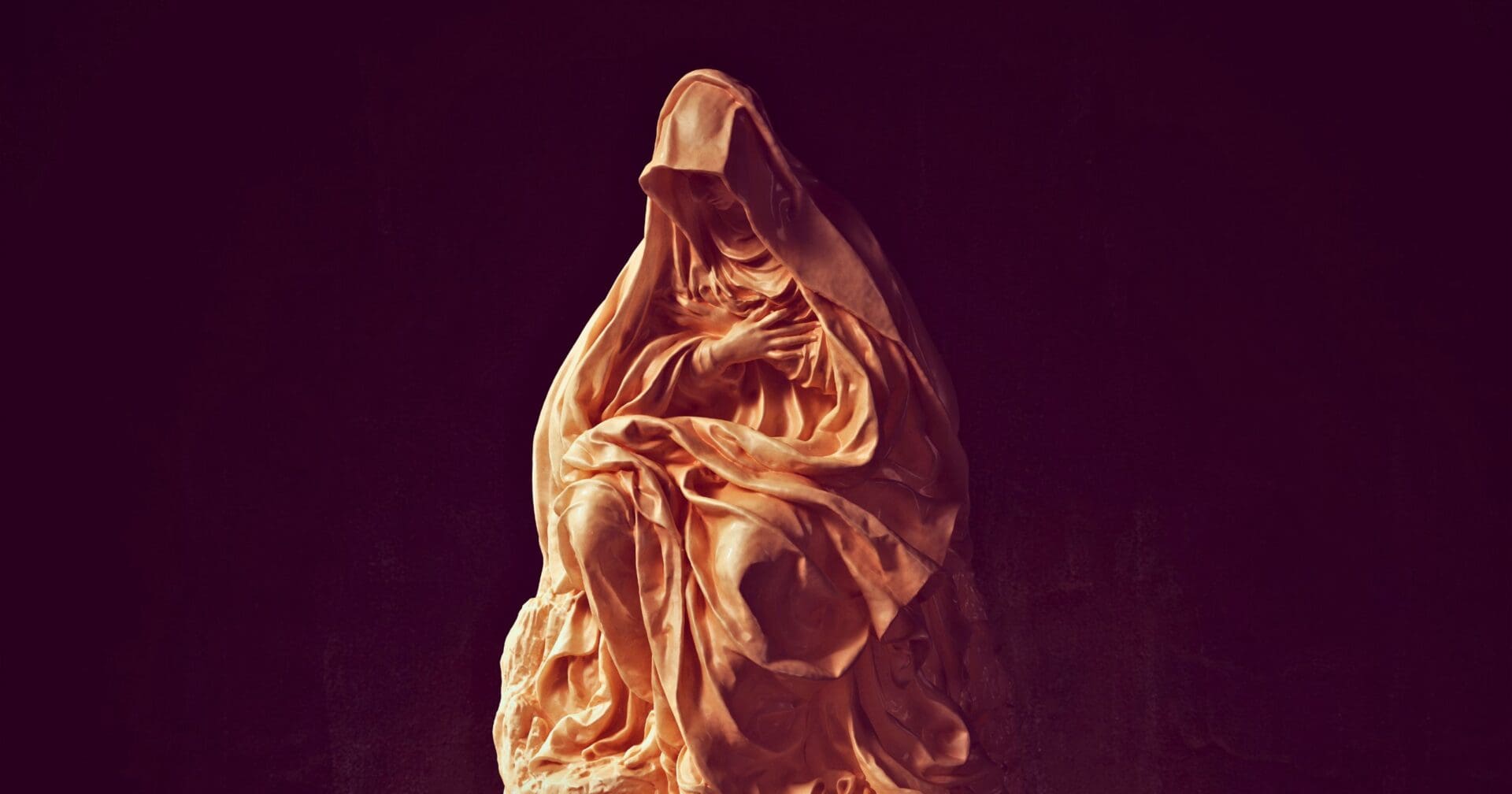
Pentecost Sunday is one of the most ancient feasts of the Church, celebrated early enough to be mentioned in the Acts of the Apostles (20:16) and St. Paul’s First Letter to the Corinthians (16:8). It is the 50th day after Easter (if we count both Easter and Pentecost), and it supplants the Jewish feast of Pentecost, which took place 50 days after the Passover and which celebrated the sealing of the Old Covenant on Mount Sinai.

The Acts of the Apostles recounts the story of the original Pentecost as well (Acts 2). Jews from all over were gathered in Jerusalem to celebrate the Jewish feast. On that Sunday, ten days after our Lord’s Ascension, the Apostles and the Blessed Virgin Mary were gathered in the Upper Room, where they had seen Christ after His Resurrection:

And suddenly there came a sound from heaven, as of a mighty wind coming, and it filled the whole house where they were sitting. And there appeared to them parted tongues as it were of fire, and it sat upon every one of them: And they were all filled with the Holy Ghost, and they began to speak with divers tongues, according as the Holy Ghost gave them to speak. [Acts 2:2-4]

Christ had promised His Apostles that He would sent His Holy Spirit, and, on Pentecost, they were granted the gifts of the Spirit. The Apostles began to preach the Gospel in all of the languages that the Jews who were gathered there spoke, and about 3,000 people were converted and baptized that day.

That is why Pentecost is often called “the birthday of the Church.” On this day, with the descent of the Holy Spirit, Christ’s mission is completed, and the New Covenant is inaugurated. It’s interesting to note that St. Peter, the first pope, was already the leader and spokesman for the Apostles on Pentecost Sunday (see Acts 2:14ff).

In years past, Pentecost was celebrated with greater solemnity than it is today. In fact, the entire period between Easter and Pentecost Sunday was known as Pentecost (and it still is called Pentecost in the Eastern churches, both Catholic and Orthodox). During those 50 days, both fasting and kneeling were strictly forbidden, because this period was supposed to give us a foretaste of the life of Heaven. In more recent times, parishes celebrated the approach of Pentecost with the public recitation of the Novena to the Holy Ghost.

Editorial credit: piosi / Shutterstock.com

Love uCATHOLIC?
Get our inspiring content delivered to your inbox every morning – FREE!

The post The Solemnity of Pentecost appeared first on uCatholic.

Daily Reading


Daily Meditation


Saint Julia was born of noble parents in North Africa. When she was still quite young, her city was conquered by barbarians. Julia was captured and sold as a slave to a pagan merchant, but she did not complain or feel sorry for herself. She accepted everything, and performed the most humble tasks with wonderful cheerfulness. For Julia loved God with all her heart. In her spare time, she read holy books and prayed fervently.

One day her master decided to take her with him to France. On the way, he stopped at an island to go to a pagan festival. Julia refused to even go near the place where they were celebrating. She did not want to have anything to do with those superstitious ceremonies.

The governor of that region was very angry with her for not joining in the pagan feast. “Who is that woman who dares to insult our gods?” he cried. Julia’s owner answered that she was a Christian. He said, too, that although he had not been able to make her give up her religion, still she was such a good, faithful servant that he would not know what to do without her.

“I will give you four of my best women slaves for her,” offered the governor, but her master refused. “No,” he said, “All you own will not buy her. I would willingly lose the most valuable thing in the world rather than lose her.”

When the merchant was asleep, however, the wicked governor tried to make Julia sacrifice to the gods. He promised to have her set free if she would, but she absolutely refused. She said she was as free as she wanted to be as long as she could serve Jesus. Then the pagan ruler, in great anger, had her struck on the face and her hair torn from her head. She was next put on a cross to hang there until she died. Her feast day is May 23rd.

Photo credit: Public Domain via Wikimedia Commons

Love uCATHOLIC?
Get our inspiring content delivered to your inbox every morning – FREE!

The post Saint Julia appeared first on uCatholic.

Daily Reading


Daily Meditation


Saint Rita of Cascia, Saint of the Impossible, led a life of many trials. Yet, during that life she also achieved many significant triumphs. She is also known as the ‘Peacemaker of Jesus’ for her many good deeds. She was the only child born to Antonio and Amata Lotti in a tiny hamlet near Cascia, Italy. St. Rita Miracles began the day she was baptized when bees swarmed around her cradle. They peacefully flew in and out of her mouth and all around her without harming her or anyone in her family.

By the age of twelve she wished to enter a convent but her parents felt she would be better protected if she married. They arranged a marriage for her to Paelo Mancini, a town watchman. The marriage was blessed with twin sons. Unfortunately, Paelo was an immoral, quick tempered man and Rita suffered his abuse for eighteen years before he was ambushed and stabbed to death. Their teenage sons wished to seek revenge against their father’s death. Through her prayers and interventions her sons did not act upon their revenge. Both sons died of illness within a year.

Left alone, St. Rita de Cascia sought the religious life but the Augustinian nuns in the monastery of Saint Mary Magadalen refused to let her enter the convent. Because some of their members belonged to the rival family responsible for Paelo’s murder, they feared for the peace of the convent.

Most stories of St. Rita agree she was transported to the convent by night through the intervention of her patron saints, St. John the Baptist, St. Augustine of Hippo and St Nicholas of Tolentino. When the nuns found her inside the convent walls the next morning they accepted her.

Another story of Saint Rita is that she confronted those responsible for her husband’s death and implored them to turn to lives of peace. It is said, in the end, the two rivaling families even signed a document declaring their war against each other was over.

Rita of Cascia the widowed mother who suffered great physical abuse at the hands of her husband and mental anguish at the revengeful seekings of her sons, became Sister Rita at the age of thirty-six.

St. Rita lived forty years as a practicing nun of poverty and doing works of mercy, charity and peace. When she entered the convent she was given one habit. She wore that habit one habit the remainder of her life and was buried in it.

One day, as Saint Rita was kneeling in prayer before a replica of the Crucified Christ. She implored, “Oh my Jesus, let me share in Thy suffering at least by one of Thy thorns.” A single thorn from the crown surrounding Jesus’ head speared directly into Sister Rita’s forehead. This wound bled until the end of her life.

The final four years of her life Saint Rita de Cascia was confined to bed as an invalid totally dependant upon the charity of her sisters. She ate little more than the Eucharist and she taught the younger sisters. In her final days, she had one request, that a cousin would bring to her a single rose from her family’s estate. It was the middle of January and the cousin thought this to be impossible. But when the cousin went to Rita’s former home she found a single rose in blossom on an otherwise bare bush in the family garden.

Saint Rita met her Divine Savior on May 22, 1457. She was Beatified by Pope Urban VIII in 1627 and Canonized by Pope Leo IV on May 22, 1900.

Because of her many trials and sacrifices throughout her life Rita the Saint is known as Rita Patron Saint of Impossible Causes and desperate situations. She’s often entreated by those suffering the afflictions of abuse, sickness, desperate causes, difficult marriages, widows and wounded people, also those suffering from sterility and infertility.

There are many stories about her acts of charity and obedience. One Saint Rita Story is that the Convent Mother, wishing to test the obedience of Rita, instructed her to water a dead and withered plant from the convent garden every day for a year. Sister Rita obediently did as she was instructed, every day. At the end of a year, to the great astonishment of her superiors, that dead plant brought forth leaves and flowers and became the most beautiful of all the grape vines in the garden. Today, 500 hundred years later, that same vine remains bountiful and beautiful. Its leaves are dried and powdered and sent all over the world to people who are suffering. Many cures have been reported by the grape leaves. Its fruit is sent to the Pope and to other Dignitaries.

The year 1450 was declared a jubilee year by Pope Nicholas V. When St. Rita asked to accompany the other nuns to Rome so she might gain the indulgences of the jubilee, her superiors told her they would permit her to go when the wound on her head healed. It is said, Saint Rita asked Jesus to heal the wound on her head so she might go to Rome with her sisters. God heard her prayer. Her forehead was healed and she was granted permission to accompany her sisters to Rome. When she returned, the moment she set foot in the chapel at Cascia the wound reappeared and remained until her death.

Photo credit: Public Domain via Wikimedia Commons

Love uCATHOLIC?
Get our inspiring content delivered to your inbox every morning – FREE!

The post Saint Rita of Cascia appeared first on uCatholic.

Daily Reading


Daily Meditation


Like Blessed Miguel Agustín Pro, S.J., Saint Cristóbal and his 24 companion martyrs lived under a very anti-Catholic government in Mexico, one determined to weaken the Catholic faith of its people. Churches, schools and seminaries were closed; foreign clergy were expelled. Cristóbal established a clandestine seminary at Totatiche, Jalisco. Magallanes and the other priests were forced to minister secretly to Catholics during the presidency of Plutarco Calles (1924-28).

All of these martyrs except three were diocesan priests. David, Manuel and Salvador were laymen who died with their parish priest, Luis Batis. All of these martyrs belonged to the Cristero movement, pledging their allegiance to Christ and to the Church that he established to spread the Good News in society—even if Mexico’s leaders once made it a crime to receive Baptism or celebrate the Mass.

St. Magallanes Cristóbal wrote and preached against armed rebellion, but was falsely accused of promoting the Cristero Rebellion in the area. Arrested on May 21, 1927, while en route to celebrate Mass at a farm, he gave away his few remaining possessions to his executioners, gave them absolution, and without a trial, he was martyred four days later with Saint Agustín Caloca in Colotlán, Jalisco. His last words to his executioners were “I die innocent, and ask God that my blood may serve to unite my Mexican brethren.”

These martyrs did not die as a single group but in eight Mexican states, with Jalisco and Zacatecas having the largest number. They were beatified in 1992 and canonized eight years later.

Photo credit: Public Domain via Wikimedia Commons, Nheyob via Wikimedia Commons

Love uCATHOLIC?
Get our inspiring content delivered to your inbox every morning – FREE!

The post Saint Cristóbal Magallanes and Companions appeared first on uCatholic.

Daily Reading


Daily Meditation


In the year 1400, a young man came to the door of the largest hospital in Siena. A plague was raging through the city so horrible that as many as twenty people died each day just in the hospital alone. And many of the people who died were those who were needed to tend the ill. It was a desperate situation — more and more people were falling ill and fewer and fewer people were there to help them.

The twenty-year-old man who stood there had not come because he was ill but because he wanted to help. And he brought not new patients but young men like himself willing to tend the dying. For four months Bernardine and his companions worked day and night not only to comfort the patients but to organize and clean the hospital. Only at the end of the plague did Bernardine himself fall ill — of exhaustion.

But that was Bernardine’s way — whatever he did, he put his whole self into it. Immediately after he recovered he was back caring for the sick — but this time, he was responsible not for a whole hospital but one person — an invalid aunt. Yet for fourteen months she got his full attention. Throughout his life, he put as much energy into caring for one person as for hundreds, as much commitment into converting one citizen as to preaching to a whole city.

After his aunt died, Bernardine started to think about where his life should be going. The son of a noble family, he had been orphaned at seven and raised by an aunt. We are told as a young person that he hated indecent talk so much that he would blush when he heard it. Even his schoolmates hesitated to make him so uncomfortable but apparently one adult citizen thought it would be a great joke to needle Bernardine. In a public marketplace he stopped Bernardine and started to talk to him in a shameful way. But if he had thought to get away with his cruel trick, he was surprised when Bernardine slapped him in the face. The man slunk away, shamed in front of the very crowd he’d been trying to impress.

Bernardine, who had come to Siena to study, threw himself into prayer and fasting to discover what God wanted him to do. One might have expected him to continue his work with the sick but in 1403 he joined the Franciscans and in 1404 he was ordained a priest.

The Franciscans were known as missionary preachers, but Bernardine did very little preaching with because of a voice that was weak and hoarse. For twelve years he remained in the background, his energies going to prayer or to his own spiritual conversion and preparation.

At the end of that time, he went to Milan on a mission. When he got up to preach his voice was strong and commanding and his words so convincing that the crowd would not let him leave unless he promised to come back.

Thus began the missionary life of the one whom Pope Pius II called a second Paul. As usual, Bernardine through his whole self, body and soul, into his new career. He crisscrossed Italy on foot, preaching for hours at a time, several times a day. We are told he preached on punishment for sin as well as reward for virtue but focusing in the end on the mercy of Jesus and the love of Mary. His special devotion was to the Holy Name of Jesus.

Some who were jealous denounced him to the pope by saying he preached superstition. Silenced for a short while, Bernardine was soon cleared and back to preaching.

Bernardine refused several cities that wanted him as bishop but he was unable to avoid being named vicar general of his order. All his energy during that period went to renewing the original spirit of the order.

Soon, however, Bernardine heard the call to go back to preaching which consumed his last days. As a matter of fact, even when it was clear he was dying, he preached fifty consecutive days. He died in 1444 when he was almost 64 years old.

Photo credit: Public Domain via Wikimedia Commons

Love uCATHOLIC?
Get our inspiring content delivered to your inbox every morning – FREE!

The post Saint Bernardine of Siena appeared first on uCatholic.

Daily Reading


Daily Meditation


Pope Saint Celestine V was the eleventh of twelve children. His father died early, and his mother raised him with an influence towards a religious vocation.  When his mother would ask, “Which one of you is going to become a saint?” little Peter would answer “Me, Mama! I’ll become a saint!”.

At age seventeen, he became a Benedictine monk at the monastery of Santa Maria di Faifoli, near Montagano, Italy. Here he began to persue a life of solitude. In 1240, he moved into a cave on Mt. Morrone, of which he received his surname.

At age 30, he moved to Mt. Majella with two other companions, where he began to apply to himself a life of strict mortification rules. He would fast for 6 days a week, long prayers, wear hair shirts and iron chains. Many would flock to him, that he founded the order of the Celestines, after himself. He continued his life here for the next 50 years and became well-known throughout most of Italy.

Following a two year conclave during which the cardinals could not decide on a pope, Peter came to them with the message that God was not pleased with the long delay; the cardinals chose Peter as Pope.

The primary objective of his pontificate was to reform clergy, many of whom were using spiritual power to obtain wordly power. Celestine sought a way to bring the faithful to the original Gospel spirit, and he settled on “Pardon” – he called for a year of forgiveness of sins, and return to evangelical austerity and fidelity.

He reigned a mere five months, and the members of the Vatican Curia took advantage of him. This led to much mismanagement, and great uproar in the Vatican. Knowing he was responsible, Celestine asked forgiveness for his mistakes, and abdicated on 13 December 1294, the last pope to do so until Pope Benedict XVI.

His successor, Boniface VIII, kept Celestine hidden for the last ten months of his life in a small room in a Roman palace. Celestine may have appreciated it – he never lost his love of the hermit’s life, and spent his last days in prayer.

Photo credit: Enrico Spetrino / Shutterstock.com

Love uCATHOLIC?
Get our inspiring content delivered to your inbox every morning – FREE!

The post Pope Saint Celestine V appeared first on uCatholic.

Daily Reading


Daily Meditation


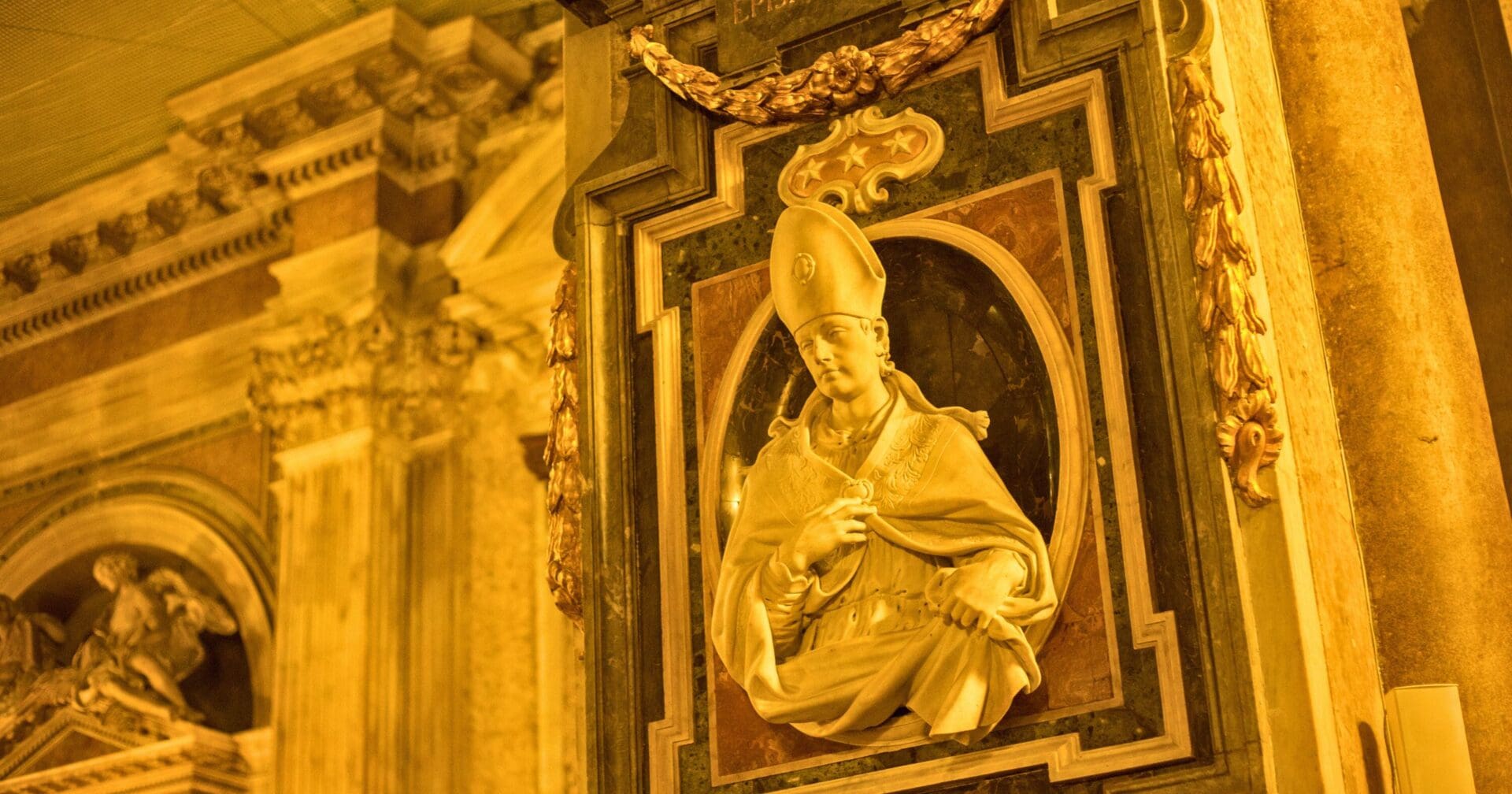
Little is known of Pope Saint John I’s life before he took office, except that he was born in Tuscany and that his father was Constantius. He was elected a week after the death of his predecessor Hormisdas.

Thanks to the recent reunification of the Eastern and Western Churches under Hormisdas, relations were very good with the Byzantine empire, but for the same reason they were strained with Theodoric, king of the Ostrogoths. The Byzantine emperor Justin persecuted heretics with enthusiasm, and he issued an edict against Arianism in 523. Theodoric, an Arian, distrusted the papacy’s affinity to Justin, and he pressured John to go to Constantinople and convince the emperor to withdraw the edict.

John did indeed go to Constantinople and was well-received, but the edict was not withdrawn. Upon his return to Italy, Theodoric had John arrested and imprisoned in Ravenna. Worn out by his journey and probably starved, John died in prison soon after. Pope St. John I is honored as a martyr.

Photo credit: Public Domain via getarchive

Love uCATHOLIC?
Get our inspiring content delivered to your inbox every morning – FREE!

The post Pope Saint John I appeared first on uCatholic.

Daily Reading


Daily Meditation


From his childhood Saint Paschal Baylon seems to have been marked out for the service of God. Amid his daily labors as a shepherd, he found time to instruct and evangelize the rude herdsmen who kept their flocks on the hills of Aragon. At the age of twenty-four he entered the reformed Franciscan Order near the town of Monfort, Spain, where he remained, out of humility, a simple lay brother, occupying himself by preference with the roughest and most servile tasks.

He was distinguished by his ardent devotion and love for the Blessed Sacrament. He would spend hours on his knees before the tabernacle, often being raised from the ground in the fervor of his prayer. And there, from the authentic and eternal Truth, he drew such stores of wisdom that, unlettered as he was, he was considered by all a master in theology and spiritual science.

Shortly after his profession he was sent to Paris on business connected with his Order. The journey was full of perils, owing to the hostility of the Huguenots, who were numerous at the time in the south of France; and on four separate occasions Paschal was in imminent danger of death at their hands. Twice he was taken for a spy; but it was not God’s will that His servant should obtain the crown of martyrdom which he so earnestly desired, though he regarded himself as unworthy of it. He returned in safety to his convent, where he would later die in the odor of sanctity in 1592.

Multitudes witnessed the miracles which took place during the three days his body was exposed for veneration. He was canonized in 1690, and in 1897 declared patron of all Eucharistic congresses and confraternities.

Editorial credit: Bill Perry / Shutterstock.com

Love uCATHOLIC?
Get our inspiring content delivered to your inbox every morning – FREE!

The post Saint Paschal Baylon appeared first on uCatholic.

Daily Reading


Daily Meditation


Saint Brendan of Ardfert and Clonfert, known also as Brendan the Voyager, was born in Ciarraighe Luachra, near the present city of Tralee, County Kerry, Ireland, in 484; he died at Enachduin, now Annaghdown, in 577. He was baptized at Tubrid, near Ardfert, by Bishop Erc. For five years he was educated under St. Ita, “the Brigid of Munster”, and he completed his studies under St. Erc, who ordained him priest in 512. Between the years 512 and 530 St. Brendan built monastic cells at Ardfert, and at Shanakeel or Baalynevinoorach, at the foot of Brandon Hill. It was from here that he set out on his famous voyage for the Land of Delight.

St. Brendan belongs to that glorious period in the history of Ireland when the island in the first glow of its conversion to Christianity sent forth its earliest messengers of the Faith to the continent and to the regions of the sea. It is, therefore, perhaps possible that the legends, current in the ninth and committed to writing in the eleventh century, have for foundation an actual sea-voyage the destination of which cannot however be determined.

These adventures were called the “Navigatio Brendani”, the Voyage or Wandering of St. Brendan, but there is no historical proof of this journey. Brendan is said to have sailed in search of a fabled Paradise with a company of monks, the number of which is variously stated as from 18 to 150. After a long voyage of seven years they reached the “Terra Repromissionis”, or Paradise, a most beautiful land with luxuriant vegetation.

The narrative offers a wide range for the interpretation of the geographical position of this land and with it of the scene of the legend of St. Brendan. While many locations had been speculated, in the early part of the nineteenth century belief in the existence of the island was completely abandoned. But soon a new theory arose, maintained by those scholars who claim for the Irish the glory of discovering America, namely, MacCarthy, Rafn, Beamish, O’Hanlon, Beauvois, Gafarel, etc. They rest this claim on the account of the Northmen who found a region south of Vinland and the Chesapeake Bay called “Hvitramamaland” (Land of the White Men) or “Irland ed mikla” (Greater Ireland), and on the tradition of the Shawano (Shawnee) Indians that in earlier times Florida was inhabited by a white tribe which had iron implements.

In regard to Brendan himself the point is made that he could only have gained a knowledge of foreign animals and plants, such as are described in the legend, by visiting the western continent.

The oldest account of the legend is in Latin, “Navigatio Sancti Brendani”, and belongs to the tenth or eleventh century; the first French translation dates from 1125; since the thirteenth century the legend has appeared in the literatures of the Netherlands, Germany, and England.

Photo credit: Panaspics / Shutterstock.com

Love uCATHOLIC?
Get our inspiring content delivered to your inbox every morning – FREE!

The post Saint Brendan appeared first on uCatholic.

Daily Reading


Daily Meditation