
Listen to this reflection in English
Escuchar esta reflexión en español
To help our young granddaughters learn their Catholic prayers, we often lead them in a Hail Mary after we say dinner grace. “We really should be doing the Our Father too,” my husband said one night as our forks were paused above the pasta and breaded chicken. It’s not that we don’t say the Our Father on other occasions, but often the kids are eager to eat and move on to other activities, and they don’t have the patience. The Our Father takes longer to recite, requires a more deliberate focus, and young children stumble over words like “who art,” “hallowed,” “trespasses,” and “temptation.”
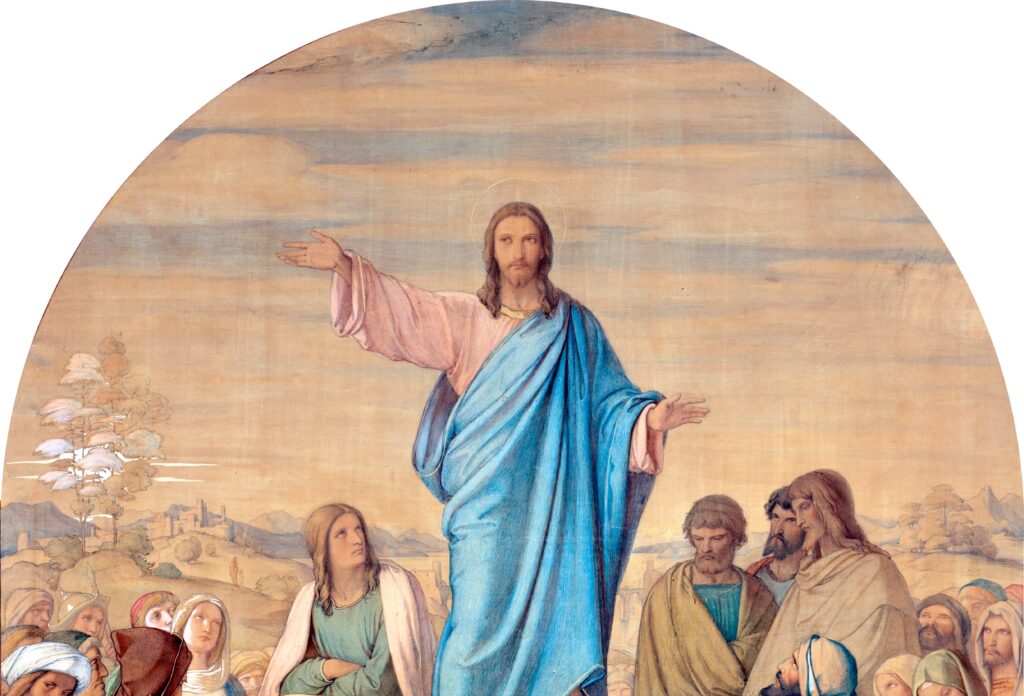
In today’s Gospel, Jesus teaches His Apostles how to pray in what is a more fluid prayer than the one we know: “Father, hallowed be your name, your Kingdom come. Give us each day our daily bread and forgive us our sins for we ourselves forgive everyone in debt to us, and do not subject us to the final test.”
Matthew 6:9-13 presents a longer version of the Our Father, often considered the “primary version,” and the one coupled with the Sermon on the Mount. In keeping with centuries of tradition, the official prayer of the Church is a translation based on St. Jerome’s Latin Vulgate and the Pater Noster has its foundations in this Gospel.
I imagine that many different versions must have been prayed by Jesus’ Apostles as they traveled for years spreading the Gospel. As they moved from community to community many people would have spoken Aramaic, or, more commonly, Greek, but they would have encountered other languages and dialects. The prayers that are rote to us would have been new and unusual and would have been received in each community in a way that reflected their culture. The disciples’ plea was a universal call to know the Father.
Many would have called God, “Abba,” the Galilean Aramaic word for father. Today’s Alleluia verse says: “You have received a spirit of adoption as sons through which we cry: Abba! Father!” All are called to pray to our Father.
Ironically, today is the feast of the Holy Rosary. Many people outside the Church do not understand the Hail Mary or the Rosary, and some believe this prayer detracts from the Father, but, Our Lady’s prayer, so beautiful in its rhythm and simplicity, leads us, bead by bead, to the Our Father prayer that anchors each decade and mystery of Christ’s life.
Our granddaughters often speak to “Jesus and Holy Mary.” May we learn from the children in our lives that effortless intimacy with holiness. May we grow in our closeness with our Father through the Blessed Mother.
Para ayudar a nuestras nietas pequeñas a aprender las oraciones católicas, a menudo rezamos con ellas un Avemaría después de la bendición de los alimentos. “Deberíamos rezar también el Padrenuestro”, comentó mi esposo una noche, mientras nuestros tenedores quedaban suspendidos sobre la pasta y el pollo empanizado. No es que no recemos el Padrenuestro en otras ocasiones, pero a menudo las niñas tienen prisa por comer y pasar a otras actividades, y les falta paciencia. El Padrenuestro lleva más tiempo, requiere una atención más pausada y a los niños pequeños se les hace difícil pronunciar palabras como “santificado”, “ofensas” y “tentación”.
En el Evangelio de hoy, Jesús enseña a sus Apóstoles a orar con una versión más fluida que la que conocemos: “Padre, santificado sea tu nombre, venga tu Reino, danos hoy nuestro pan de cada día y perdona nuestras ofensas, puesto que también nosotros perdonamos a todo aquel que nos ofende, y no nos dejes caer en tentación”.
Mateo 6, 9-13 presenta una versión más extensa del Padrenuestro, considerada a menudo la ‘versión principal’ y asociada al Sermón en el Monte. Siguiendo una tradición de siglos, la oración oficial de la Iglesia es una traducción basada en la vulgata latina de San Jerónimo, y el ‘Pater Noster’ tiene sus fundamentos en este Evangelio.
Imagino que los Apóstoles de Jesús debieron de rezar muchas versiones diferentes mientras viajaban durante años difundiendo el Evangelio. Al desplazarse de una comunidad a otra, se encontraban con personas que hablaban arameo o, más comúnmente, griego, pero también con otros idiomas y dialectos. Aquellas oraciones que para nosotros son recitadas por memoria resultaban en ese entonces nuevas e inusuales, y eran acogidas en cada comunidad de una manera que reflejaba su propia cultura. La súplica de los discípulos era un llamado universal a conocer al Padre.
Muchos llamaban a Dios “Abba”, la palabra aramea para “padre”. La aclamación antes del Evangelio de hoy dice: “Hemos recibido un espíritu de hijos, que nos hace exclamar: ¡Padre!” Todos estamos llamados a orar a nuestro Padre.
Irónicamente, hoy es la fiesta del Santo Rosario. Muchas personas ajenas a la Iglesia no comprenden el Avemaría ni el Rosario, y algunas creen que esta oración resta importancia al Padre; sin embargo, la oración de Nuestra Señora —tan hermosa en su ritmo y sencillez— nos conduce, cuenta a cuenta, hacia el Padrenuestro, que sirve de ancla para cada misterio y decena de la vida de Cristo.
Nuestras nietas suelen hablar con “Jesús y Santa María”. Ojalá aprendamos de los niños que nos rodean esa intimidad natural con la santidad. Que crezcamos en cercanía con nuestro Padre a través de nuestra Santísima Madre.
 Beth Casteel writes from rural southwestern Pennsylvania. She and her husband are blessed with four adult children and four grandchildren. You can read more of her work at bethcasteel.com or you can check out her chapter in two collaborative books, Crowned With Grace, and Cloud of Witnesses, available at store.
Feature Image Credit: Edward Von Steinle, art.diocesan.com/stock-photo/the-sermon-on-the-mount–6390/
The views and opinions expressed in the Inspiration Daily blog are solely those of the original authors and contributors. These views and opinions do not necessarily represent those of Diocesan, the Diocesan staff, or other contributors to this blog.
Daily Reading

Memorial of Our Lady of the Rosary
Readings for the Memorial of Our Lady of the Rosary Reading 1 Galatians 2:1-2, 7-14 Brothers and sisters:After fourteen years I again went up to Jerusalem with Barnabas,taking Titus along…
Saint of the Day
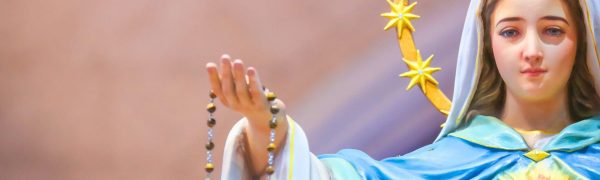
Our Lady of the Rosary
The Rosary’s significance is highlighted by historic victories attributed to its recitation, leading to a universal Catholic feast celebrating Our Lady of the Rosary. The post Our Lady of the