
“If anyone wants to go to law with you over your tunic, hand him your cloak as well.”
Christ says this during the Sermon on the Mount, a few verses after the Beatitudes. This Sermon is one of His longest in Scripture, and it gives us a clear picture of exactly how He intends to fulfill the Old Testament laws.
Up until Christ’s coming, the Mosaic Law helped prepare the Chosen People for the fullness of truth He would bring. As He told the Pharisees, some of those laws were in place due to the hardness of people’s hearts, but they weren’t meant to be permanent. He wants more for us than just retribution—He wants us to have the unconditional love that He modeled with all His words and actions, and ultimately with His death and resurrection.
The Jews were right to honor the Ten Commandments, which are absolutely necessary for a moral life. But ultimately those aren’t enough for us to become who He created us to be—people who love as unconditionally as He does. That is our great mission: to embody Christ’s love more deeply, day by day. Even His Jewish audiences were called to not stop at the Ten Commandments. His Sermon takes them, and us, beyond the basics and plunges us deep into the Heart of the God who is Love.
What is love?
We live in a world of convenience. Our unwillingness to endure pain or inconvenience can be seen from the smallest events of ordinary living, like same-day delivery, to the greatest events in life, like marriage and death. As a culture, we are unwilling to face anything unless we are promised that it’s safe, convenient, and beneficial. While that might sound nice, the reality is that convenience is exactly the opposite of what we were made for.
Because love is supposed to cost us everything.
Why? What about prudence? Good judgment? Of course, all the virtues should be practiced together; however, the greatest virtue isn’t prudence. “The greatest of all these is love.”
Hand over your cloak as well. Walk with someone else for two miles instead of one. Give to whomever asks of you. Love at all costs. Love is supposed to cost us everything—because it cost Him everything. That’s what we were made for. That is our great purpose and paradox: We cannot truly be who He made us to be until we sacrifice out of love for someone else.
Of course, this will look different for different people. How we treat the stranger on the street will look different from how we treat our own family, but the end is the same. If we treat both with a love that gives fully without expecting anything in return, we will begin to approach Him in love. In the words of Pope Benedict XVI, we were not made for comfort; we were made for greatness. How will you choose to love today?
“[A]l que te quiera demandar en juicio para quitarte la túnica, cédele también el manto”.
Cristo dice esto durante el Sermón del Monte, unos versículos después de las Bienaventuranzas. Este Sermón es uno de los más largos de las Escrituras y nos da una imagen clara de cómo pretende cumplir las leyes del Antiguo Testamento.
Hasta la venida de Cristo, la Ley Mosaica ayudó a preparar al Pueblo Elegido para la plenitud de la verdad que Él traería. Como les dijo a los fariseos, algunas de esas leyes estaban vigentes debido a la dureza de corazón de la gente, pero no estaban destinadas a ser permanentes. Él quiere más para nosotros que solo retribución: quiere que tengamos el amor incondicional que Él modeló con todas sus palabras y acciones, y finalmente con su muerte y resurrección.
Los judíos tenían razón al honrar los Diez Mandamientos, que son absolutamente necesarios para una vida moral. Pero, en última instancia, estos no son suficientes para que nos convirtamos en quienes Él nos creó para ser: personas que aman tan incondicionalmente como Él. Esa es nuestra gran misión: encarnar el amor de Cristo más profundamente, día a día. Incluso sus oyentes judíos fueron llamados a no detenerse en los Diez Mandamientos. Su Sermón los lleva, y nos lleva a nosotros, más allá de lo básico y nos sumerge en el Corazón del Dios que es Amor.
¿Qué es el amor?
Vivimos en un mundo de conveniencia. Nuestra renuencia a soportar el dolor o las molestias se puede ver desde los eventos más pequeños de la vida cotidiana, como los envíos rápidos, hasta los eventos más importantes de la vida, como el matrimonio y la muerte. Como cultura, no estamos dispuestos a enfrentar nada a menos que se nos prometa que es seguro, conveniente y beneficioso. Aunque eso pueda sonar bien, la realidad es que la conveniencia es exactamente lo contrario de lo que fuimos creados.
Porque se supone que el amor nos cueste todo.
¿Por qué? ¿Y la prudencia? ¿El buen juicio? Por supuesto, todas las virtudes deben practicarse juntas; sin embargo, la mayor virtud no es la prudencia. “La mayor de todas ellas es el amor”.
Entrega también tu manto. Camina con alguien dos millas en lugar de una. Da a quien te lo pida. Ama a toda costa. Se supone que el amor nos cueste todo, porque a Él le costó todo. Para eso fuimos creados. Ese es nuestro gran propósito y paradoja: No podemos ser verdaderamente quienes Él nos creó para ser hasta que nos sacrifiquemos por amor a alguien más.
Por supuesto, esto se ve diferente para cada persona. La forma en que tratamos al extraño en la calle será diferente a cómo tratamos a nuestra propia familia, pero el fin es el mismo. Si tratamos a ambos con un amor que da plenamente sin esperar nada a cambio, comenzaremos a acercarnos a Él con amor. En palabras del Papa Benedicto XVI, no fuimos hechos para la comodidad; fuimos hechos para la grandeza. ¿Cómo elegirás amar hoy?
 Hailing from Nashville, Catherine is a graduate of Christendom College with a lifelong passion for words. Her love of writing and her Catholic Faith continue to shape her as a freelance editor, copywriter, and (aspiring) novelist, where she pursues her passions for the love and greater glory of God.
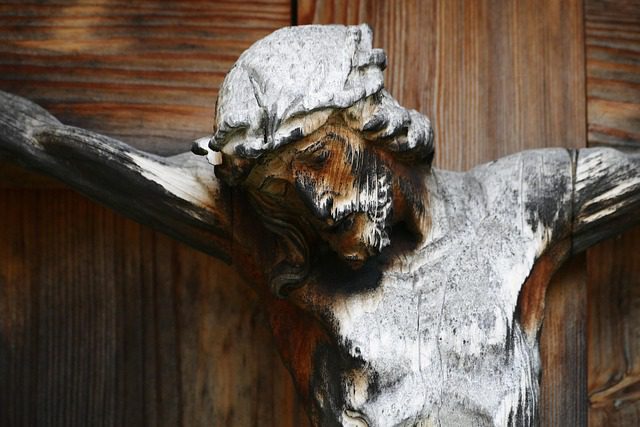
Feature Image Credit: stux, pixabay.com/photos/crucifix-cross-wayside-cross-carved-1502352/
The views and opinions expressed in the Inspiration Daily blog are solely those of the original authors and contributors. These views and opinions do not necessarily represent those of Diocesan, the Diocesan staff, or other contributors to this blog.
Daily Reading

Monday of the Eleventh Week in Ordinary Time
Reading 1 1 Kings 21:1-16 Naboth the Jezreelite had a vineyard in Jezreelnext to the palace of Ahab, king of Samaria.Ahab said to Naboth, “Give me your vineyard to be…
Saint of the Day
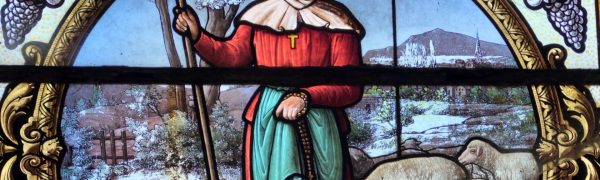
Saint Germaine Cousin
Born in 1579 of humble parents at Pibrac, a village about ten miles from Toulouse; died in her native place in 1601. From her birth she seemed marked out for