


“I give praise to You, Father, Lord of heaven and earth, for although You have hidden these things from the wise and the learned, You have revealed them to the childlike.”
This brief moment of joyful praise in today’s Gospel comes during one of Christ’s public sermons to the Jews, one that is primarily a reproach against the towns that have not received His truth, despite witnessing His miracles. In fact, the majority of Matthew 11 is Christ’s rebuke of those who remain hard-hearted, despite all He has already done to show He is the Messiah.
But this moment of praise, however brief, must have been significant, since it is present in the Scriptures for us to read and contemplate to this day—significant enough that today’s Gospel is a mere two verses. The presence of this moment in Scripture, and the fact that it is its own Gospel, tell us that something profound is being said here.
“…you have revealed them to the childlike.”
“Childlike” is an interesting word. Perhaps many people would associate “childlike” with “childish,” the immaturity of young children who have not yet grown and learned to love. But even in English, “childlike” and “childish” have two very different meanings. In Hebrew, the word is “fattayim,” meaning “simple” or “naïve.” In Greek, the word is “nipioi,” which is translated as “babes” or “toddlers.” Both the Hebrew and the Greek translations give us an interesting picture of very young, impressionable children. While those words may carry negative connotations to us, they are meant to convey the idea of innocence, a childlike faith and belief that has not been weakened or jaded by relying on our own understanding or strength.
And the meaning of “childlike” is established as Christ compares it to its opposite, the “wise and the learned,” those who have been trained in thinking. Christ is indirectly criticizing the Pharisees, who have studied the Law for years, yet have missed the culmination of it in Him. Instead, He praises the little children, the ones who gather at His feet and listen, resting in His presence.
St. Therese of Lisieux, a wonderful Carmelite saint, often spoke of her “Little Way” – choosing to rest in the will of God the Father like a little child is carried in its father’s arms. There’s a lot to be said about her Little Way, and how the simplicity of a child often brings us personally closer to the Lord in ways that years of study might not. However, if we put it very simply, perhaps we might say this: Christ does not call us to perfect understanding. He is, after all, beyond our understanding. But He does call us to perfect faith, and that we can find by resting in His arms, like little children.
“¡Te doy gracias, Padre, Señor del cielo y de la tierra, porque has escondido estas cosas a los sabios y entendidos, y las has revelado a la gente sencilla!”
Este breve momento de gozosa alabanza en el Evangelio de hoy ocurre durante uno de los sermones públicos de Cristo a los judíos, uno que es principalmente un reproche a los pueblos que no han recibido su verdad, a pesar de presenciar sus milagros. De hecho, la mayor parte de Mateo 11 es la reprimenda de Cristo a quienes siguen siendo insensibles, a pesar de todo lo que Él ya ha hecho para demostrar que es el Mesías.
Pero este momento de alabanza, por breve que sea, debe haber sido significativo, ya que está presente en las Escrituras para que lo leamos y contemplemos hasta el día presente; tan significativo que el Evangelio de hoy solo tiene dos versículos. La presencia de este momento en las Escrituras, y el hecho de que sea su propio Evangelio, nos indican que aquí se dice algo profundo.
“…las has revelado a la gente sencilla.”
“Gente sencilla” son palabras interesantes. Quizás mucha gente las asociaría con “infantil” o “pueril”, la inmadurez de los niños pequeños que aún no han crecido ni aprendido a amar. Pero incluso en español, “infantil” y “como niños” tienen dos significados muy diferentes. En hebreo, la palabra es “fattayim”, que significa “simple” o “ingenuo”. En griego, la palabra es “nipioi”, que se traduce como “bebés” o “niñitos”. Tanto la traducción hebrea como la griega nos ofrecen una imagen interesante de niños muy pequeños e influenciables. Si bien estas palabras pueden tener connotaciones negativas, su propósito es transmitir la idea de inocencia, una fe y una creencia que no se han debilitado ni desgastado por confiar en nuestro propio entendimiento o fuerza.
Y el significado de “gente sencilla” se establece cuando Cristo lo compara con su opuesto, los “sabios y entendidos”, aquellos que han sido educados en el pensamiento. Cristo critica indirectamente a los fariseos, quienes han estudiado la Ley durante años, pero se han perdido su culminación en Él. En cambio, alaba a los niños pequeños, a quienes se reúnen a sus pies y escuchan, descansando en su presencia.
Santa Teresita de Lisieux, una maravillosa santa carmelita, solía hablar de su “Caminito”: elegir descansar en la voluntad de Dios Padre como un niño pequeño es llevado en brazos por su padre. Hay mucho que decir sobre su Caminito, y cómo la sencillez de un niño a menudo nos acerca personalmente al Señor de maneras que años de estudio no podrían. Sin embargo, si lo expresamos de forma sencilla, tal vez podríamos decir esto: Cristo no nos llama a una comprensión perfecta. Después de todo, Él está más allá de nuestra comprensión. Pero sí nos llama a una fe perfecta, y esa fe la podemos encontrar descansando en sus brazos, como niños pequeños.
 Hailing from Nashville, Catherine is a graduate of Christendom College with a lifelong passion for words. Her love of writing and her Catholic Faith continue to shape her as a freelance editor, copywriter, and (aspiring) novelist, where she pursues her passions for the love and greater glory of God.
Feature Image Credit: Helena Lopes, pexels.com/photo/crop-father-touching-feet-of-baby-6957496/
The views and opinions expressed in the Inspiration Daily blog are solely those of the original authors and contributors. These views and opinions do not necessarily represent those of Diocesan, the Diocesan staff, or other contributors to this blog.
Daily Reading

Memorial of Saint Bonaventure, Bishop and Doctor of the Church
Readings for the Memorial of Saint Bonaventure, Bishop and Doctor of the Church Reading 1 Isaiah 10:5-7, 13b-16 Thus says the LORD:Woe to Assyria! My rod in anger,my staff in…
Saint of the Day
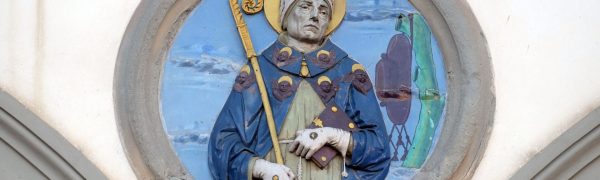
Saint Bonaventure
Saint Bonaventure was born the year 1221 and died in 1274. He was a Bishop, Cardinal, and Doctor of the Church. He is known as “The Seraphic Doctor.” The post