


On the surface level, it may seem like Jesus teaches in parables only to make complex ideas accessible to all people. While there may be an element of that, Jesus explains clearly in today’s Gospel that reaching every audience isn’t His primary goal. In fact, He explains that the parables fulfill the words of the prophet Isaiah. Jesus explains, “This is why I speak to them in parables, because ‘they look but do not see and hear but do not listen or understand’” (Matthew 13:13). Jesus admits that His parables are meant to be misunderstood by some who hear His teachings.
Why would Jesus want people to see and hear but not listen or understand? Didn’t Jesus come for everyone? It is essential to realize that the Lord desired (and still does desire) for everyone to hear His message, repent, and come to believe in Him. Unfortunately, the reality was that some of the Jewish leaders during Jesus’s time preferred things the way they were. They held their own ideas of how the messiah would look and act. They enjoyed their authority and positions of power. Their pride prevented them from accepting a message that would require turning from their current habits and humbly accepting a king who would establish his kingdom by dying on a cross rather than leading armies to conquer other nations.
The parables also give the hearers an opportunity to accept an idea or concept without feeling condemned themselves. With the parable of the sower, we are invited to look at our lives and determine which soil we are. Most likely, if you’re reading this, you are not the path which receives the seed only briefly before it is snatched up by the birds. If you have drawn your strength from your faith throughout the difficulties and trials of your life, you are probably not the rocky ground. While we all hope to one day be the fertile soil, producing fruit in abundance, most of us probably fall into the category of the thorns as we struggle through the spiritual life.
Faith can be an important and integral part of our lives, but so often, we allow the busyness and demands of everyday life to draw our hearts away from the Word. Regardless of the season of life we’re in, our attention is constantly being bombarded by various things. Family obligations, work commitments, and current events coupled with on-demand entertainment on our TVs and phones can choke out the good seed from the Lord.
As we strive to cultivate good soil in our lives, we can ask the Lord to show us how to step away from the distractions that we allow ourselves. In our commitments and obligations, we can ask Him to be present with us, and show us how to serve others like Him. After all, it is in our families, work places, and communities that the fruit the Lord wants to cultivate in us will grow and multiply.
A primera vista, podría parecer que Jesús enseña en parábolas solo para que las ideas complejas sean accesibles a todos. Si bien esto puede ser cierto, Jesús explica claramente en el Evangelio de hoy que llegar a todos los públicos no es su objetivo principal. De hecho, explica que las parábolas cumplen las palabras del profeta Isaías. Jesús explica: “Por eso les hablo en parábolas, porque viendo no ven y oyendo no oyen ni entienden.” (Mateo 13,13). Jesús admite que sus parábolas están destinadas a ser malinterpretadas por quienes escuchan sus enseñanzas.
¿Por qué querría Jesús que la gente viera y oyera pero no escuchara ni entendiera? ¿Acaso Jesús no vino para todos? Es fundamental comprender que el Señor deseaba (y aún desea) que todos escucharan su mensaje, se arrepintieran y creyeran en él. Desafortunadamente, la realidad era que algunos líderes judíos en tiempos de Jesús preferían las cosas como estaban. Tenían sus propias ideas sobre cómo se vería y actuaría el Mesías. Disfrutaban de su autoridad y sus posiciones de poder. Su orgullo les impidió aceptar un mensaje que les exigía abandonar sus hábitos y aceptar con humildad a un rey que establecería su reino muriendo en la cruz en lugar de liderar ejércitos para conquistar otras naciones.
Las parábolas también ofrecen a los oyentes la oportunidad de aceptar una idea o concepto sin sentirse condenados. Con la parábola del sembrador, se nos invita a examinar nuestras vidas y determinar qué tipo de tierra somos. Si estás leyendo esto, probablemente no seas el camino que recibe la semilla brevemente antes de que la arrebaten los pájaros. Si has sacado fuerzas de tu fe a lo largo de las dificultades y pruebas de tu vida, probablemente no seas el terreno pedregoso. Si bien todos esperamos algún día ser tierra fértil, que produzca fruto en abundancia, la mayoría probablemente caemos en la categoría de las espinas en nuestra lucha por la vida espiritual.
La fe puede ser una parte importante e integral de nuestras vidas, pero a menudo permitimos que el ajetreo y las exigencias de la vida diaria nos distraigan de la Palabra. Sin importar la etapa de la vida en la que nos encontremos, nuestra atención se ve constantemente bombardeada por diversas cosas. Las obligaciones familiares, los compromisos laborales y las noticias, junto con el entretenimiento en nuestros televisores y teléfonos, pueden ahogar la buena semilla del Señor.
Al esforzarnos por cultivar buena tierra en nuestras vidas, podemos pedirle al Señor que nos muestre cómo alejarnos de las distracciones que nos permitimos. En nuestros compromisos y obligaciones, podemos pedirle que esté presente con nosotros y nos muestre cómo servir a los demás como Él. Después de todo, es en nuestras familias, lugares de trabajo y comunidades donde el fruto que el Señor quiere cultivar en nosotros crecerá y se multiplicará.
 Maria Riley is a passionate Catholic author and speaker who loves volunteering or playing board games when she’s not writing or mom-ing around with her four daughters. Her award-winning Catholic children’s chapter book series, Adventures with the Saints, is endorsed by her bishop. Visit her at MariaRileyAuthor.com or on social media @mariarileyauthor. She and her family live in Kansas.
Feature Image Credit: Yamu_Jay, pixabay.com/illustrations/ai-generated-plant-growth-sprouting-9073529/
The views and opinions expressed in the Inspiration Daily blog are solely those of the original authors and contributors. These views and opinions do not necessarily represent those of Diocesan, the Diocesan staff, or other contributors to this blog.
Daily Reading

Fifteenth Sunday in Ordinary Time
Reading 1 Isaiah 55:10-11 Thus says the LORD:Just as from the heavensthe rain and snow come downand do not return theretill they have watered the earth,making it fertile and fruitful,giving…
Saint of the Day
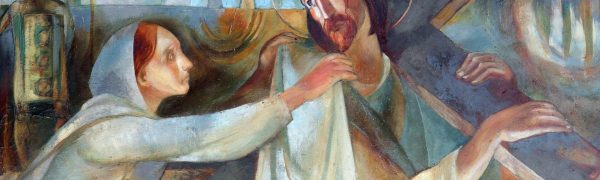
Saint Veronica
Saint Veronica wiped the face of Jesus Christ with her while He was on the way to Calvary carrying His Cross. According to tradition, the cloth was imprinted with the