


Today the Gospel reading provides us with Matthew’s account of the healing of the Gadarene demoniacs. Jesus has just crossed the sea with His disciples. During that trip He demonstrated that even the winds and the sea are at His command. Now, upon coming into the territory of the Gadarenes, “two demoniacs who were coming from the tombs met him. They were so savage that no one could travel by that road. They cried out, ‘What have you to do with us, Son of God? Have you come here to torment us before the appointed time?’”
And then the demoniacs pleaded with Jesus. Unlike Luke’s account of this event (Luke 8: 26-39), Matthew does not provide many details about the man possessed. Instead, he primarily describes the interaction of the demoniacs with Jesus. This focus allows us to see clearly the power and authority of Jesus. Savage demoniacs plead with Jesus. His identity is known to them and along with that identity, His power. The demons recognize they are powerless under His authority. Jesus commands them to “Go then!” and the demons heed his command.
Yet the townspeople who hear what Jesus has done do not rejoice. There is no celebration welcoming back the healed man, no gratitude expressed for Jesus’s work. Instead, they appear more overwhelmed by His power than by their fear of the demoniacs: “Thereupon the whole town came out to meet Jesus, and when they saw him they begged him to leave their district.” The One who was sent to deliver, to heal, to save, was sent away.
It seems the Gadarenes had become accustomed to the darkness, to the demons prowling about their earth, adapting to life with them. It is worth examining where in our own lives we may have done the same. Where might we have become unwilling to recognize and accept the authority of Jesus to change the status quo?
Jesus, the Son of God, has the power to cast out demons, even the most savage of them. Will we let Him?
Hoy, el Evangelio nos presenta el relato de Mateo sobre la curación de los endemoniados gadarenos. Jesús acababa de cruzar el mar con sus discípulos. Durante ese viaje, demostró que incluso los vientos y el mar están a su disposición. Al llegar al territorio de los gadarenos, “dos endemoniados salieron de entre los sepulcros y fueron a su encuentro. Eran tan feroces, que nadie se atrevía a pasar por aquel camino. Los endemoniados le gritaron a Jesús: ‘¿Qué quieres de nosotros, Hijo de Dios? ¿Acaso has venido hasta aquí para atormentarnos antes del tiempo señalado?’”
Y entonces los endemoniados le suplicaron a Jesús. A diferencia del relato de Lucas sobre este suceso (Lucas 8,26-39), Mateo no proporciona muchos detalles sobre el hombre poseído. En cambio, describe principalmente la interacción de los endemoniados con Jesús. Este enfoque nos permite ver claramente el poder y la autoridad de Jesús. Endemoniados violentos suplican a Jesús. Conocen su identidad y, con ella, su poder. Los demonios reconocen su impotencia ante su autoridad. Al saber que Jesús va a echarlos fuera, piden ser mandados a entrar a unos cerdos y con tan solo oír las palabras: “Está bien” de la boca de Jesús, se van.
Sin embargo, los habitantes del pueblo, al oír lo que Jesús ha hecho, no se alegran. No hay celebración al recibir al hombre sanado, ni gratitud por la obra de Jesús. En cambio, parecen más abrumados por su poder que por el miedo a los endemoniados: “Entonces salió toda la gente de la ciudad al encuentro de Jesús, y al verlo, le suplicaron que se fuera de su territorio“. Aquel que fue enviado para liberar, sanar y salvar, fue despedido.
Parece que los gadarenos se habían acostumbrado a la oscuridad, a los demonios que rondaban por su tierra, adaptándose a la vida con ellos. Vale la pena examinar en cuáles momentos de nuestra vida hemos hecho lo mismo. ¿En cuáles momentos nos hemos vuelto reacios a reconocer y aceptar la autoridad de Jesús para cambiar el statu quo?
Jesús, el Hijo de Dios, tiene el poder de expulsar demonios, incluso a los más feroces. ¿Lo permitiremos?
 Raine Pyne is a longtime public school educator. She is married to Greg, who is also an educator. They have five sons, three dogs, and one cat, plus hundreds of adolescent students and countless stacks of books. Raine is a former parish catechist and women’s retreat leader. She is a student at the Theology of the Body Institute and a member of the Word on Fire Institute’s Writing Community. She is passionate about learning, language, and the ever deepening journey of faith.
Feature Image Credit: Gustave Doré, art.diocesan.com/stock-photo/christ-healing-a-possessed-man-14959/
The views and opinions expressed in the Inspiration Daily blog are solely those of the original authors and contributors. These views and opinions do not necessarily represent those of Diocesan, the Diocesan staff, or other contributors to this blog.
Daily Reading

Wednesday of the Thirteenth Week in Ordinary Time
Reading 1 Amos 5:14-15, 21-24 Seek good and not evil,that you may live;Then truly will the LORD, the God of hosts,be with you as you claim!Hate evil and love good,and…
Saint of the Day
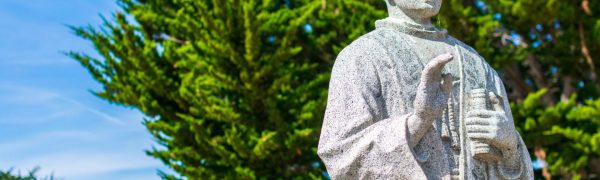
Saint Junipero Serra
Junípero Serra Ferrer, O.F.M., was a Spanish Franciscan friar who founded missions 21 in California, including San Diego to San Francisco. He is often called The Apostle of California. The