

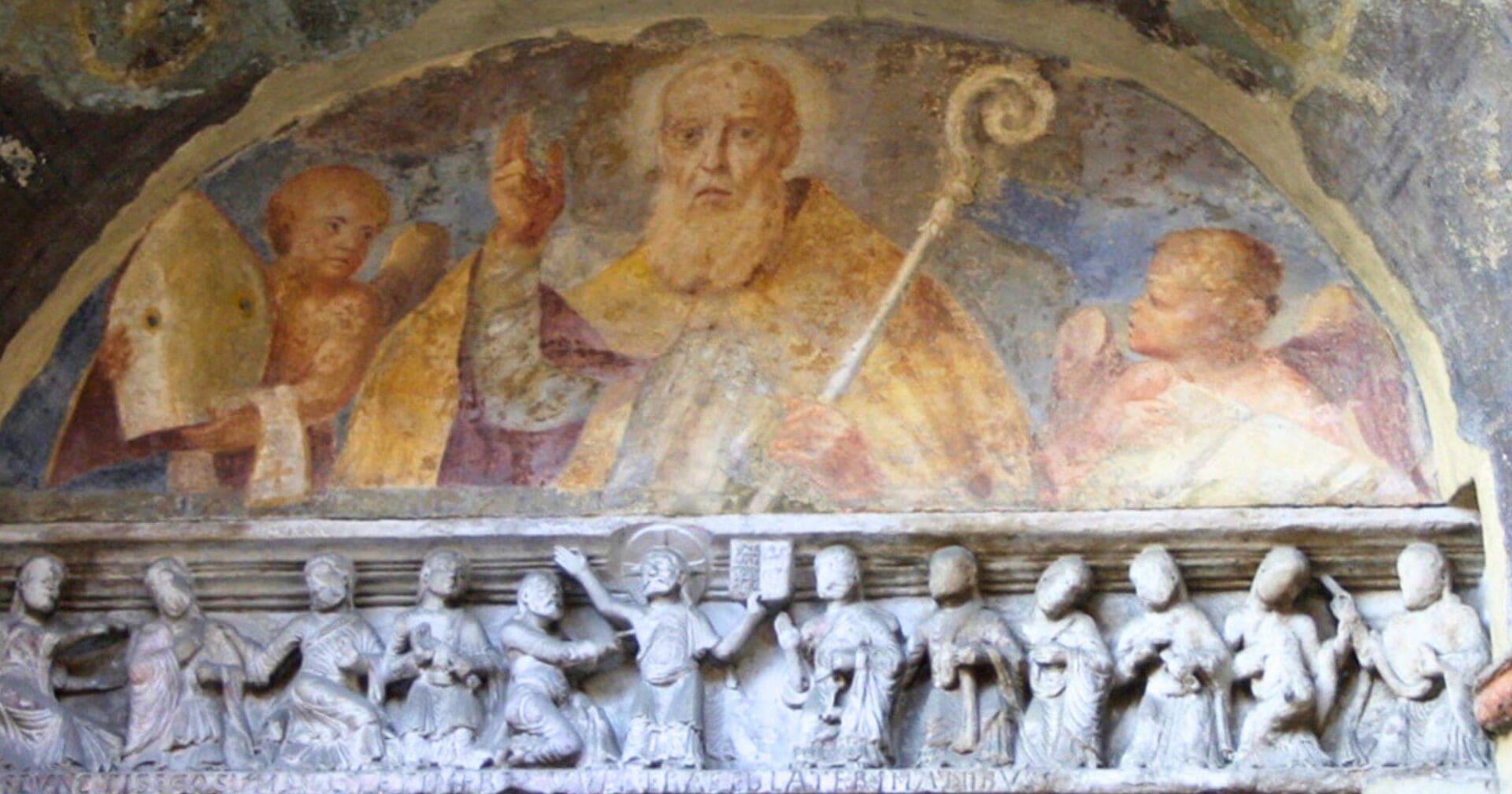
Succeeding the formidable St. Leo the Great as pope was no small feat, yet Hilarius, the Archdeacon, rose to the challenge admirably. A native of Sardinia, Hilarius had been a distinguished member of the Roman clergy, previously appointed by St. Leo as a papal legate to the controversial council at Ephesus in 449. This council, which was overrun by Monophysite sympathizers and led by Dioscorus, the patriarch of Alexandria, notoriously rejected the appeals of the papal legates. Despite Hilarius’s protests, the council wrongly condemned Flavian, the orthodox Patriarch of Constantinople, and endorsed the Monophysite Eutyches, forcing Hilarius to escape under threat to his life and seek refuge in a chapel dedicated to St. John the Evangelist. His return to Rome was fraught with difficulty, earning the council at Ephesus the title of a “robbers’ gathering” by St. Leo.
As the pope, Hilarius was instrumental in bringing stability to the church, especially within the Gallic hierarchy. The unauthorized appointment of Hermes as Archbishop of Narbonne led to an appeal to Pope Hilarius, who resolved the dispute in a council at Rome in 462, reinforcing the primacy of Arles as the leading see in Gaul. Similarly, he addressed appeals from Spain in a council held in 465, notable for being the first Council of Rome with surviving acts. His tenure also included affirming the ecumenical councils of Nicaea, Ephesus, and Chalcedon through a letter sent to the East, alongside the dogmatic letter of his predecessor, St. Leo, to Flavian. Hilarius further demonstrated his commitment to orthodoxy by publicly reprimanding Emperor Anthemius in St. Peter’s for tolerating heresy.
Hilarius’s dedication to enhancing Rome’s sacred architecture was evident in the construction and embellishment of several churches, notably an oratory near the Lateran dedicated to St. John the Evangelist. This was a gesture of gratitude for the saint’s believed intercession during Hilarius’s perilous time in Ephesus. The entrance of this oratory still bears the inscription acknowledging St. John as Hilarius’s savior. Beyond this, Hilarius’s efforts included the building of two additional churches and the lavish decoration of others, showcasing the support of Rome’s affluent families despite the depredations of Goths and Vandals.
Pope Hilarius passed away on February 29, and his legacy is honored annually on February 28, marking the end of a pontificate that significantly contributed to the consolidation of the church’s authority and the beautification of its spiritual homes in Rome.
Photo credit: G.dallorto via Wikimedia Commons

The post Pope Saint Hilarius appeared first on uCatholic.
Daily Reading

Tuesday of the Twenty-ninth Week in Ordinary Time
Reading 1 Ephesians 2:12-22 Brothers and sisters:You were at that time without Christ,alienated from the community of Israeland strangers to the covenants of promise,without hope and without God in the…
Daily Meditation

More Than Many Sparrows
Listen to this reflection in EnglishEscuchar esta reflexión en español Click here for daily readings Today is the feast of St. Margaret Mary Alacoque, the French Visitation nun who brought…