

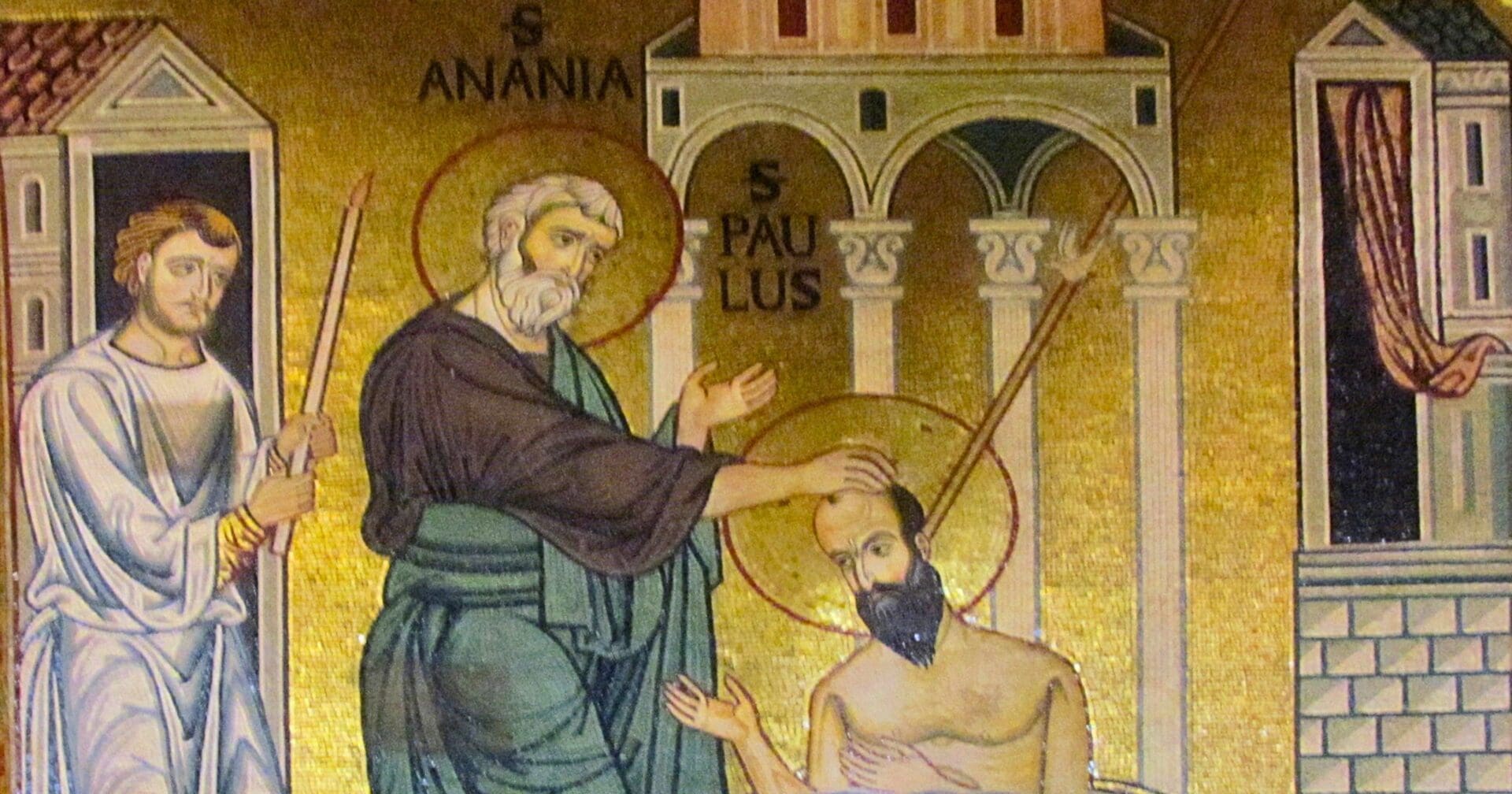
Saint Ananias, a seminal figure in early Christianity, played a pivotal role in the spiritual awakening of Saul of Tarsus, later known as Saint Paul. Ananias’s story is interwoven with the early Christian community in Damascus, documented by Saint Luke as the first Christian congregation beyond Palestine. This community, possibly predating Antioch’s, emerged merely five to six years after Christ’s ascension, organized around Ananias, a charismatic and devout leader. They were known by various names, including Followers of the Way and Disciples, highlighting their devotion and communal identity.
Ananias stands out as the first named spiritual leader outside Jerusalem in Christian texts, signifying his importance. Described as merciful, reputable, and god-fearing, he is believed to have been among the 72 disciples, a native of Damascus recommended by the Apostles to lead there. His ministry extended to central Syria, underlined by his proficiency in Latin, which was instrumental during Saint Paul’s testimony before Proconsul Felix.
His martyrdom came under the orders of Roman Governor Licianus Mucianus, who condemned Ananias to death by stoning outside Damascus. His grave became a site of memorial, later encompassed by a monastery that medieval Arabic writers frequently mentioned.
Ananias’s most distinguished act was baptizing Saint Paul, following Saul’s transformative vision on the road to Damascus. This baptism not only marked Saul’s conversion but also signified the beginning of Paul’s missionary journey. Ananias, having fulfilled his divine mission, met his martyrdom in Eleutheropolis. His residence was later transformed into a sanctuary and a center of religious veneration. Through his actions, Saint Ananias shaped the early Christian church.
Photo credit: Gmihail via Wikimedia Commons

The post Saint Ananias appeared first on uCatholic.
Daily Reading

Fifth Sunday of Lent
Reading I Ezekiel 37:12-14 Thus says the Lord GOD: O my people, I will open your graves and have you rise from them, and bring you back to the land of Israel.Then you…
Daily Meditation

Jesus’ Timing
Click here for daily readings Jesus loved Mary, Martha, and Lazarus, so He waited. This is such a difficult passage to swallow. Like Martha who cries to Jesus, “Lord, if…