

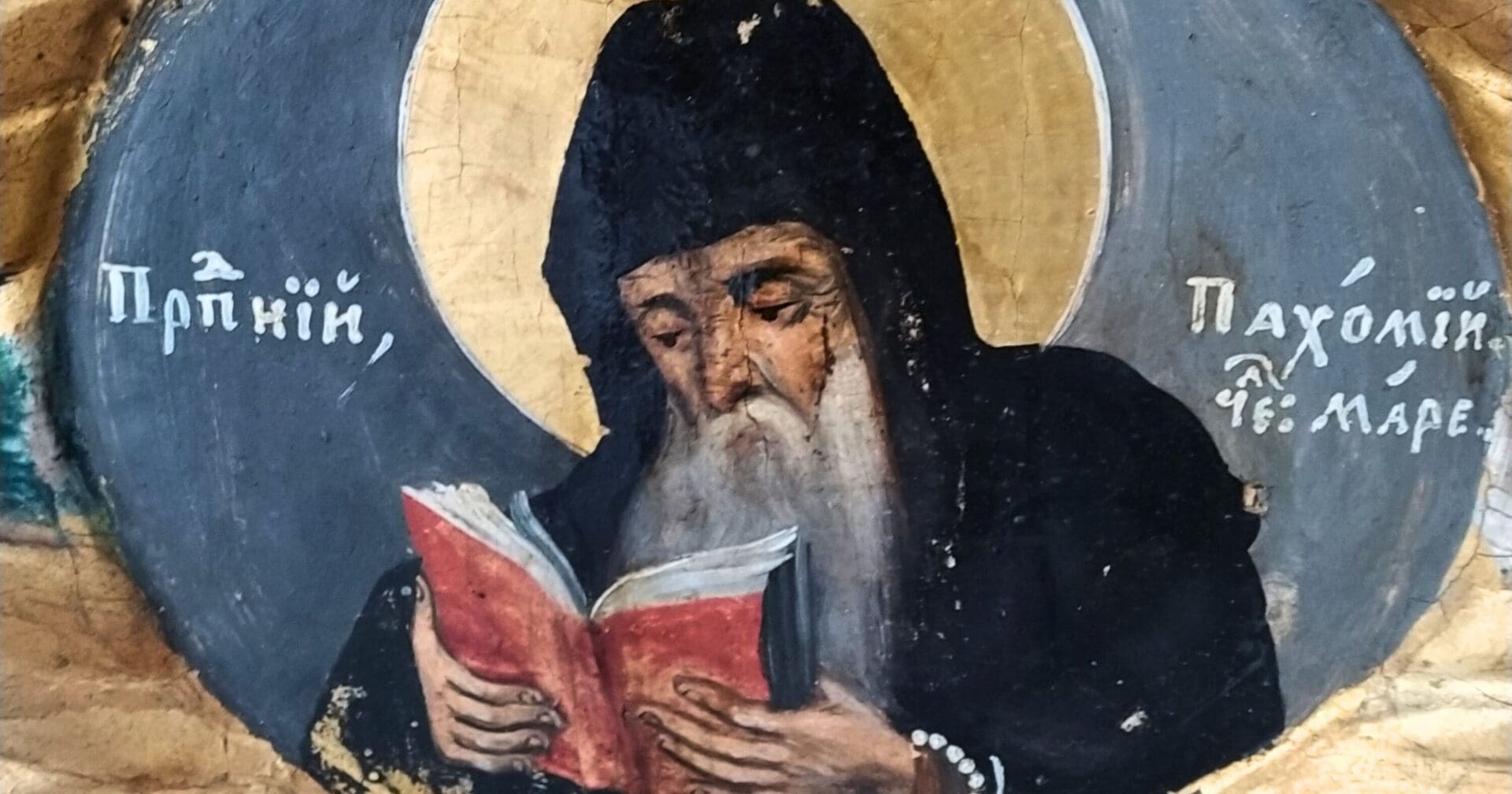
Saint Pachomius was born about 292 in the Upeer Thebaid in Egypt and was inducted into the Emperor’s army as a twenty-year-old. The great kindness of Christians at Thebes toward the soldiers became embedded in his mind and led to his conversion after his discharge. After being baptized, he became a disciple of an anchorite, Palemon, and took the habit. The two of them led a life of extreme austerity and total dedication to God; they combined manual labor with unceasing prayer both day and night.
Later, Pachomius felt called to build a monastery on the banks of the Nile at Tabennisi; so about 318 Palemon helped him build a cell there and even remained with him for a while. In a short time some one hundred monks joined him and Pachomius organized them on principles of community living. So prevalent did the desire to emulate the life of Pachomius and his monks become, that the holy man was obliged to establish ten other monasteries for men and two nunneries for women. Before his death in 346, there were seven thousand monks in his houses, and his Order lasted in the East until the 11th century.
St. Pachomius was the first monk to organize hermits into groups and write down a Rule for them. Both St. Basil and St. Benedict drew from his Rule in setting forth their own more famous ones. Hence, though St. Anthony is usually regarded as the founder of Christian monasticism, it was really St. Pachomius who began monasticism as we know it today.
Photo credit: Mihai Andrei / Shutterstock.com
The post Saint Pachomius appeared first on uCatholic.
Daily Reading

Wednesday of the Twenty-eighth Week in Ordinary Time
Reading 1 Galatians 5:18-25 Brothers and sisters:If you are guided by the Spirit, you are not under the law.Now the works of the flesh are obvious:immorality, impurity, licentiousness, idolatry,sorcery, hatreds,…
Daily Meditation

The Demand for a Sign
Listen to this reflection in EnglishEscuchar esta reflexión en español Click here for daily readings There is something great in our lives. Yes, our Lord and Savior. Sometimes, as humans,…