

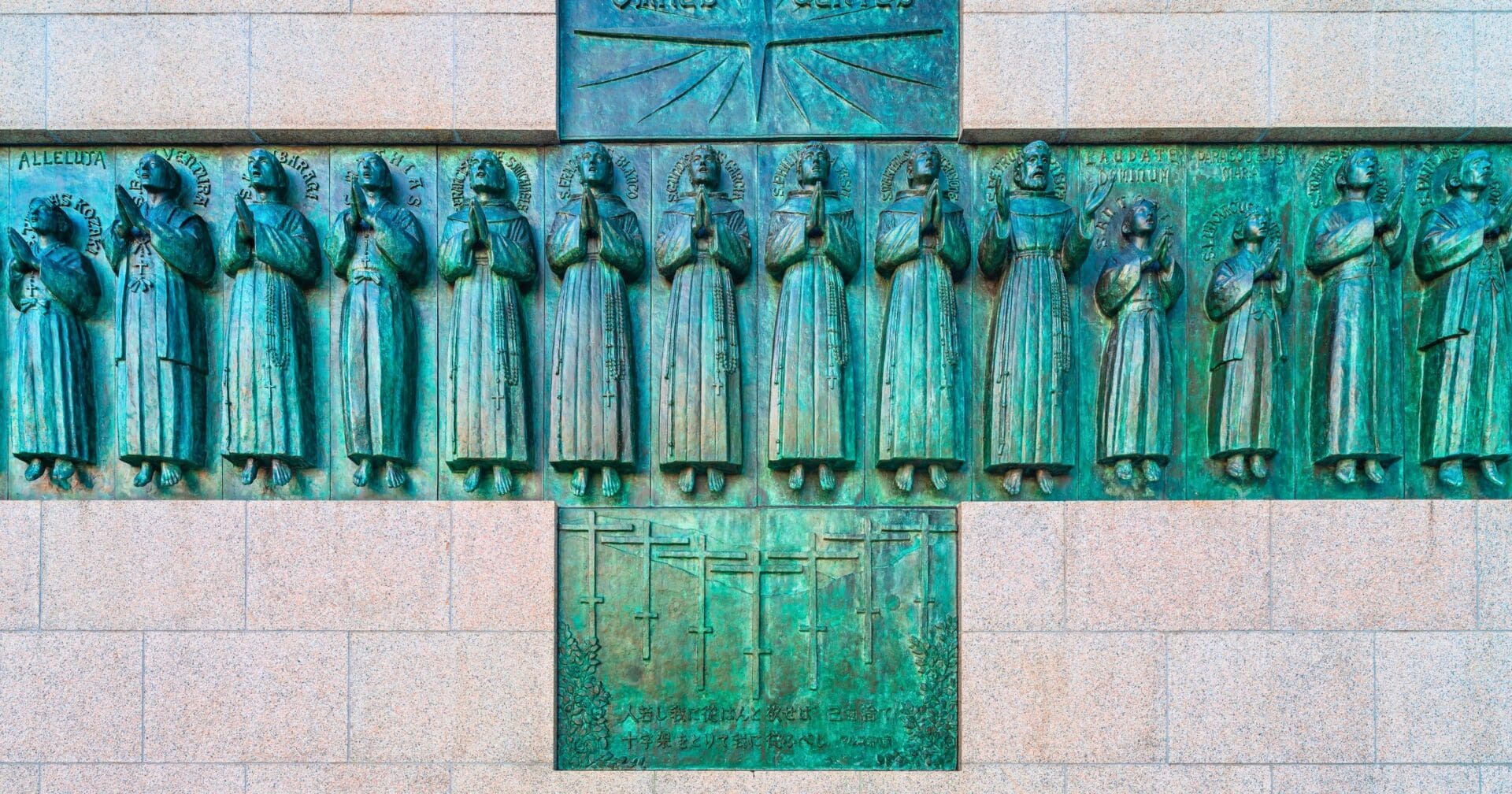
Paul Miki, a native Japanese Jesuit, is perhaps the most renowned of the Japanese martyrs. Born in Tounucumada, Japan, to a Japanese military leader, Paul received his education at the Jesuit college in Anziquiama. He joined the Jesuits in 1580, quickly gaining recognition for his powerful preaching skills.
On February 5, Paul Miki’s life took a tragic turn when he, alongside twenty-five other Catholics, was crucified. This event occurred during the persecution led by Toyotomi Hideyoshi, the Taiko of Japan, who ruled in the emperor’s name. The group, collectively known as the 26 Martyrs of Japan, met their fate on a hill overlooking Nagasaki, later named the Holy Mountain. This diverse group included not only priests and brothers from the Jesuit and Franciscan orders but also laymen from the Secular Franciscan Order. They varied in background, ranging from catechists and doctors to artisans, servants, elderly men, and children, all unified in their faith and devotion to Jesus and the Church.
Among the lay Japanese who shared this cruel fate were several notable individuals. Francis, a carpenter, was apprehended while witnessing the executions and subsequently crucified. Gabriel, a 19-year-old and the son of a Franciscan porter; Leo Kinuya, a 28-year-old carpenter from Miyako; Diego Kisai, a Jesuit coadjutor; Joachim Sakakibara, a cook for the Franciscans in Osaka; Peter Sukejiro, who was arrested after being sent to assist the prisoners by a Jesuit priest; Cosmas Takeya from Owari, a preacher in Osaka; and Ventura from Miyako, a former bonze who returned to Catholicism, were among those who suffered the same fate. These martyrs were canonized in 1862 as the Martyrs of Japan.
In his final moments on the cross, Paul Miki delivered a poignant sermon to the gathered onlookers. He affirmed his Japanese heritage and clarified that his only ‘crime’ was preaching Christ’s teachings. Expressing gratitude for dying for this cause, he declared his words to be truthful and urged the crowd to seek happiness through Christ. Demonstrating profound forgiveness, he followed in Christ’s footsteps, pardoning his persecutors and praying for God’s mercy upon all, hoping his sacrifice would enrich the lives of others.
When missionaries revisited Japan in the 1860s, initially, they found no evidence of Christianity. However, after settling in, they discovered thousands of hidden Christians around Nagasaki, who had clandestinely kept their faith alive. The martyrs, initially beatified in 1627, received canonization in 1862.
Editorial credit: kuremo / Shutterstock.com
The post Saint Paul Miki and Companions appeared first on uCatholic.
Daily Reading

Monday of the Fifth Week of Lent
Reading I Daniel 13:1-9, 15-17, 19-30, 33-62 or 13:41c-62 In Babylon there lived a man named Joakim,who married a very beautiful and God-fearing woman, Susanna,the daughter of Hilkiah;her pious parents…
Daily Meditation

“Neither do I condemn you”
Click here for daily readings Jesus did not condemn her. The Pharisees wanted her stoned. They were requesting her death for this sin and I suspect would have been okay…