

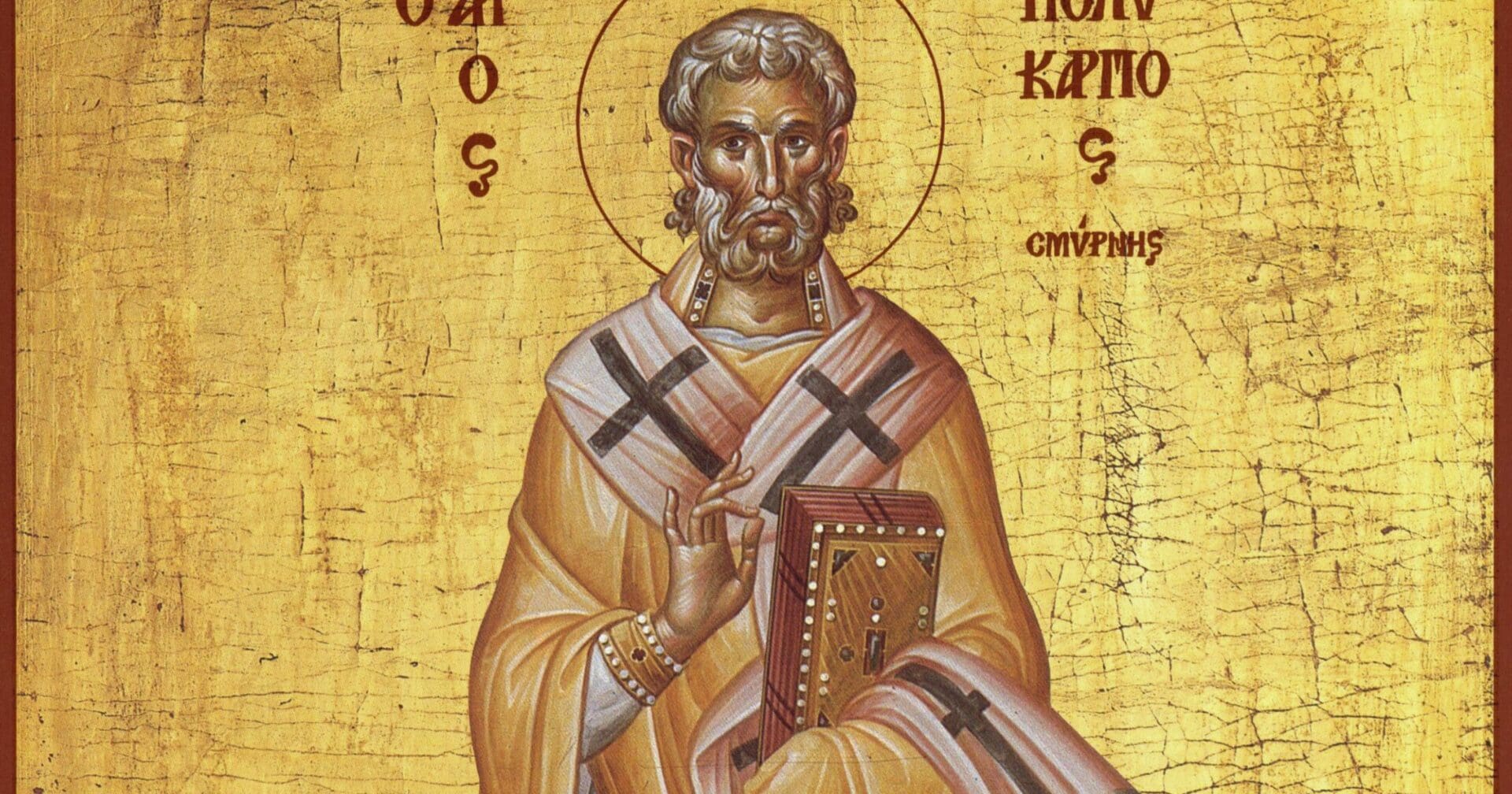
Saint Polycarp, born around 69 A.D. and dying in 155 A.D., served as the Bishop of Smyrna, present-day Izmir, Turkey. He emerged as a pivotal Christian figure in Roman Asia Minor, bridging the gap between the apostolic traditions and the second-century Church. Despite the scarcity of detailed accounts of his life, Polycarp is celebrated mainly for his profound martyrdom, vividly captured in the Martyrium Polycarpi. Converted to Christianity by St. John the Evangelist around 80 A.D., Polycarp was deeply influenced by his teachings and those who had directly encountered Christ. His appointment as the Bishop of Smyrna around 96 A.D. by the Apostles underscores his significance in the early Church.
Polycarp’s close association with St. Ignatius of Antioch, another key figure in the early Christian era, highlights his critical role in linking the apostolic foundations with the patristic developments, particularly in Christian Asia Minor. His encounter with Ignatius, en route to martyrdom in Rome, is marked by Ignatius’s description of Polycarp being adorned with the “garment of grace.” Polycarp’s staunch defense of Christian orthodoxy against heresies like Marcionism and Valentinianism, coupled with his epistle to the Philippians, underscores his theological depth. His letter is particularly notable for its references to New Testament scriptures, evidencing the early circulation of these texts.
Polycarp’s arrest and subsequent martyrdom in Smyrna followed his return from Rome, where he had been discussing the Easter date with Pope Anicetus. Facing his captors with a serene acceptance of God’s will, Polycarp utilized his final moments to pray for the universal Church. His martyrdom, amidst the raucous atmosphere of the Smyrna stadium, was marked by divine encouragement, as a heavenly voice bolstered his resolve. Confronted by the Roman proconsul, Polycarp’s refusal to renounce his faith or to blaspheme Christ, even under threat of death by fire or beasts, exemplifies his unwavering devotion and courage.
Polycarp’s execution by burning, an attempt thwarted by miraculous intervention as the flames encircled but did not consume him, led to his death by stabbing. The subsequent handling of his body, sought after by both Jews and Christians, and the decision to burn his remains to prevent any form of idolatry, culminates in the veneration of Polycarp’s bones as relics. His legacy, enshrined in the celebration of his heavenly birthday, continues to inspire the faithful, reflecting the enduring impact of his martyrdom and teachings on the Christian tradition.
Editorial credit: hramikona / Shutterstock.com
The post Saint Polycarp appeared first on uCatholic.
Daily Reading

Fifth Sunday of Lent
Reading I Ezekiel 37:12-14 Thus says the Lord GOD: O my people, I will open your graves and have you rise from them, and bring you back to the land of Israel.Then you…
Daily Meditation

Jesus’ Timing
Click here for daily readings Jesus loved Mary, Martha, and Lazarus, so He waited. This is such a difficult passage to swallow. Like Martha who cries to Jesus, “Lord, if…