

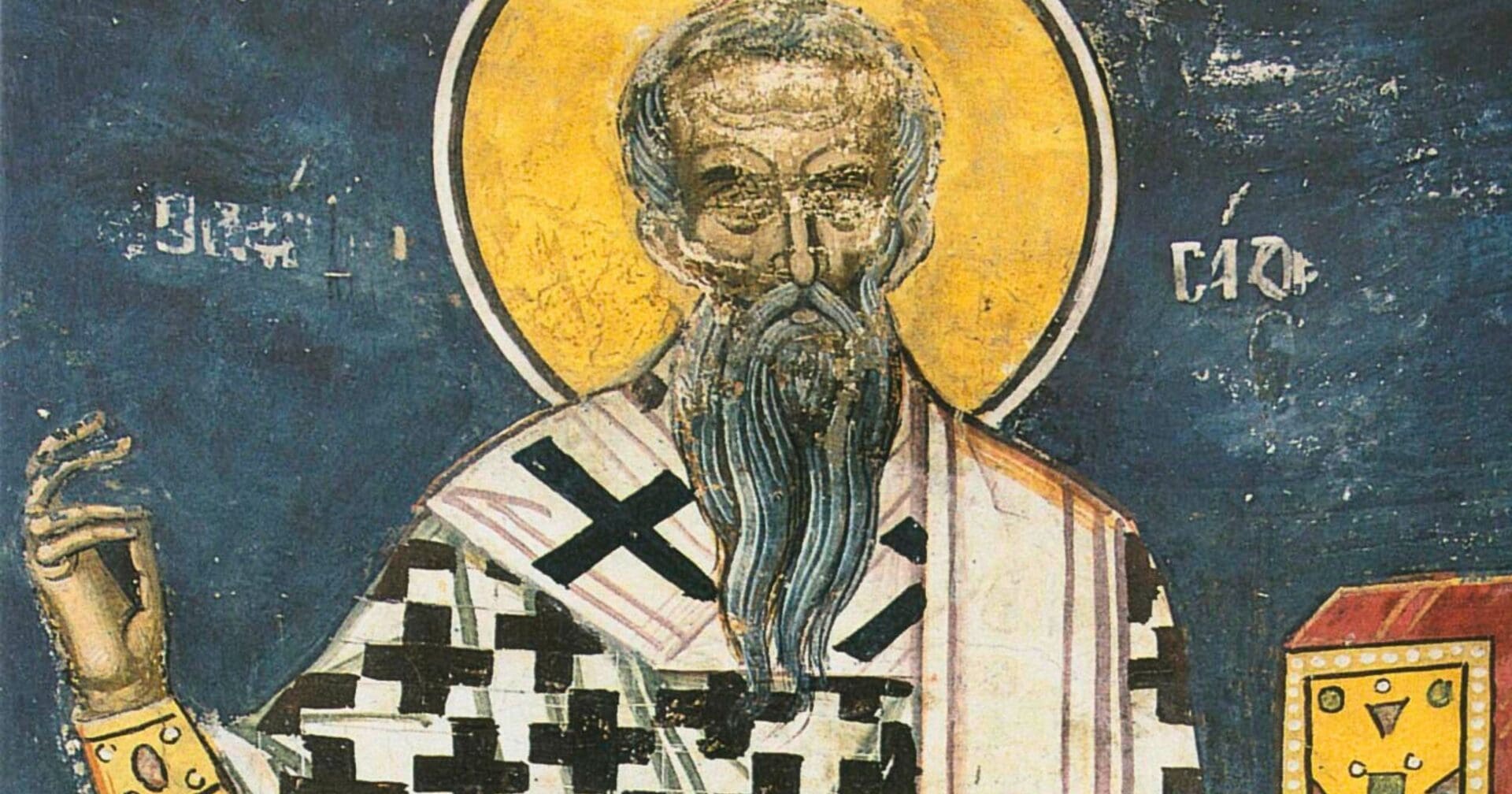
At twenty-five years old, Saint Porphyry of Gaza, originally a wealthy inhabitant of Thessalonica, embarked on a spiritual journey that led him to the desert of Sceté. For five years, he devoted himself to the monastic life within one of its esteemed religious communities. Yet, an inner calling toward a more secluded existence prompted him to move to Palestine. There, amidst rigorous self-discipline, he endured five years of stringent penance until deteriorating health necessitated a reduction in his ascetic practices. Undeterred by his physical ailments, Porphyry made Jerusalem his home, where he dutifully visited the sacred sites daily, displaying a remarkable indifference to his suffering, as if it afflicted someone else entirely.
During this period, a divine inspiration led him to divest all his possessions, distributing the proceeds among the impoverished. This act of sacrifice was met with a miraculous restoration of his health. In 393, Porphyry was ordained as a priest and entrusted with the guardianship of the relics of the true cross. Three years later, despite his attempts to decline due to his humility, he was unexpectedly consecrated as the Bishop of Gaza through the orchestration of a neighboring bishop and the local Christian community, effectively being coerced into acceptance.
Gaza, a stronghold of paganism at the time, presented Porphyry with a vast field for his evangelical endeavors. Through his efforts, complemented by miraculous occurrences, he succeeded in converting many to Christianity. His mission was further bolstered by an imperial decree, secured with the help of St. John Chrysostom, mandating the demolition of pagan temples.
Confronted with a particularly majestic temple dedicated to the principal deity, Porphyry seized the opportunity to symbolically vanquish paganism by constructing a Christian church atop its ruins. The church’s entrance was notably adorned with marble from the destroyed temple, ensuring that each Christian stepping into the church would symbolically trample over the remnants of idolatry and superstition. Porphyry witnessed the near eradication of idol worship within his diocese and passed away in 420.
Photo credit: Public Domain via Wikimedia Commons

The post Saint Porphyry of Gaza appeared first on uCatholic.
Daily Reading

Tuesday of the Second Week of Easter
Reading 1 Acts 4:32-37 The community of believers was of one heart and mind,and no one claimed that any of his possessions was his own,but they had everything in common.With…
Daily Meditation

The Power of Baptism
Click here for daily readings I always find it interesting in the Gospels that people get very confused about seemingly simple statements. It is easy to look back and wonder…