

“I am making you the father of a host of nations.”
“I will give to you and to your descendants after you the land in which you are now staying.”
“If I glorify myself, my glory is worth nothing; but it is my Father who glorifies me.”
On the exact same day I began reflecting on today’s readings from Genesis and the Gospel from John, I read and reflected on a meditation of humility adapted from the writings of the Rev. Cajetan Mary da Bergamo, a Capuchin priest who lived in Italy from 1660 to 1753. His meditations are gathered in the book entitled, Know Thyself: 100 Guided Meditations on Humility of Heart. I highly recommend it to anyone and everyone.
This particular meditation talks about us figuring out what is from God and what is our own. Bergamo’s conclusion is quick and to the point: “By rendering to God what is His, nothing is left to ourselves but nothingness. … all that is within us that is more than nothingness belongs to God, and He can take away what is His when He chooses without doing us any wrong.”
Yet our readings show us God’s love for us. God Himself told Abram the gifts He would give him: a new name and fertility and descendants and a homeland. Earlier in Genesis, we are told Abraham believed God, and it was credited to him as righteousness. Even Jesus, the Son of God Himself, confessed glorifying Himself was nothing, but the Father glorifying Him was everything. Can we believe in — and accept — that all-encompassing love?
Later in Bergamo’s short reflection, he tells us, “All the good that I do comes from God, and nothing belongs to me but my own nothingness. What was I in the abyss of eternity? A mere nothing. And what did I do of myself to emerge from that nothingness? Nothing. If God had not created me, where should I be? In nothingness. If God did not uphold me at every turn, whither should I return? Into nothingness. … When I do evil it is entirely my own work, when I do good it belongs to God alone.”
Knowing and living a humility like that is the wisdom of the saints throughout the ages. As we march closer to the sacrifice of Calvary this Lent, I know that such a humility is not yet mine, as apparent as my nothingness actually is. I pray constantly that I may eventually approach it and fully rely on God — Father, Son and Holy Spirit — who is truly my everything.
“Serás padre de una multitud de pueblos”.
“A ti y a tus descendientes les daré en posesión perpetua toda la tierra de Canaán, en la que ahora vives”.
“Si yo me glorificara a mí mismo, mi gloria no valdría nada. El que me glorifica es mi Padre”.
El mismo día en que comencé a reflexionar sobre las lecturas de hoy del Génesis y del Evangelio de Juan, leí y medité sobre una meditación de humildad adaptada de los escritos del Reverendo Cayetano María de Bérgamo, un sacerdote capuchino que vivió en Italia de 1660 a 1753. Sus meditaciones están recopiladas en el libro titulado Conócete a ti mismo: 100 meditaciones guiadas sobre la humildad del corazón. Lo recomiendo encarecidamente a todo el mundo.
Esta meditación en particular trata sobre discernir qué proviene de Dios y qué es nuestro. La conclusión de Bérgamo es rápida y directa: “Al entregar a Dios lo que es suyo, no nos queda nada más que la nada… todo lo que hay en nosotros que es más que la nada pertenece a Dios, y Él puede quitarnos lo que es suyo cuando lo desee sin hacernos daño alguno”.
Sin embargo, nuestras lecturas nos muestran el amor de Dios por nosotros. Dios mismo le dijo a Abram los dones que le otorgaría: un nuevo nombre, fertilidad, descendencia y una patria. Anteriormente en el Génesis, se nos dice que Abraham creyó en Dios, y esto le fue contado por justicia. Incluso Jesús, el Hijo de Dios mismo, confesó que glorificarse a sí mismo no era nada, pero que la glorificación del Padre lo era todo. ¿Podemos creer en ese amor que abarca todo y aceptarlo?
Más adelante, en su breve reflexión, Bérgamo nos dice: “Todo el bien que hago viene de Dios, y nada me pertenece salvo mi propia nada. ¿Qué era yo en el abismo de la eternidad? Una mera nada. ¿Y qué hice por mí mismo para emerger de esa nada? Nada. Si Dios no me hubiera creado, ¿dónde estaría? En la nada. Si Dios no me sostuviera en cada paso, ¿adónde regresaría? A la nada… Cuando hago el mal, es enteramente obra mía; cuando hago el bien, pertenece sólo a Dios”.
Conocer y vivir una humildad como esa es la sabiduría de los santos a lo largo de los siglos. Al acercarnos al sacrificio del Calvario en esta Cuaresma, sé que aún no poseo esa humildad, por más evidente que sea mi propia insignificancia. Oro constantemente para poder alcanzarla algún día y confiar plenamente en Dios —Padre, Hijo y Espíritu Santo,— quien verdaderamente lo es todo para mí.
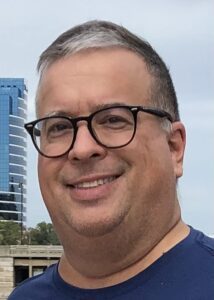 Mike Karpus is a regular guy. He grew up in Michigan’s Upper Peninsula, graduated from Michigan State University and works as an editor. He is married to a retired Catholic school principal, raised two daughters who became Catholic school teachers at points in their careers, and now relishes his three young grandchildren. He serves on a Catholic school board and has served on pastoral councils, a building committee and a parish stewardship committee. He currently is a lector at Mass, a Knight of Columbus, vice president of a memorial scholarship committee and a board member of the local Habitat for Humanity organization. But mostly he’s a regular guy.
Feature Image Credit: Matus Hatala, unsplash.com/photos/body-of-water-waving-i55tj_BBwa0
The views and opinions expressed in the Inspiration Daily blog are solely those of the original authors and contributors. These views and opinions do not necessarily represent those of Diocesan, the Diocesan staff, or other contributors to this blog.
Daily Reading
Thursday of the Fifth Week of Lent
Reading 1 Genesis 17:3-9 When Abram prostrated himself, God spoke to him:“My covenant with you is this:you are to become the father of a host of nations.No longer shall you…
Saint of the Day
Saint Margaret Clitherow
Margaret Clitherow, English martyr, sheltered priests, died by pressing in 1586 for her Catholic faith. The post Saint Margaret Clitherow appeared first on uCatholic.