

After Jesus raises Lazarus from the dead, He returns to Bethany and dines with Lazarus and his sisters. Mary lavishes Jesus’ feet with costly aromatic nard. Around them, crowds press in to gawk at the miracle worker and see for themselves the man who, rumor has it, staggered out from his tomb. Judas Iscariot then accuses Mary of wasting the costly oil that could have been used for the poor. Jesus replies, “Leave her alone. Let her keep this for the day of my burial.”
Jesus’ response refers not to the poor but to what’s about to happen in a mere six days. When we avoid distractions such as neck-craning and nodding at reprimands, we may notice something: the Lord’s message. “Let her keep this for the day of my burial,” He says. I wonder what He means by this. Certainly, he wasn’t referring to the costly oil that was all absorbed into His skin and no longer available to keep.
When someone dies, we recall the last things we said and did with them. While Mary may not have known it at the time, Jesus knew that her most lavish act would be her last encounter with Him while He was alive. What a consolation it must have been for Mary that she had given Jesus her best when she heard the shocking news of His death. So the this, in “let her keep this,” I conclude, refers to the memory of her last time with her Savior.
Mary didn’t know of Jesus’ imminent departure, yet she lavished costly oil upon Him. Unlike Mary, we do know what’s to come during Holy Week. What will we lavish upon Him?
Después de resucitar a Lázaro, Jesús regresó a Betania y cenó con él y sus hermanas. María ungió los pies de Jesús con costoso aceite aromático de nardo. A su alrededor, una multitud se agolpaba para contemplar al hacedor de milagros y ver por sí mismos al hombre que, según los rumores, había salido tambaleándose de su tumba. Judas Iscariote acusó entonces a María de malgastar el óleo costoso que podría haberse usado para los pobres. Jesús respondió: “Déjenla. Esto lo tenía guardado para el día de mi sepultura”.
La respuesta de Jesús no se refería a los pobres, sino a lo que estaba a punto de suceder en tan solo seis días. Cuando evitamos distracciones como estirar el cuello y asentir ante las reprimendas, podemos notar algo: el mensaje del Señor. “Esto lo tenía guardado para el día de mi sepultura”, dijo. Otra traducción dice que guarde esto para el dia de mi sepultura. Me pregunto qué quiso decir con esto. Ciertamente, no se refería al costoso aceite que había sido absorbido por su piel y que ya no se podía guardar.
Cuando alguien muere, recordamos lo último que dijimos e hicimos con esa persona. Aunque María quizá no lo supiera en ese momento, Jesús sabía que su acto más generoso sería su último encuentro con Él en la vida. Qué consuelo debió sentir María al haberle dado lo mejor de sí a Jesús cuando recibió la terrible noticia de su muerte. Por lo tanto, concluyo que esto se refiere al recuerdo de su último momento con su Salvador.
María no sabía de la inminente partida de Jesús, pero aun así le derramó óleo costoso. A diferencia de María, nosotros sí sabemos lo que sucederá durante la Semana Santa. ¿Qué le vamos a derramar nosotros?
 Frances Smit is a children’s book author, a Catechist (of the Good Shepherd), educator, and mom. She serves in-the-pews Catholics seeking MORE through stories that hold space for an encounter with God. She desires everyone to experience that with God, there is always MORE. https://fbsmit.
Feature Image Credit: ali mousavi, https://unsplash.com/photos/white-ceramic-vase-on-white-table-EWIfwcLPALQ
The views and opinions expressed in the Inspiration Daily blog are solely those of the original authors and contributors. These views and opinions do not necessarily represent those of Diocesan, the Diocesan staff, or other contributors to this blog.
Daily Reading

Monday of Holy Week
Reading 1 Isaiah 42:1-7 Here is my servant whom I uphold,my chosen one with whom I am pleased,Upon whom I have put my Spirit;he shall bring forth justice to the…
Saint of the Day
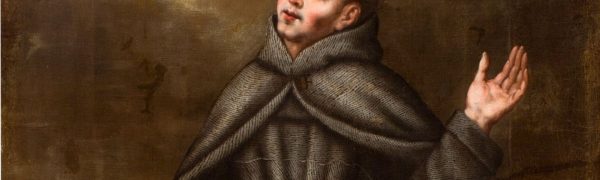
Saint Peter Regalado
Saint Peter de Regalado (1390–1456) was a Friar Minor and reformer. He was born at Valladolid. He was noted reformer, primarily by setting a good and pious example. Had the