

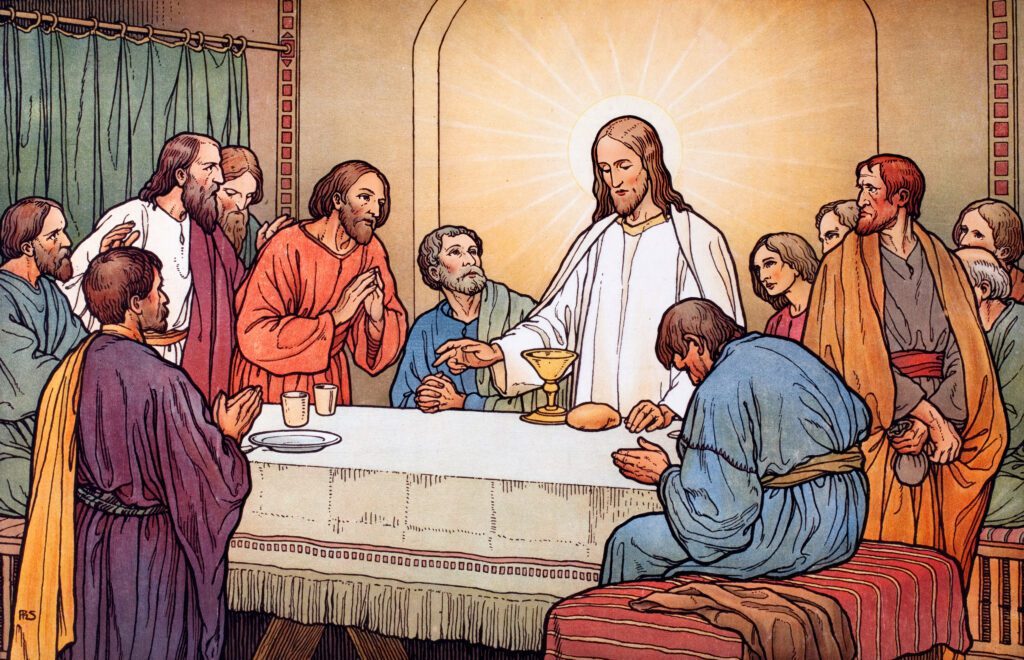
“Morning after morning he opens my ear that I may hear; and I have not rebelled, have not turned back” (Isaiah 50:4-5).
Isaiah’s suffering servant from today’s first reading captures three key points for our consideration. First, discipleship is a day to day commitment—it begins anew each morning. Second, our ears are opened that we may hear the Lord God speak, but we are not forced to hear. Third, there is always the possibility we may rebel, for our free will allows us to choose, or change, the direction we are heading.
These considerations, in turn, create a spotlight for approaching the Gospel reading of the day, as Matthew recounts how Judas Iscariot negotiates with the chief priests and then waits for the opportunity to hand Jesus over to them. It is important to remember that Judas was one of the chosen twelve. With open ears, he had heard the call of Christ and responded, and Jesus drew him into His inner circle. Yet something must have shifted in Judas’s heart along the way, for he rebelled. And if he rebelled, Judas must have stopped hearing.
Jesus knew this. He loved Judas and he knew his heart, just as he knows the inner depths of each of our hearts. How poignant then for Him to speak to His disciples these words about one of His own, sharing with them at table: “The Son of Man indeed goes, as it is written of him, but woe to that man by whom the Son of Man is betrayed” (Matthew 26:24).
Jesus knew what awaited Him. He knew He was to be crucified, as it had been written. But what if Jesus also knew that His crucifixion would come even without the betrayal of Judas? Was it written that Judas had to be a betrayer? Like the suffering servant, Judas could have called upon the Lord for help and he would not have been disgraced (Isaiah 50:7). Jesus was there, near him, waiting. But Judas didn’t reach out to Him, and the outcome of his choices yielded devastating effects. Therefore, Judas’s disgrace becomes our lesson.
May we choose to hear, taking no moment for granted. May we remember that unlike Judas, Jesus’s ears were opened to the voice of the Father, morning after morning, and He trusted. Even in the anticipation of his death, Jesus did not rebel, did not turn back. Instead, He trusted. In doing so Jesus was able to fully surrender His will to the Father. May we, each day, do the same.
“Mañana tras mañana, el Señor despierta mi oído, para que escuche yo, como discípulo. El Señor Dios me ha hecho oír sus palabras y yo no he opuesto resistencia ni me he echado para atrás” (Isaías 50,4-5).
El siervo sufriente de Isaías, de la primera lectura de hoy, nos presenta tres puntos claves para nuestra reflexión. Primero, el discipulado es un compromiso diario: comienza de nuevo cada mañana. Segundo, nuestros oídos se abren para que podamos escuchar al Señor Dios hablar, pero no estamos obligados a escuchar. Tercero, siempre existe la posibilidad de que nos rebelemos, ya que nuestro libre albedrío nos permite elegir o cambiar la dirección que seguimos.
Estas consideraciones, a su vez, nos ayudan a comprender el pasaje del Evangelio que leemos hoy, donde Mateo relata cómo Judas Iscariote negocia con los sumos sacerdotes y luego espera la oportunidad para entregar a Jesús. Es importante recordar que Judas era uno de los doce elegidos. Con los oídos abiertos, había escuchado el llamado de Cristo y había respondido, y Jesús lo había incluido en su círculo íntimo. Sin embargo, algo debió haber cambiado en el corazón de Judas en el camino, pues se rebeló. Y si se rebeló, Judas debió haber dejado de escuchar.
Jesús lo sabía. Amaba a Judas y conocía su corazón, así como conoce las profundidades de cada uno de nuestros corazones. ¡Qué conmovedor entonces que les dijera a sus discípulos estas palabras sobre uno de los suyos, compartiendo la mesa con ellos: “Porque el Hijo del hombre va a morir, como está escrito de él; pero ¡ay de aquel por quien el Hijo del hombre va a ser entregado!” (Mateo 26:24)
Jesús sabía lo que le esperaba. Sabía que sería crucificado, como estaba escrito. Pero ¿y si Jesús también supiera que su crucifixión ocurriría incluso sin la traición de Judas? ¿Estaba escrito que Judas tenía que ser un traidor? Al igual que el siervo sufriente, Judas podría haber invocado al Señor pidiendo ayuda y no habría sido deshonrado (Isaías 50,7). Jesús estaba allí, cerca de él, esperando. Pero Judas no se acercó, y el resultado de sus decisiones tuvo consecuencias devastadoras. Por lo tanto, la deshonra de Judas se convierte en nuestra lección.
Que elijamos escuchar, sin tomar nada por hecho. Recordemos que, a diferencia de Judas, los oídos de Jesús estaban atentos a la voz del Padre, mañana tras mañana, y Él confiaba. Incluso ante la inminencia de su muerte, Jesús no se rebeló ni retrocedió. Al contrario, confió. De esta manera, Jesús pudo entregar completamente su voluntad al Padre. Que nosotros, cada día, hagamos lo mismo.
 Raine Pyne is a longtime public school educator. She is married to Greg, who is also an educator. They have five sons, three dogs, and one cat, plus hundreds of adolescent students and countless stacks of books. Raine is a former parish catechist and women’s retreat leader. She is a student at the Theology of the Body Institute and a member of the Word on Fire Institute’s Writing Community. She is passionate about learning, language, and the ever deepening journey of faith.
Feature Image Credit: Philip Schumacher, https://art.diocesan.com/stock-photo/the-last-supper-16264/
The views and opinions expressed in the Inspiration Daily blog are solely those of the original authors and contributors. These views and opinions do not necessarily represent those of Diocesan, the Diocesan staff, or other contributors to this blog.
Daily Reading

Wednesday of Holy Week
Reading I Isaiah 50:4-9a The Lord GOD has given me a well-trained tongue,That I might know how to speak to the weary a word that will rouse them.Morning after morning …
Saint of the Day
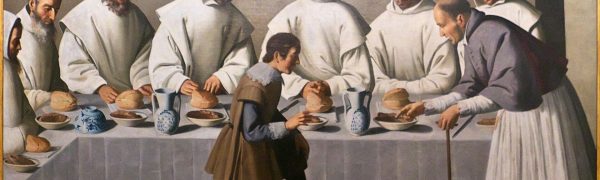
Saint Hugh of Grenoble
Hugh of Grenoble, bishop for 52 years, was a staunch defender of the Church and papacy, and benefactor of St. Bruno, founder of the Carthusian Order. The post Saint Hugh