

Here in John’s Gospel as at other times, Jesus baffles His Apostles. He says that if we know Him, we will also know His Father, and that “whoever has seen me has seen the Father” (John 14:9). Jesus dwells in the Father, and the Father dwells in Him.
We know this if we know the Trinity — each of the three Persons exercises circumincessio, the Latin term describing the mutual indwelling of each Person. The Father, Son, and Holy Spirit are all “in” each other, participating in each other’s life because their life is the same. They are Persons of the same Godhead, all equally God while being distinct persons at the same time.
This is a captivating concept to meditate on in itself, yet Jesus introduces another idea that we could easily gloss over in the same passage. “Amen, amen, I say to you, whoever believes in me will do the works that I do, and will do greater ones than these, because I am going to the Father” (John 14:12). Do we understand what this means?
There’s not really a figurative way to take these words. Jesus has been working miracles throughout His public ministry, and this is what is usually meant by “works.” His believers will do these works and will do greater works than these. How? Why? “Because I am going to the Father. . . . If you ask anything of me in my name, I will do it” (John 14:12, 14).
Jesus goes to the Father and intercedes for us, and the Father delights in granting prayers asked through Jesus’ mediation. So Jesus will grant what we ask, and yet in a sense it will be us doing the works: “whoever believes in me will do the works that I do.”
This is possible for the same reason that Jesus can do the works. Jesus is God, a Person of the Holy Trinity, and possesses infinite power. Yet He has both a divine nature and a human nature: He is truly human. In His humanity, Jesus works miracles by virtue of His perfect union with God.
To the extent that we allow God to dwell in us and therefore express the image of God, we embody the same thing in our own human nature. God longs to dwell in us, and indeed He already dwells in each person. His presence is most potent in those who align themselves to Him. We do this by following Him, by living as He lived and loving as He loved. Our Gospel passage today comes immediately after He urges His disciples to love one another as He has loved them. This is a key for us.
We really can do the same things and greater things than Jesus did. This requires radical trust and radical love. Nothing else is needed.
Aquí, en el Evangelio de Juan, como en otras ocasiones, Jesús desconcierta a sus apóstoles. Dice que si lo conocemos, también conoceremos a su Padre – “Quien me ve a mí, ve al Padre” (Juan 14,9). Jesús mora en el Padre, y el Padre mora en Él.
Esto lo entendemos si conocemos la Trinidad: cada una de las tres Personas ejerce la circumincessio, término latino que describe la mutua inhabitación de cada Persona. El Padre, el Hijo y el Espíritu Santo están todos “en” el otro, participando de la vida del otro porque su vida es la misma. Son Personas de la misma Divinidad, todos igualmente Dios, siendo a la vez personas distintas.
Este es un concepto fascinante para meditar, pero Jesús introduce otra idea que podríamos pasar por alto fácilmente en el mismo pasaje: “Yo les aseguro: el que crea en mí, hará las obras que hago yo y las hará aun mayores, porque yo me voy al Padre” (Juan 14,12). ¿Entendemos lo que esto significa?
No hay una interpretación metafórica para estas palabras. Jesús ha estado realizando milagros a lo largo de su ministerio público, y esto es lo que generalmente se entiende por “obras”. Sus creyentes harán estas obras y harán obras aún mayores. ¿Cómo? ¿Por qué? “…porque yo me voy al Padre; y cualquier cosa que pidan en mi nombre, yo la haré…” (Juan 14,12 y 14).
Jesús va al Padre e intercede por nosotros, y el Padre se complace en conceder las oraciones hechas a través de la mediación de Jesús. Así que Jesús concederá lo que pidamos, y sin embargo, en cierto sentido, seremos nosotros quienes hagamos las obras: “el que crea en mí, hará las obras que hago yo”.
Esto es posible por la misma razón por la que Jesús puede hacer las obras. Jesús es Dios, una Persona de la Santísima Trinidad, y posee poder infinito. Sin embargo, tiene tanto una naturaleza divina como una naturaleza humana: es verdaderamente humano. En su humanidad, Jesús obra milagros en virtud de su perfecta unión con Dios.
En la medida en que permitimos que Dios more en nosotros y, por lo tanto, expresamos la imagen de Dios, encarnamos lo mismo en nuestra propia naturaleza humana. Dios anhela habitar en nosotros, y de hecho, ya habita en cada persona. Su presencia es más poderosa en quienes se unen a Él. Lo logramos siguiéndolo, viviendo como Él vivió y amando como Él amó. El pasaje del Evangelio de hoy se presenta inmediatamente después de que Jesús exhorta a sus discípulos a amarse unos a otros como Él los amó. Esta es una clave fundamental para nosotros.
Realmente podemos hacer las mismas cosas e incluso cosas mayores que las que hizo Jesús. Esto requiere una confianza y un amor absolutos. Ninguna otra cosa es necesaria.
 David Dashiell is a freelance author, editor, and publisher in Hawaii. He has three children, a degree in theology, and enjoys writing poetry and discussing philosophy, culture, music, theology, and comedy. You can find his poetry blog, Poems at Twilight, on Substack, his publishing company, Ether Press, here, and his personal website here.
Feature Image Credit: Jon Tyson, unsplash.com/photos/man-in-black-jacket-lying-on-floor-CYswOLYDUXY
The views and opinions expressed in the Inspiration Daily blog are solely those of the original authors and contributors. These views and opinions do not necessarily represent those of Diocesan, the Diocesan staff, or other contributors to this blog.
Daily Reading

Memorial of Saint Athanasius, Bishop and Doctor of the Church
Readings for the Memorial of Saint Athanasius, Bishop and Doctor of the Church Reading 1 Acts 13:44-52 On the following sabbathalmost the whole citygathered to hear the word of the…
Saint of the Day
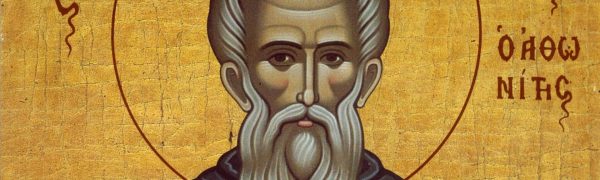
Saint Athanasius
Saint Athanasius the Great, a Bishop, Confessor, and Doctor of the Church, is renowned for defending the Christian faith against early heresies. The post Saint Athanasius appeared first on uCatholic.