
Click here for daily readings

God is in the business of drawing all to Himself, of embracing all in His infinite healing Love. And, to our surprise, He chooses to need us to help Him accomplish this mission. Jesus wants to dwell within and work through each of us, as members of His very Body, to finish the work He began during His earthly life.

We become members of the family of God through Baptism, and the life of grace in us is replenished and nourished and increased when we receive the very Bread of Life, the Body, Blood, Soul, and Divinity of Christ, in the Eucharist. As the life of Christ increases in us, so He is increasingly able to work in us and through us, to draw others to Himself. 

Through the sacraments, Christ’s life in us expands, so that He is living His life in ours, and He is continuing His work with our cooperation. Our baptism makes us co-workers with Christ, co-missionaries, not fossils. We are baptized to become disciples, and as disciples, we must grow in knowledge and grace so that we can go and help make more disciples!

We are called by our baptism and empowered by our participation in the Eucharistic liturgy to be ready to open our mouths to share the Good News of Jesus Christ with those who are open (this openness being a critical point for our missionary efforts). As Philip opened his mouth and proclaimed Jesus to the eunuch, who expressed an openness to the Truth by asking a question, so may we be willing to invite others into the joy of all that is true and good and beautiful. Then we will be able to say with the Psalmist: “Hear now, all you who fear God, while I declare what He has done for me!”

Contact the author


Dios se dedica a atraer a todos hacia Sí mismo, a abrazar a todos en Su infinito Amor sanador. Y, para nuestra sorpresa, Él elige necesitarnos para que le ayudemos a cumplir esta misión. Jesús desea habitar en cada uno de nosotros y obrar a través de nosotros, como miembros de Su propio Cuerpo, para terminar la obra que comenzó durante Su vida terrenal.

Nos convertimos en miembros de la familia de Dios a través del Bautismo, y la vida de gracia en nosotros se renueva, se nutre y se incrementa cuando recibimos el verdadero Pan de Vida, el Cuerpo, la Sangre, el Alma y la Divinidad de Cristo, en la Eucaristía. A medida que la vida de Cristo crece en nosotros, Él es cada vez más capaz de obrar en nosotros y a través de nosotros para atraer a otros hacia Sí mismo.

A través de los sacramentos, la vida de Cristo en nosotros se expande, de modo que Él vive su vida en la nuestra, y continúa su obra con nuestra cooperación. Nuestro bautismo nos convierte en colaboradores de Cristo, en misioneros, no en seres pasivos. Somos bautizados para convertirnos en discípulos, y como discípulos, debemos crecer en conocimiento y gracia para poder ir y ayudar a formar más discípulos.

Estamos llamados por nuestro bautismo y fortalecidos por nuestra participación en la liturgia eucarística para estar listos para abrir la boca y compartir la Buena Nueva de Jesucristo con aquellos que están abiertos a ella (esta apertura es un punto crucial para nuestros esfuerzos misioneros). Así como Felipe abrió la boca y proclamó a Jesús al eunuco, quien expresó su apertura a la Verdad haciendo una pregunta, así también nosotros podemos estar dispuestos a invitar a otros a la alegría de todo lo que es verdadero, bueno y bello. Entonces podremos decir con el salmista: “Cuantos temen a Dios, vengan y escuchen, y les diré lo que ha hecho por mí”.

Comunicarse con la autora


Kathryn Mulderink, MA, is married to Robert, Station Manager for Holy Family Radio. Together they have seven children (including Father Rob), and eleven grandchildren. She is President of the local community of Secular Discalced Carmelites and has published five books and many articles. Over the last 30 years, she has worked as a teacher, headmistress, catechist, Pastoral Associate, and DRE, and as a writer and voice talent for Catholic Radio. Currently, she serves the Church by writing and speaking, and by collaborating with various parishes and to lead others to encounter Christ and engage their faith. Her website is www.KathrynTherese.com

Feature Image Credit: Comunidade Javé Nissi, pexels.com/photo/gold-colored-trophy-in-tilt-shift-lens-6915822/

The views and opinions expressed in the Inspiration Daily blog are solely those of the original authors and contributors. These views and opinions do not necessarily represent those of Diocesan, the Diocesan staff, or other contributors to this blog.

Daily Reading


Saint of the Day


Pictures of Saint George usually show him killing a dragon to rescue a beautiful lady. The dragon stands for wickedness. The lady stands for God’s holy truth. St. George was a brave martyr who was victorious over the devil.

Born, in Syria Palaestina, he was a soldier in the army of the Roman Emperor Diocletian, and he was one of the Emperor’s favorite soldiers. Now Diocletian was a pagan and a bitter enemy to the Christians. He put to death every Christian he could find. St. George was a brave Christian, a real soldier of Christ. Without fear, he went to the Emperor and sternly scolded him for being so cruel. Then he gave up his position in the Roman army. For this he was tortured in many terrible ways and finally beheaded.

So boldly daring and so cheerful was St. George in declaring his Faith and in dying for it that Christians felt courage when they heard about it. Many songs and poems were written about this martyr. Soldiers, especially, have always been devoted to him.

He is the patron of many countries including, England, Palestine, Portugal, Malta, and more. He is a patron of Soldiers and one the 14 Holy Helpers.

Photo credit: Public Domain via Wikimedia Commons

Love uCATHOLIC?
Get our inspiring content delivered to your inbox every morning – FREE!

The post Saint George appeared first on uCatholic.

Daily Reading

 

Daily Meditation


Click here for daily readings

One day before today’s Gospel, Jesus fed the multitude with just five barley loaves and two fish. He calmed the sea and walked on water to His disciples. Now, the crowds have followed Him to Capernaum, and there, amazingly, they still ask Him, “Then what sign do you do, that we may see, and believe you? What work do you perform?” (John 6:30) Seriously, people?

After reminding them to seek the food that endures for eternity, the bread of heaven, they respond “Lord, give us this bread always” (John 6:34). He finally sees His opportunity to go on. He has their attention and their hearts are open, if only just a little. So He begins today’s Gospel: “I am the bread of life…”

“I am it,” He seems to say. “I am everything you are searching for. I am everything you need. I have been sent to you by my Father because He loves you, each and every one of you. I am here to do His will, and His will is to gather every heart to Him. Come to me.”

Jesus shared this astounding invitation with His disciples that day in Capernaum, and He’s sharing it still with each of us today. Jesus was sent by God to gather all; He was sent by God to gather you. Specifically, you. He is the bread from heaven that will sustain you in every way. And He will never give up on you. Ever. Come to Him.

Like those disciples in Capernaum, we can lose sight of all the wonders God has already done in our lives. We can become complacent and ask, “What can you do for me now?” Seriously, people? How about everything?

Next time we approach the altar to receive the Eucharist, instead of just walking along in the Communion line, let’s truly come to Him. Let’s look to Jesus and hear his words, “I am the bread of life; whoever comes to me will never hunger, and whoever believes in me will never thirst.” And from our heart of hearts, let’s humbly answer, “Lord, give us this bread always.”

Contact the author


Un día antes del Evangelio de hoy, Jesús alimentó a la multitud con tan solo cinco panes de cebada y dos peces. Calmó el mar y caminó sobre las aguas hacia sus discípulos. Ahora, la multitud lo ha seguido hasta Capernaúm, y allí, sorprendentemente, todavía le preguntan: “¿Qué signo vas a realizar tú, para que lo veamos y podamos creerte? ¿Cuáles son tus obras?” (Juan 6:30). ¿De verdad?

Tras recordarles que busquen el alimento que perdura para la eternidad, el pan del cielo, responden: “Señor, danos siempre de ese pan” (Juan 6:34). Jesús finalmente ve la oportunidad de continuar. Capta su atención y sus corazones se abren, aunque sea solo un poquito. Y así comienza el Evangelio de hoy: “Yo soy el pan de vida…”

“Yo lo soy”, parece decir. “Yo soy todo lo que buscan. Yo soy todo lo que necesitan. Mi Padre me ha enviado porque los ama a cada uno de ustedes. Estoy aquí para hacer su voluntad, y su voluntad es reunir cada corazón en torno a Él. Vengan a mí.”

Jesús compartió esta asombrosa invitación con sus discípulos aquel día en Capernaúm, y la sigue compartiendo con cada uno de nosotros hoy. Jesús fue enviado por Dios para reunir a todos; fue enviado por Dios para reunirte a ti. Específicamente, a ti. Él es el pan del cielo que te sustentará en todo. Y nunca te abandonará. Nunca. Ven a Él.

Al igual que aquellos discípulos en Capernaúm, podemos perder de vista todas las maravillas que Dios ya ha hecho en nuestras vidas. Podemos caer en la complacencia y preguntarnos: “¿Qué puedes hacer por mí ahora?” ¿De verdad? La respuesta es, ¡todo!

La próxima vez que nos acerquemos al altar para recibir la Eucaristía, en lugar de simplemente caminar en la cola de comunión, acerquémonos verdaderamente a Él. Miremos a Jesús y escuchemos sus palabras: “Yo soy el pan de vida. El que viene a mí no tendrá hambre, y el que cree en mí nunca tendrá sed”. Y desde lo más profundo de nuestro corazón, respondamos humildemente: “Señor, danos siempre de ese pan”.

Comunicarse con la autora


Pamela Kavanaugh is a grateful wife, mother, and grandmother who has dedicated her professional life to Catholic education. Though she has done her very best to teach her students well in the subjects of language and religion, she knows that she has learned more than she has taught. She lives, teaches, and writes in southwest suburban Chicago.

Feature Image Credit: Jan Davidsz. DeHeem, art.diocesan.com/stock-photo/still-life-with-a-host-surrounded-by-a-wreath-of-fruit-25113/

The views and opinions expressed in the Inspiration Daily blog are solely those of the original authors and contributors. These views and opinions do not necessarily represent those of Diocesan, the Diocesan staff, or other contributors to this blog.

Daily Reading


Saint of the Day


We have little definite information about Pope Saint Caius. It was said that he was a relative of the Emperor Diocletian and was also an uncle of an unidentified holy Susanna. He also made up the final structure of the lower orders. The information is not verifiable, but seems to maybe preclude his martyrdom, because – on the threshold of Peter from 283 to 296 – he died before the Diocletian persecution was unleashed.

Legend has it that Caius was born in the Dalmatian city of Salona (nda: Solin is about 5 km NE of Split), to a noble family related to the Roman emperor Diocletian.

Pope Caius was consecrated on December 17, 283. However, during his pontificate, the anti-repression was much attenuated. There were concessions for the construction of new churches and the expansion of cemeteries.

At the same time, on the home front, heresies multiplied. The last in chronological order was that of “Mitra” (nda: manicheistic type of heresy, of Asian origin, for which God assumed the heavenly contrast of light and of darkness).

His remains were first placed in the cemetery of San Callisto, in 1631, in what was his house in Rome, which then became a church. In 1880, when the church was demolished to build the Ministry of War, in via XX settembre, his relics were transferred to the chapel of the Barberini family.

Photo credit: Public Domain via Wikimedia Commons

Love uCATHOLIC?
Get our inspiring content delivered to your inbox every morning – FREE!

The post Pope Saint Caius appeared first on uCatholic.

Daily Reading


Daily Meditation


Click here for daily readings

In today’s Gospel we see this moment when the crowd, still buzzing from the miracle of the multiplication of the loaves and fishes, goes searching for Jesus—not because they want Him, but because they want more of what He can give. I’m not going to lie, this makes me squirm a bit because I realize how often this is me!  How many times have I come to prayer with a list of needs, hoping God will multiply something in my life—finances, quick resolutions, recognition—rather than simply asking for the grace to trust Him?

Jesus, with such gentleness, redirects the people’s desire. He doesn’t scold their hunger; He simply invites them to a deeper one. “Do not work for food that perishes,” He says, “but for the food that endures for eternal life.” He acknowledges their longing but shifts their gaze from the temporary to the eternal, from the surface to the soul. It’s such a tender correction—one I need far more often than I’d like to admit.

The crowd asks what they must do to accomplish God’s works, expecting some impressive task. Instead, Jesus gives them something beautifully simple: Believe. Sure, that might feel like a difficult task, but Jesus would never ask the impossible! Believing, trusting, and hoping in the unknown, are all possible with the grace of God. And we merely need to ask to receive it. Look beyond the miracle to the One who performed it. This is the daily invitation of discipleship—not to chase after the quick fix, the visible sign, or the material reassurance, but to place our confidence in the Christ who sustains us in ways the world never could.

In my own life, God has shown me again and again that the “bread” I think I need is rarely the nourishment my heart is truly craving. The real miracle is not the multiplied loaves but the multiplied grace that comes when I seek Jesus for who He is, not for what He can provide.

Contact the author


En el Evangelio de hoy vemos este momento en el que la multitud, aún entusiasmada por el milagro de la multiplicación de los panes y los peces, busca a Jesús, no porque lo deseen a él, sino porque desean más de lo que pueden recibir de Él. No voy a mentir, esto me incomoda un poco porque me doy cuenta de cuántas veces hago lo mismo. ¿Cuántas veces he venido a orar con una lista de necesidades, esperando que Dios multiplique algo en mi vida (finanzas, propósitos rápidos, reconocimiento) en lugar de simplemente pedir la gracia de confiar en Él?

Jesús, con tanta dulzura, redirige el deseo de la gente. No reprende su hambre; simplemente los invita a una más profunda. “No trabajen por ese alimento que se acaba, sino por el alimento que dura para la vida eterna”. Reconoce su anhelo, pero desvía su mirada de lo temporal a lo eterno, de la superficie al alma. Es una corrección tan tierna, una que necesito mucho más a menudo de lo que me gustaría admitir. 

La multitud pregunta qué deben hacer para realizar las obras de Dios, esperando una tarea impresionante. En cambio, Jesús les da algo hermosamente simple: Creer. Claro, puede parecer una tarea difícil, ¡pero Jesús nunca pediría algo imposible! Creer, confiar y tener esperanza en lo desconocido son posibles con la gracia de Dios. Y tan solo tenemos que pedirlo para recibirlo. Miremos más allá del milagro, a Aquel que lo realizó. Esta es la invitación diaria del discipulado: no a buscar la solución rápida, la señal visible ni la tranquilidad material, sino a depositar nuestra confianza en Cristo, quien nos sostiene de maneras que el mundo nunca podría.

En mi propia vida, Dios me ha mostrado una y otra vez que el “pan” que creo necesitar rara vez es el alimento que mi corazón realmente anhela. El verdadero milagro no son los panes multiplicados, sino la gracia multiplicada que llega cuando busco a Jesús por quién es, no por lo que me puede dar.

Comunicarse con la autora


Allison Gingras (www.ReconciledToYou.com ) shares an everyday Catholic faith with humor and honesty. Her writing includes The Handy Little Guide to Novenas (OSV), Encountering Signs of Faith (Ave Maria Press), the Stay Connected Journals for Catholic Women (OSV), and her newest book, Jesus Heals (OSV), published in 2025. Allison is the Director of Digital Evangelization for Family Rosary USA.

Feature Image Credit: Blickpixel, pixabay.com/photos/children-love-friends-hand-flower-512601/

The views and opinions expressed in the Inspiration Daily blog are solely those of the original authors and contributors. These views and opinions do not necessarily represent those of Diocesan, the Diocesan staff, or other contributors to this blog.

Daily Reading


Saint of the Day


Click here for daily readings

Around this time five years ago, our first granddaughter was baptized. Public gatherings were troublesome in pandemic days. Events that should have brought great rejoicing were muted by the fear of disease. Our pastor offered a private ceremony in which ten masked family members could attend. We stressed over who the ten should be. Our immediate family was six. Add the priest, the baby, her father, a non-family member godparent, and my parents and that was twelve. It left no room for aunts, uncles, cousins, significant others, or the father’s devout Baptist family. 

Worry over hurt feelings and directives from our diocese that no group baptisms should be held clouded my joy over the pending baptism. I felt a lot of responsibility for making sure she was baptized in the church and lamented my concerns to the sacristan at another church where I was an organist. He and I, a cantor, a lector, and a priest were the only ones allowed to be present while the Mass was being live streamed. 

“Your granddaughter’s baptism is not only for her, but for her parents and the rest of your family to receive that grace,” he said. That statement interrupted my drive into pious control and reminded me that the grace extended at baptism would help cover my sins too. Rather than concerning myself with the reception of a sacrament, I had been worrying about a ceremony and a celebration. 

Our diligence encourages the dissipation of the deceptive voice of the devil, who continually dares us to abandon our deliberate confidence in a loving God. Yet today’s first reading from Acts and the Responsorial Psalm remind us to persevere and not allow the concerns of the day to waiver our faith. “I set the Lord ever before me; with him at my right hand I shall not be disturbed,” the psalmist says. 

On the road to Emmaus, Cleopas says to Jesus, whom he does not recognize: “it is now the third day since this took place. Some women from our group, however, have astounded us: they were at the tomb early in the morning and did not find his body; they came back and reported that they had indeed seen a vision of angels who announced that he was alive.”

Jesus expresses disappointment in their initial lack of faith. “Oh, how foolish you are! How slow of heart to believe all that the prophets spoke!” It wasn’t until he broke the bread for them that “their eyes were opened and they recognized him.”

The sacristan’s words opened my eyes to the importance of spiritual diligence – doing everything needed for the salvation of my soul and the souls around me. Despite masks and a small “audience,” my granddaughter’s baptism brought great joy and when a few extra people showed up our priest welcomed them. 

Contact the Author


Hace cinco años, por estas fechas, bautizamos a nuestra primera nieta. Las reuniones públicas eran problemáticas en tiempos de pandemia. Eventos que deberían haber traído gran regocijo se vieron empañados por el miedo a la enfermedad. Nuestro párroco ofreció una ceremonia privada a la que podían asistir diez familiares con mascarilla. Nos preocupamos de quiénes serían esos diez. En tan solo nuestra familia inmediata éramos seis. Si a eso le sumamos el sacerdote, la bebé, su padre, un padrino que no era de la familia y mis padres, eran doce. No quedaba espacio para tías, tíos, primos, parejas ni para la devota familia bautista del padre.

La preocupación por los sentimientos heridos y las directivas de nuestra diócesis de que no se celebraran bautismos en grupo nublaron mi alegría por el bautismo pendiente. Sentía mucha responsabilidad por asegurarme de que se bautizara en la iglesia y lamenté mis preocupaciones al sacristán de otra iglesia donde yo era organista. Él y yo, un cantor, un lector y un sacerdote, éramos los únicos con permiso para estar presentes mientras se transmitía la misa en línea. 

“El bautismo de tu nieta no es solo para ella, sino para que sus padres y el resto de tu familia reciban esa gracia”, dijo. Esa declaración interrumpió mi impulso hacia el control piadoso y me recordó que la gracia otorgada en el bautismo también ayudaría a cubrir mis pecados. En lugar de preocuparme por la recepción de un sacramento, me había estado preocupando por una ceremonia y una celebración.

Nuestra diligencia fomenta la disipación de la voz engañosa del diablo, que continuamente nos reta a abandonar nuestra confianza deliberada en un Dios amoroso. Sin embargo, la primera lectura de hoy de los Hechos de los Apóstoles y el Salmo Responsorial nos recuerdan que debemos perseverar y no permitir que las preocupaciones del día debiliten nuestra fe. “Tengo siempre presente al Señor y con él a mi lado, jamás tropezaré”, dice el salmista. 

De camino a Emaús, Cleofás le dice a Jesús, a quien no reconoce: “han pasado ya tres días desde que estas cosas sucedieron. Es cierto que algunas mujeres de nuestro grupo nos han desconcertado, pues fueron de madrugada al sepulcro, no encontraron el cuerpo y llegaron contando que se les habían aparecido unos ángeles, que les dijeron que estaba vivo”.

Jesús expresa su decepción por su falta de fe inicial. “¡Qué insensatos son ustedes y qué duros de corazón para creer todo lo anunciado por los profetas!” No fue hasta que partió el pan que “se les abrieron los ojos y lo reconocieron”.

Las palabras del sacristán me abrieron los ojos a la importancia de la diligencia espiritual: hacer todo lo necesario para la salvación de mi alma y de las almas que me rodeaban. A pesar de las mascarillas y del reducido público, el bautizo de mi nieta me trajo una gran alegría y, cuando llegaron algunas personas de más, nuestro sacerdote les dio la bienvenida a ellos también.

Comunicarse con la autora


Beth Casteel writes from rural southwestern Pennsylvania. She and her husband  are blessed with four adult children and four grandchildren. You can read more of her work at https://bethcasteel.com/ or you can check out her chapter in two collaborative books, Crowned With Grace, and Cloud of Witnesses, available at https://store.faithandfamilypublications.com/

Feature Image Credit: Rene Kuder, art.diocesan.com/stock-photo/emmaus-20049/

The views and opinions expressed in the Inspiration Daily blog are solely those of the original authors and contributors. These views and opinions do not necessarily represent those of Diocesan, the Diocesan staff, or other contributors to this blog.

Daily Reading


Saint of the Day


Click here for daily readings

Imagine a child who climbs to the top of a playground structure. He excitedly ascends as high as he can go. He reaches the highest tower and for the first time looks down. His joy quickly melts into fear. The steep slide before him looks to him to be a path of sure death. Panic comes over him. He stands at the top of the playground structure, paralyzed with fear.

The boy hears a clanging noise from the tunnel he had recently emerged from. His eyes widen further. He doesn’t know what to do. Suddenly, a voice calls out from the tunnel, “It’s me.” With those two words, the child immediately feels his body relax. He recognizes that voice because he’s heard it every day of his life. He knows he’s safe because his father has come to rescue him. He knows his father’s voice, and before he can even see him, the boy benefits from his dad’s presence.

Though his father only spoke two words, the boy hears infinitely more meaning. He hears his dad saying, “You’re safe now. I’ve come to help you. You’re not alone.” Many times just a few words can have a profound impact on someone, especially when it’s a voice we recognize without even seeing their face.

The disciples in the boat during today’s Gospel had a similar experience. They rowed in the boat, excited after the miraculous multiplication of the loaves and fishes. It didn’t take long for the euphoria of the miracle to wear off. The “sea was stirred up,” and “they began to be afraid.” Though we don’t get many details in John’s account, we know about this storm from the other Gospels. How quickly their joy melted into fear. Then they saw something that was beyond their comprehension. A man walked on the water toward them. They didn’t understand or know what to do.

Jesus spoke to them and said, “It is I.” These few words said aloud meant a great deal to the Apostles. They recognized His voice and were comforted to know that He was there with them. Their fear melted knowing Jesus was near. They heard His voice and knew Him.

The words Jesus spoke were more than just letting His Apostles know that He was there. Jesus’ words could also be translated as, “I am,” as in the name that God gave to Moses from the burning bush. When Jesus identified Himself as the one walking on the water toward them, He simultaneously affirmed that He is the living and true God. His Apostles have nothing to fear because their Rabbi is more than just a man who can walk on water. He is the Lord.

Contact the Author


Imagina a un niño que sube a lo alto de una estructura de juegos infantiles. Sube emocionado lo más alto que puede. Llega a la torre más alta y, por primera vez, mira hacia abajo. Su alegría se convierte rápidamente en miedo. El tobogán empinado que tiene delante le parece un camino a la muerte segura. El pánico se apodera de él. Permanece en lo alto de la estructura, paralizado por el miedo.

El niño oye un ruido metálico proveniente del túnel del que acababa de salir. Sus ojos se abren aún más. No sabe qué hacer. De repente, una voz grita desde el túnel: “Soy yo”. Con esas dos palabras, el niño siente inmediatamente que su cuerpo se relaja. Reconoce esa voz porque la ha oído todos los días de su vida. Sabe que está a salvo porque su padre ha venido a rescatarlo. Reconoce la voz de su padre, e incluso antes de verlo, el niño se beneficia de su presencia.

Aunque su padre sólo pronunció dos palabras, el niño escucha un significado infinitamente mayor. Oye a su padre decir: “Ahora estás a salvo. He venido a ayudarte. No estás solo”. Muchas veces, solo unas pocas palabras pueden tener un profundo impacto en alguien, especialmente cuando se trata de una voz que reconocemos sin siquiera ver su rostro.

Los discípulos en la barca durante el Evangelio de hoy tuvieron una experiencia similar. Remaban en la barca, emocionados después de la milagrosa multiplicación de los panes y los peces. La euforia del milagro no tardó en desvanecerse. El mar se agitó y comenzaron a tener miedo. Aunque no obtenemos muchos detalles en el relato de Juan, conocemos esta tormenta por los otros Evangelios. ¡Qué rápido su alegría se convirtió en miedo! Entonces vieron algo que estaba más allá de su comprensión. Un hombre caminaba sobre el agua hacia ellos. No entendían ni sabían qué hacer.

Jesús les habló y dijo: “Soy yo”. Estas pocas palabras pronunciadas en voz alta significaron mucho para los Apóstoles. Reconocieron su voz y se consolaron al saber que Él estaba allí con ellos. Su miedo se disipó al saber que Jesús estaba cerca. Oyeron su voz y lo reconocieron.

Las palabras que Jesús pronunció fueron más que simplemente hacerles saber a sus Apóstoles que Él estaba allí. Las palabras de Jesús también podrían traducirse como “Yo soy”, al igual que el nombre que Dios le reveló a Moisés desde la zarza ardiente. Cuando Jesús se identificó como aquel que caminaba sobre las aguas hacia ellos, afirmó simultáneamente que Él es el Dios vivo y verdadero. Sus apóstoles no tienen nada que temer, porque su Maestro es mucho más que un hombre que podía caminar sobre el agua. Es el Señor.

Comunicarse con la autora


Maria Riley is a passionate Catholic author and speaker who loves volunteering or playing board games when she’s not writing or mom-ing around with her four daughters. Her award-winning Catholic children’s chapter book series, Adventures with the Saints, is endorsed by her bishop. Visit her at MariaRileyAuthor.com or on social media @mariarileyauthor. She and her family live in Kansas.

Feature Image Credit: Airgilstudio, pixabay.com/illustrations/jesus-storm-disciples-boat-trust-8748516/

The views and opinions expressed in the Inspiration Daily blog are solely those of the original authors and contributors. These views and opinions do not necessarily represent those of Diocesan, the Diocesan staff, or other contributors to this blog.

Daily Reading


Saint of the Day


Click here for daily readings

Parenting is the work of repetition, especially in families with multiple children. Something can never be said just once. “What’s for dinner?” is an oft repeated question in my home, as well as “What are we doing today?” My husband and I happen to have 6 kids, so there are some days that I feel like I’m experiencing an inordinate amount of déjà vu when I have to repeat the same thing over and over again. 

Sometimes, I wonder if Jesus felt the same way during his ministry. Or, when I’m really feeling like a failure in the patience department, I wonder if God ever feels that way about me. Can’t I just remember what He has told me over and over again? 

In today’s Gospel, we hear Jesus explaining to the people that it was God who gave the Israelites manna in the desert, not Moses. This is something the people ought to know and understand. God had been caring for and providing for His people throughout history. Didn’t they know it already? Wasn’t God tired of having to prove His trustworthiness over and over again?

Clearly not, and praise the Lord for it. God is not like me, or any of us, who lose our patience over repeated childlike requests. Not only did God provide for the Israelites in the desert, Jesus explains that He will continue to provide for us in a new and incredible way. The manna in the desert lasted only a time, but the bread from Heaven will last until the end of time. Jesus, our true Bread, sustains us and gives us access to the Father in a way never before had on earth. 

It’s even more amazing to consider that this isn’t a one and done thing. Jesus doesn’t offer himself to us once in the Eucharist. We are invited weekly, even daily, to the sacrifice of the Mass where we can receive our Lord in true food and drink to nourish our souls. Every day, every single day, Jesus offers Himself to us. He isn’t exasperated with our need for daily nourishment. He isn’t fed up with our consistent need for grace because we have sinned yet again. 

2nd Peter 3:15 tells us that, “Our Lord’s patience is directed toward salvation.” God knows we cannot get to heaven on our own. Because of sin, our desires are disordered and we are prone to fall into temptation. Like my children who ask over and over again what time we are going to the park, we return to God over and over again asking for forgiveness, for grace, for help. And God, over and over again, offers us the Eucharist to support and sustain us. God does not tire of us nor is He surprised when we fall. He is ever faithful, ever patient, and ever loving.

Contact the author


Ser padres es una tarea repetitiva, especialmente en familias con varios hijos. Algo nunca se puede decir solo una vez. “¿Qué hay para cenar?” es una pregunta que se repite con frecuencia en mi casa, al igual que “¿Qué vamos a hacer hoy?” Mi esposo y yo tenemos seis hijos, así que hay días en que siento una sensación de déjà vu desmesurada al tener que repetir lo mismo una y otra vez.

A veces, me pregunto si Jesús sintió lo mismo durante su ministerio. O, cuando me siento realmente impaciente, me pregunto si Dios alguna vez siente lo mismo por mí. ¿Acaso no puedo simplemente recordar lo que me ha dicho una y otra vez?

En el Evangelio de hoy, escuchamos a Jesús explicar al pueblo que fue Dios quien dio el maná a los israelitas en el desierto, no Moisés. Esto es algo que el pueblo debe saber y comprender. Dios había cuidado y provisto a su pueblo a lo largo de la historia. ¿Acaso no lo sabían ya? ¿No estaba Dios cansado de tener que demostrar su confiabilidad una y otra vez?

Claro que no, y alabado sea el Señor por ello. Dios no es como yo, ni como ninguno de nosotros, que perdemos la paciencia ante repetidas peticiones infantiles. Dios no solo proveyó para los israelitas en el desierto, sino que Jesús explica que continuará proveyendo para nosotros de una manera nueva e increíble. El maná en el desierto duró solo un tiempo, pero el pan del Cielo durará hasta el fin del mundo. Jesús, nuestro verdadero Pan, nos sustenta y nos da acceso al Padre como nunca antes en la tierra.

Es aún más asombroso considerar que esto no es algo que se hace una sola vez. Jesús no se ofrece a nosotros una sola vez en la Eucaristía. Somos invitados semanalmente, incluso diariamente, al sacrificio de la Misa, donde podemos recibir a nuestro Señor en verdadero alimento y bebida para nutrir nuestras almas. Cada día, todos los días, Jesús se ofrece a nosotros. No se exaspera con nuestra necesidad de alimento diario. Él no se cansa de nuestra constante necesidad de gracia porque hayamos pecado una vez más.

2 Pedro 3:15 nos dice que “la paciencia de nuestro Señor está dirigida a la salvación”. Dios sabe que no podemos llegar al cielo por nuestros propios medios. Debido al pecado, nuestros deseos están desordenados y somos propensos a caer en la tentación. Como mis hijos que preguntan una y otra vez a qué hora vamos al parque, volvemos a Dios una y otra vez pidiendo perdón, gracia y ayuda. Y Dios, una y otra vez, nos ofrece la Eucaristía para apoyarnos y sostenernos. No se cansa de nosotros ni se sorprende cuando caemos. Dios es siempre fiel, siempre paciente y siempre amoroso.

Comunicarse con la autora

Kate Taliaferro is an Air Force wife and mother. She is blessed to be able to homeschool, bake bread and fold endless piles of laundry. When not planning a school day, writing a blog post or cooking pasta, Kate can be found curled up with a book or working with some kind of fiber craft. Kate blogs at Faith Through a Focolare Focus and the link is https://katetaliaferro.substack.com.

Feature Image Credit: Unknown Artist, art.diocesan.com/stock-photo/i-am-the-bread-of-life-25977/

The views and opinions expressed in the Inspiration Daily blog are solely those of the original authors and contributors. These views and opinions do not necessarily represent those of Diocesan, the Diocesan staff, or other contributors to this blog.

Daily Reading


Saint of the Day


Gundulf, a Lombard citizen of Aosta, and Ermenberga of Burgundian descent birthed Anselm. From his mother, Anselm inherited piety and a thirst for knowledge at an early age. His biographer, Eadmer, recounts childhood memories shared by Anselm, including a vision where he imagined Heaven atop the mountains surrounding his home.

As a child, Anselm attempted to join a monastery but was denied by the abbot, fearing parental backlash. He then prayed for illness to persuade the monks, but despite falling ill, he was still denied entry. This disappointment coincided with the loss of his mother, which weakened his initial resolve. His father’s harshness eventually drove Anselm from home, leading him to travel through Mont Cenis into Normandy.

In Normandy, Anselm found his calling at the Abbey of Bec under Lanfranc’s tutelage. His learning there prepared him for roles he initially resisted, such as prior and eventually abbot after Lanfranc. Anselm’s leadership at Bec was marked by his gentle handling of initial resistance and significant contributions to philosophy and theology.

Anselm’s election as Archbishop of Canterbury came at a turbulent time. He resisted the role but was compelled to accept by King William Rufus’s insistence and a dramatic public ceremony. As archbishop, he navigated conflicts with the monarchy over church freedoms and property, reinforcing the church’s autonomy from royal interference, particularly in the contentious issue of investitures.

His tenure faced numerous challenges, including disputes over the rightful pope, which led Anselm to Rome to argue his allegiance to Pope Urban II. Despite King Henry I’s repeated attempts to sway Anselm to accept royal investiture, Anselm remained firm, resulting in legislative changes that favored church authority.

Anselm’s philosophical contributions were profound, notably his ontological argument for God’s existence, which continues to influence theological and philosophical thought. His life, marked by devotion and intellectual rigor, made him a pivotal figure in religious and academic circles, respected for his moral and scholarly resolve.

Anselm’s writings, foundational yet not as frequently cited as other theologians, offer deep insights into Catholic doctrines. His thoughts on free will, the Holy Spirit, and atonement are particularly noted for their depth and foresight.

Photo credit: Public Domain via Wikimedia Commons

Love uCATHOLIC?
Get our inspiring content delivered to your inbox every morning – FREE!

The post Saint Anselm, Doctor of the Church appeared first on uCatholic.

Daily Reading


Daily Meditation


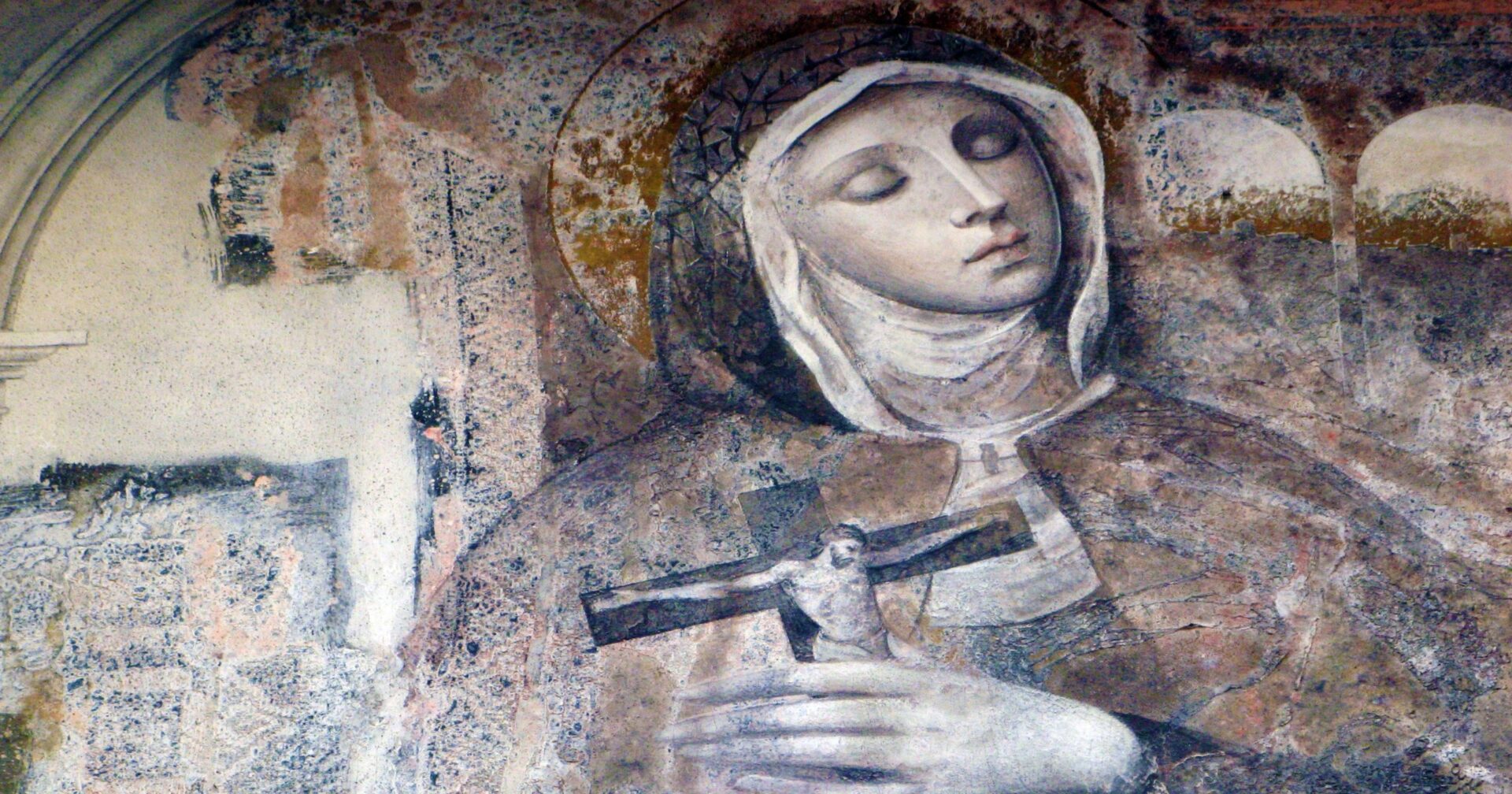
Saint Agnes of Montepulciano, a holy virgin, was born in 1268 in a little village near Montepulciano, Italy, of the wealthy family of De Segni. Her birth was announced by great lights surrounding the house where she was born, and from her babyhood she was one specially marked out for dedication to God.

As a child, she often spent hours reciting the Our Father and Hail Mary on her knees in some private corner of a chamber. She was such a pious child that when she was nine years old her parents placed her in a Franciscan convent known as Sackins, so called because their habits or scapulars were made of sackcloth. Agnes was a model of all virtues to this austere community. She was also well-known for her gifts of miracles and prophecy.

At the age of fifteen, she entered the Dominican Order at Proceno, in the county of Orvieto, and was appointed abbess by Pope Nicholas IV. She slept on the ground, with a stone under her head, and for fifteen years fasted on bread and water. At the age of thirty, however, because of poor health, her spiritual director instructed her to eat other foods.

St. Agnes was noted for her visions. She held the infant Christ in her arms and received Holy Communion from an angel. She experienced levitations and she performed miracles for the faithful of the region.

The people of Montepulciano wanted so much for her to return to them that they destroyed a house of ill repute and in its place built a convent for Agnes. In her hometown, she established in this house nuns of the order of St. Dominic. Agnes continued to be a great example of piety, humility, and charity to all for the remainder of her life. Through a long illness she showed great patience and grace, offering her sufferings up to God for the redemption of souls.

Agnes died at Monte Pulciano on the 20th of April 1317 at the age of 43. Her body was removed to the Dominicans’ church of Orvieto in 1435, where it remains. She was solemnly canonized by Benedict XIII in 1726.

Photo credit: Public Domain via Wikimedia Commons

Love uCATHOLIC?
Get our inspiring content delivered to your inbox every morning – FREE!

The post Saint Agnes of Montepulciano appeared first on uCatholic.

Daily Reading


Daily Meditation