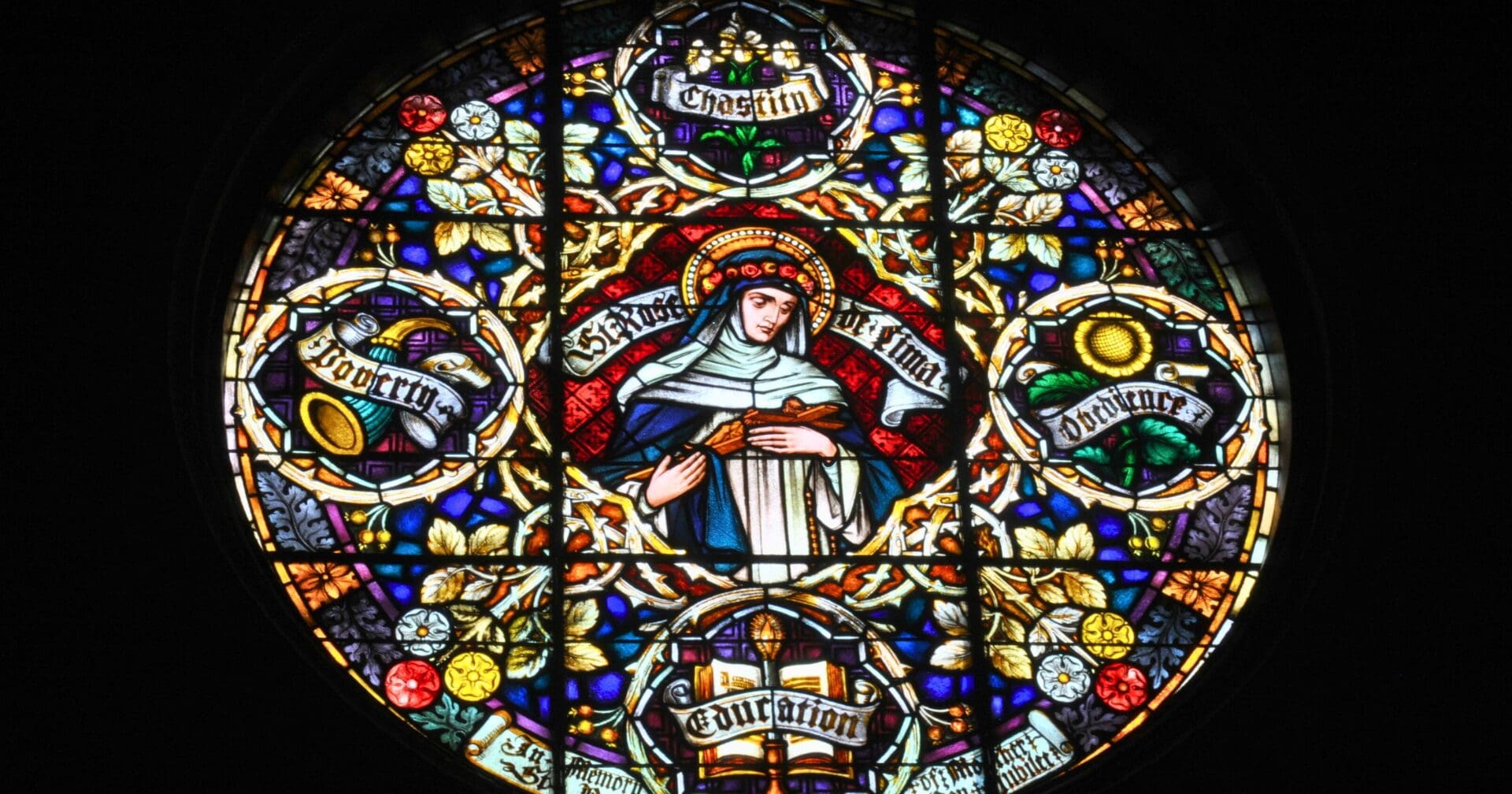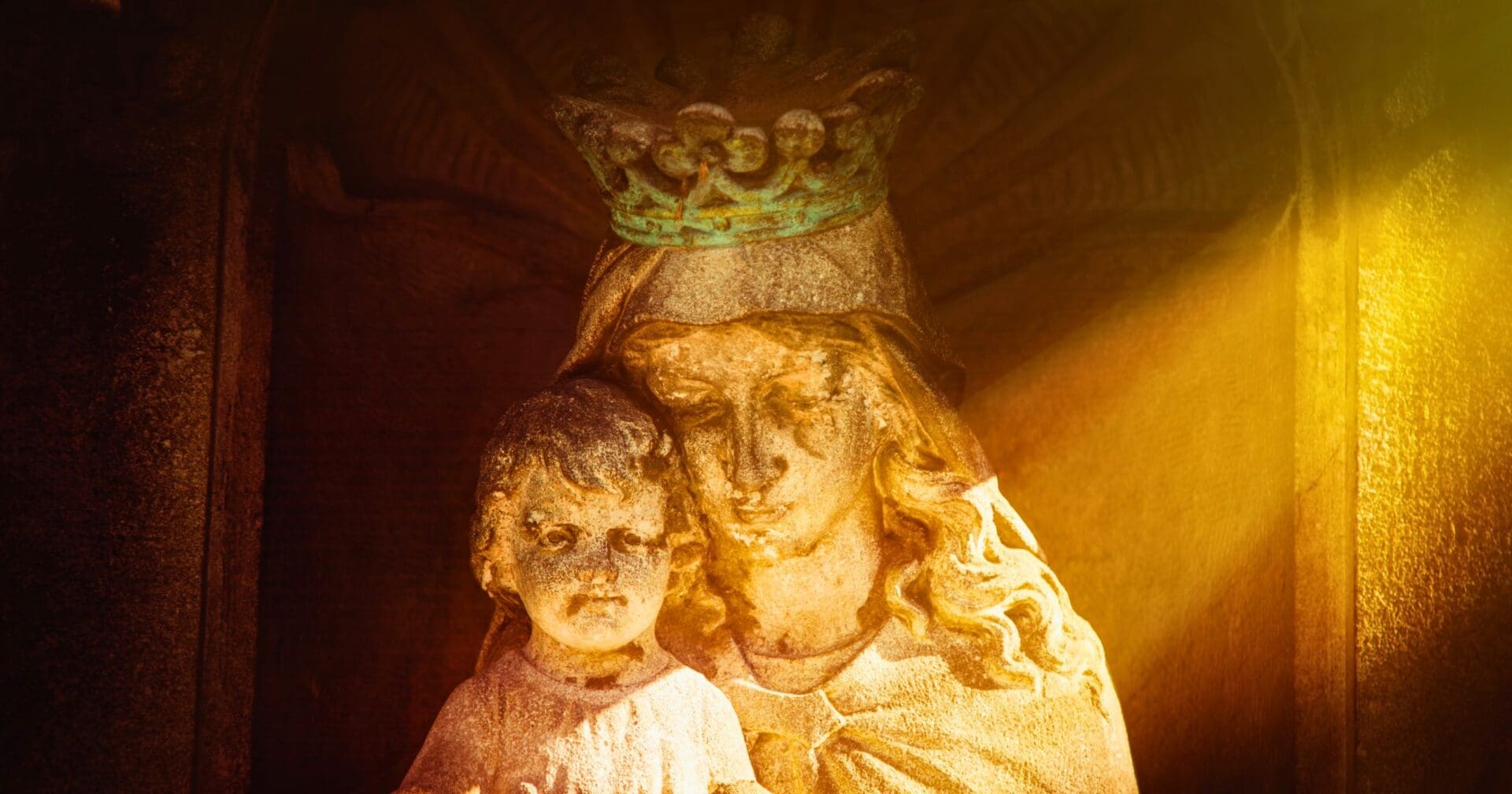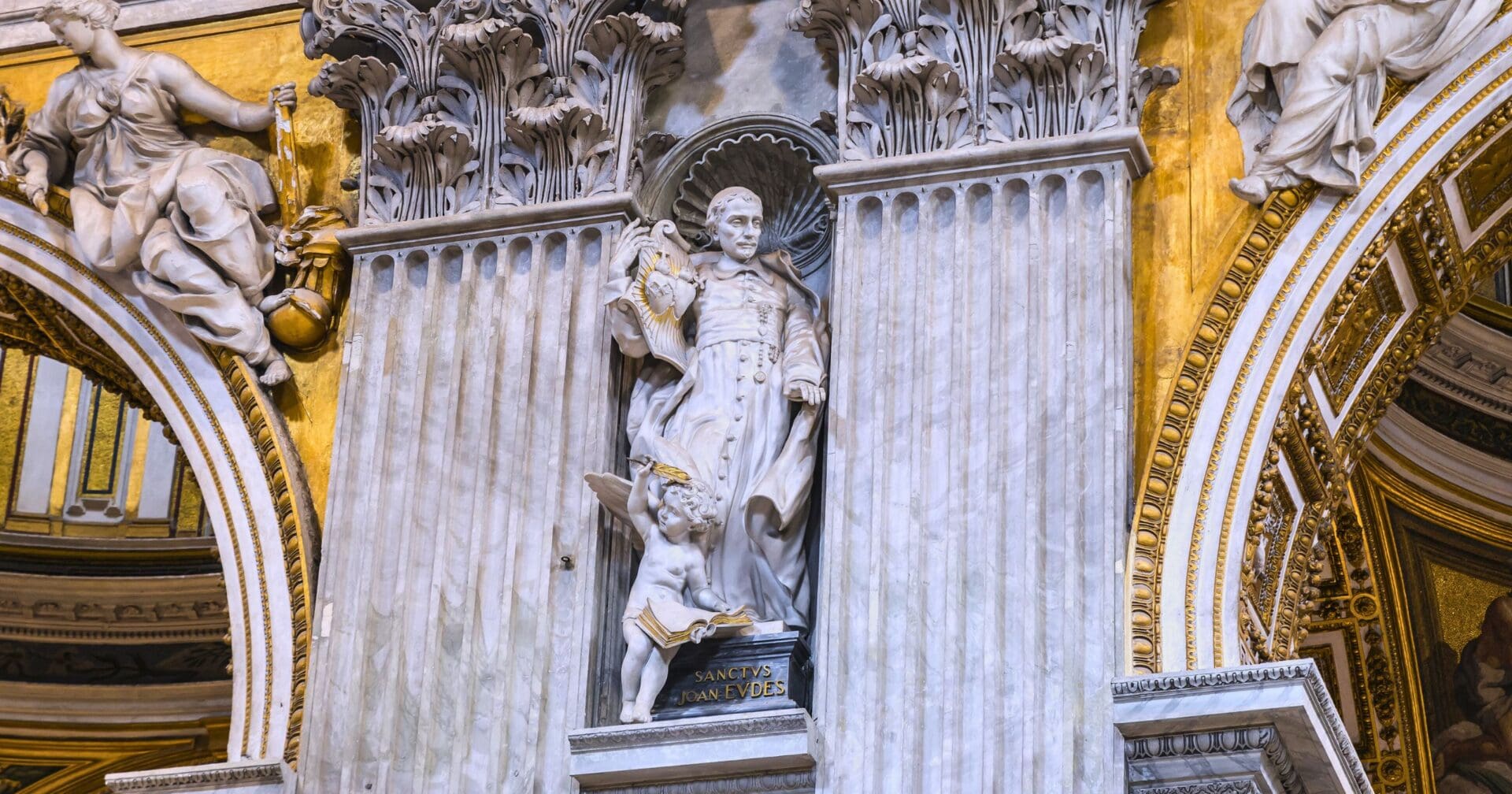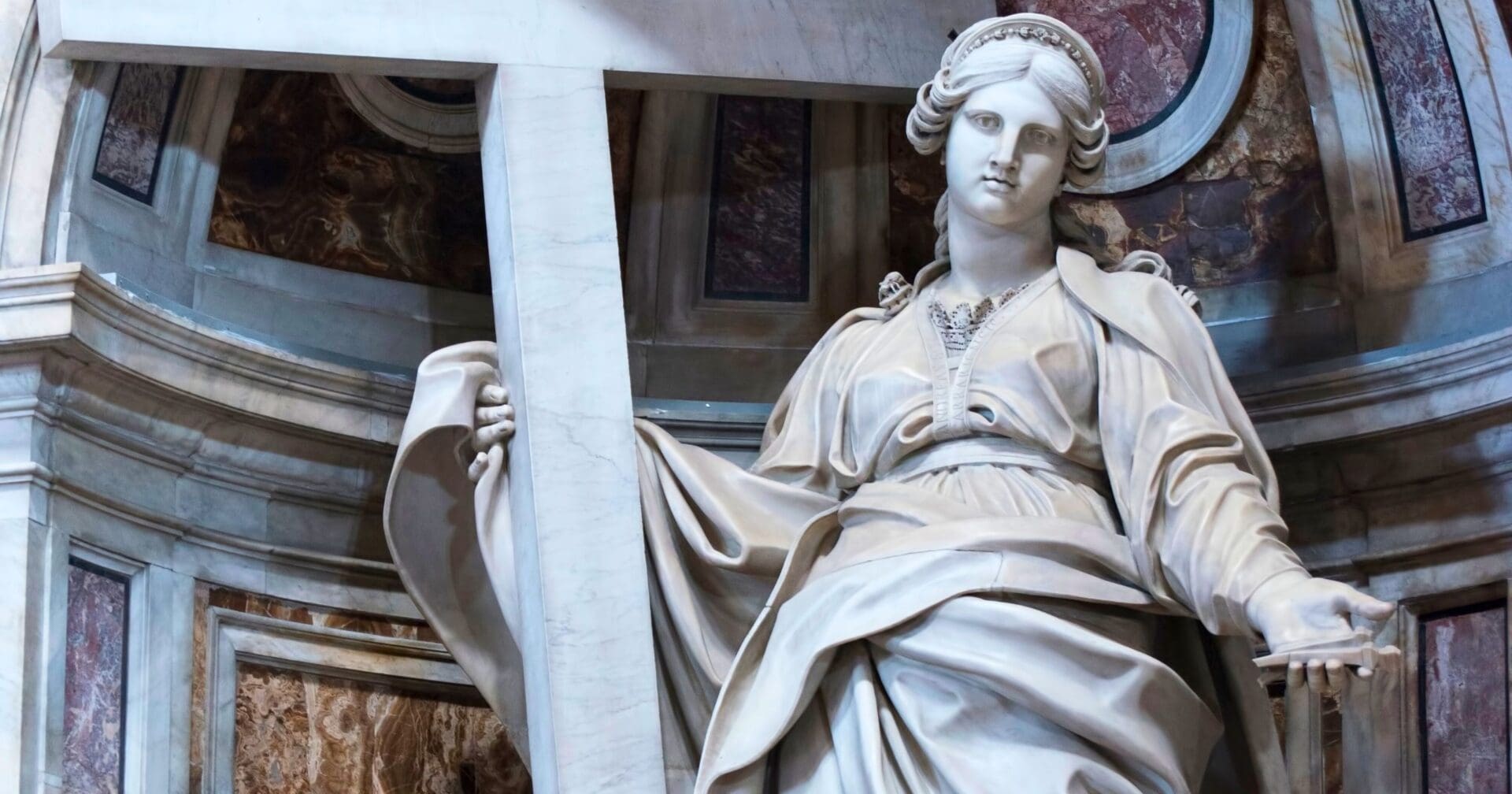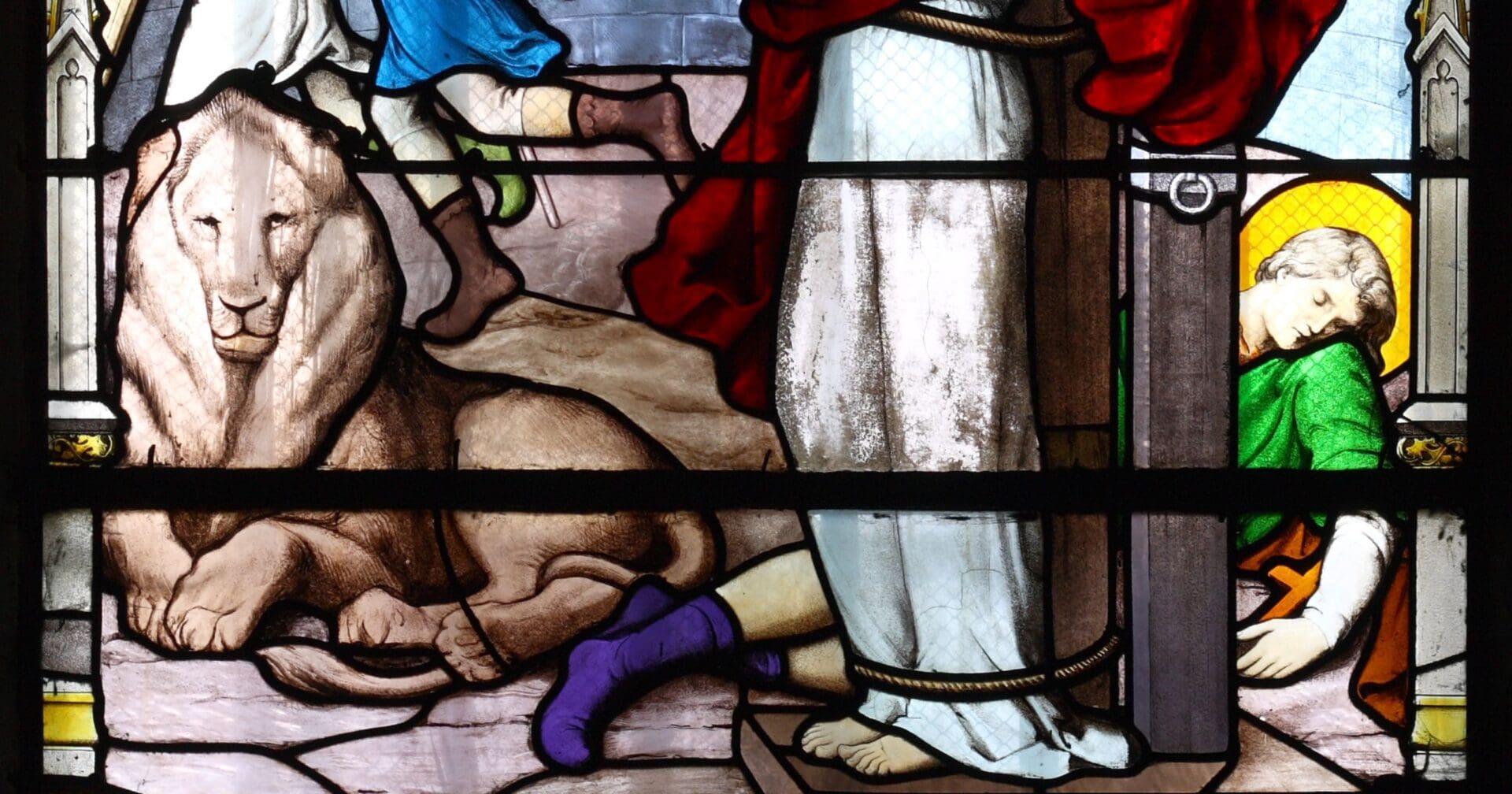

“What is happening? Today there is a great silence over the earth, a great silence, and stillness, a great silence because the King sleeps; the earth was in terror and was still, because God slept in the flesh and raised up those who were sleeping from the ages. God has died in the flesh, and the underworld has trembled.

Truly he goes to seek out our first parent like a lost sheep; he wishes to visit those who sit in darkness and in the shadow of death. He goes to free the prisoner Adam and his fellow-prisoner Eve from their pains, he who is God, and Adam’s son.

The Lord goes in to them holding his victorious weapon, his cross. When Adam, the first created man, sees him, he strikes his breast in terror and calls out to all: ‘My Lord be with you all.’ And Christ in reply says to Adam: ‘And with your spirit.’ And grasping his hand he raises him up, saying: ‘Awake, O sleeper, and arise from the dead, and Christ shall give you light.

‘I am your God, who for your sake became your son, who for you and your descendants now speak and command with authority those in prison: Come forth, and those in darkness: Have light, and those who sleep: Rise.

‘I command you: Awake, sleeper, I have not made you to be held a prisoner in the underworld. Arise from the dead; I am the life of the dead. Arise, O man, work of my hands, arise, you who were fashioned in my image. Rise, let us go hence; for you in me and I in you, together we are one undivided person.

‘For you, I your God became your son; for you, I the Master took on your form; that of slave; for you, I who am above the heavens came on earth and under the earth; for you, man, I became as a man without help, free among the dead; for you, who left a garden, I was handed over to Jews from a garden and crucified in a garden.

‘Look at the spittle on my face, which I received because of you, in order to restore you to that first divine inbreathing at creation. See the blows on my cheeks, which I accepted in order to refashion your distorted form to my own image.

‘See the scourging of my back, which I accepted in order to disperse the load of your sins which was laid upon your back. See my hands nailed to the tree for a good purpose, for you, who stretched out your hand to the tree for an evil one.

`I slept on the cross and a sword pierced my side, for you, who slept in paradise and brought forth Eve from your side. My side healed the pain of your side; my sleep will release you from your sleep in Hades; my sword has checked the sword which was turned against you.

‘But arise, let us go hence. The enemy brought you out of the land of paradise; I will reinstate you, no longer in paradise, but on the throne of heaven. I denied you the tree of life, which was a figure, but now I myself am united to you, I who am life. I posted the cherubim to guard you as they would slaves; now I make the cherubim worship you as they would God.

“The cherubim throne has been prepared, the bearers are ready and waiting, the bridal chamber is in order, the food is provided, the everlasting houses and rooms are in readiness; the treasures of good things have been opened; the kingdom of heaven has been prepared before the ages.”

A reading from an ancient homily for Holy Saturday – http://www.vatican.va/spirit/documents/spirit_20010414_omelia-sabato-santo_en.html

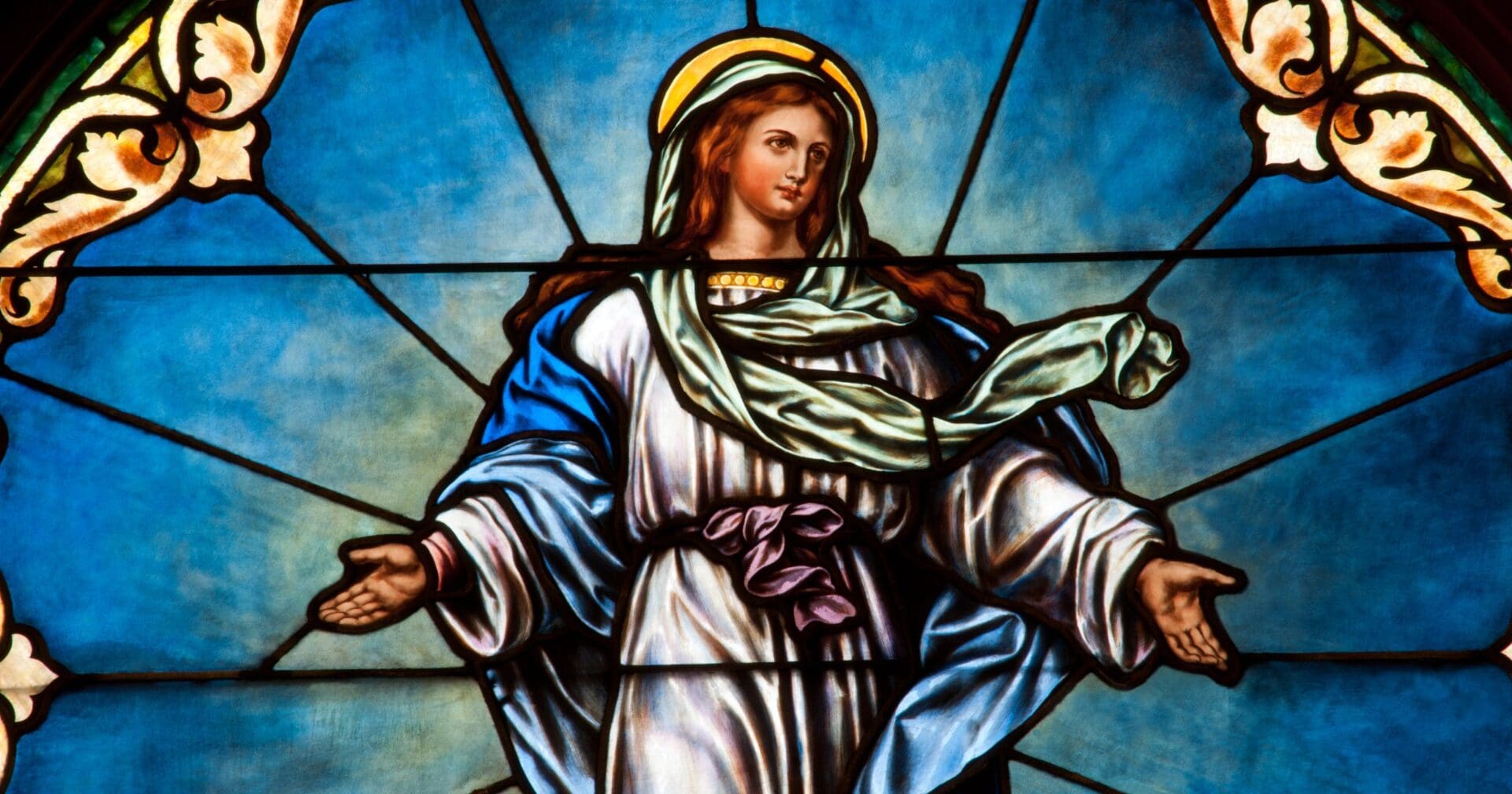
Photo credit: Zvonimir Atletic / Shutterstock

Love uCATHOLIC?
Get our inspiring content delivered to your inbox every morning – FREE!

The post Holy Saturday appeared first on uCatholic.

Daily Reading

 

Daily Meditation


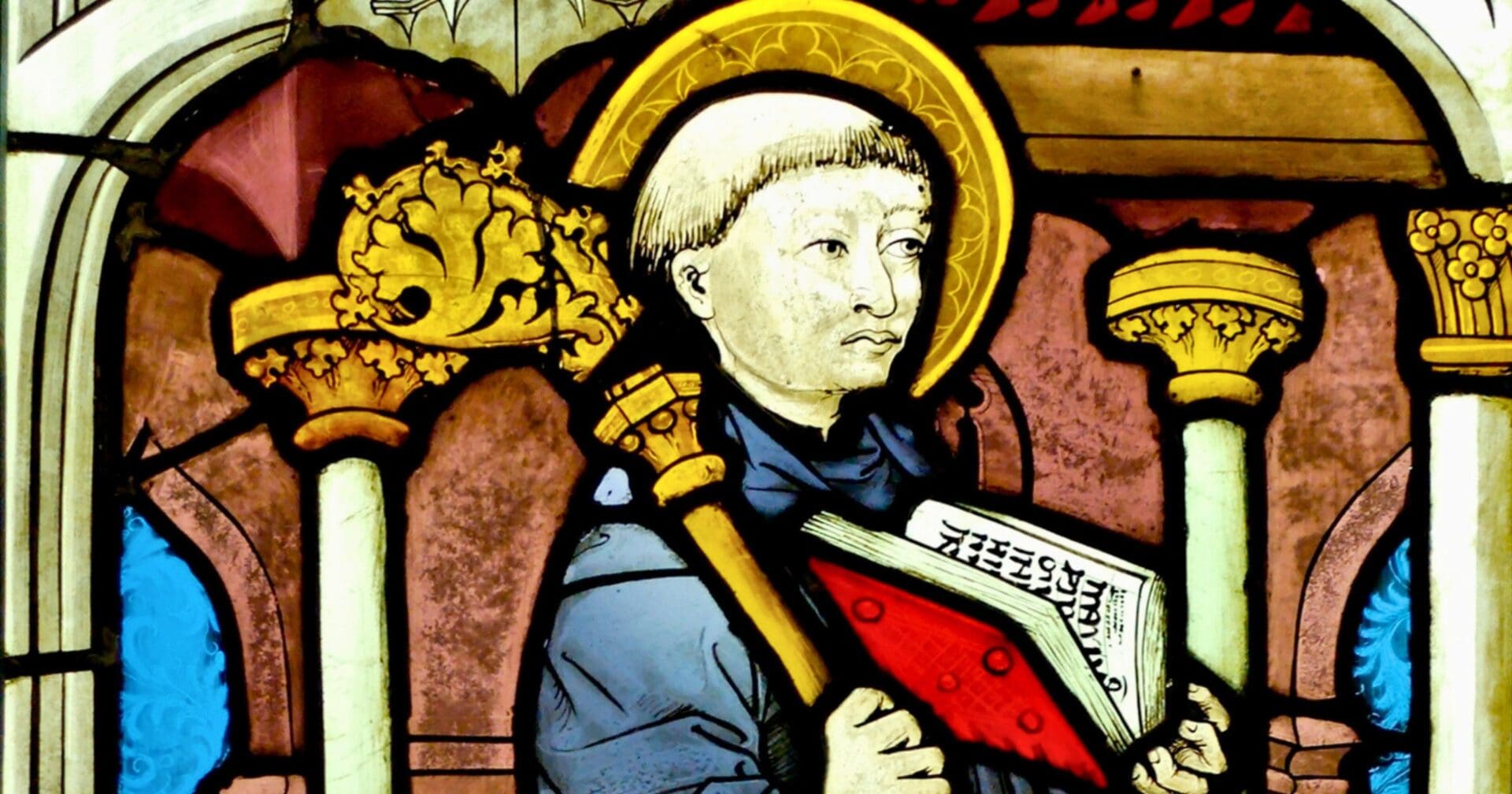
Benedict the Moor, born into slavery near Messina, Italy, in 1526, embarked on an extraordinary life journey that led him from bondage to sainthood. The son of African slaves, Benedict gained his freedom at 18 and initially took up farming, proudly owning a pair of oxen he acquired through his savings. His life took a turn towards spirituality as he chose solitude, eventually joining a community of hermits on Montepellegrino.

Despite his humble beginnings and lack of formal education, Benedict’s leadership qualities shone through, leading to his appointment as the superior of his hermit community. However, a decree from Pope Pius IV saw him transition into a Franciscan lay brother, where he humbly served as a cook at St. Mary’s convent near Palermo.

Benedict’s life took another unexpected turn when he was named the convent’s superior during a period of reform, a position he accepted reluctantly. Later, he served as a novice master, a role he requested to be relieved from to return to his preferred duty in the kitchen.

Despite his desire for a simple life, Benedict’s reputation for sanctity and miracles made him a sought-after figure, attracting countless visitors. His death at the convent marked the end of a life characterized by humility, devotion, and miraculous deeds. Canonized in 1807, Benedict the Moor is venerated as a patron saint of African-Americans, leaving behind a legacy that continues to inspire. King Philip III of Spain, recognizing his sanctity, funded a special tomb for this revered friar.

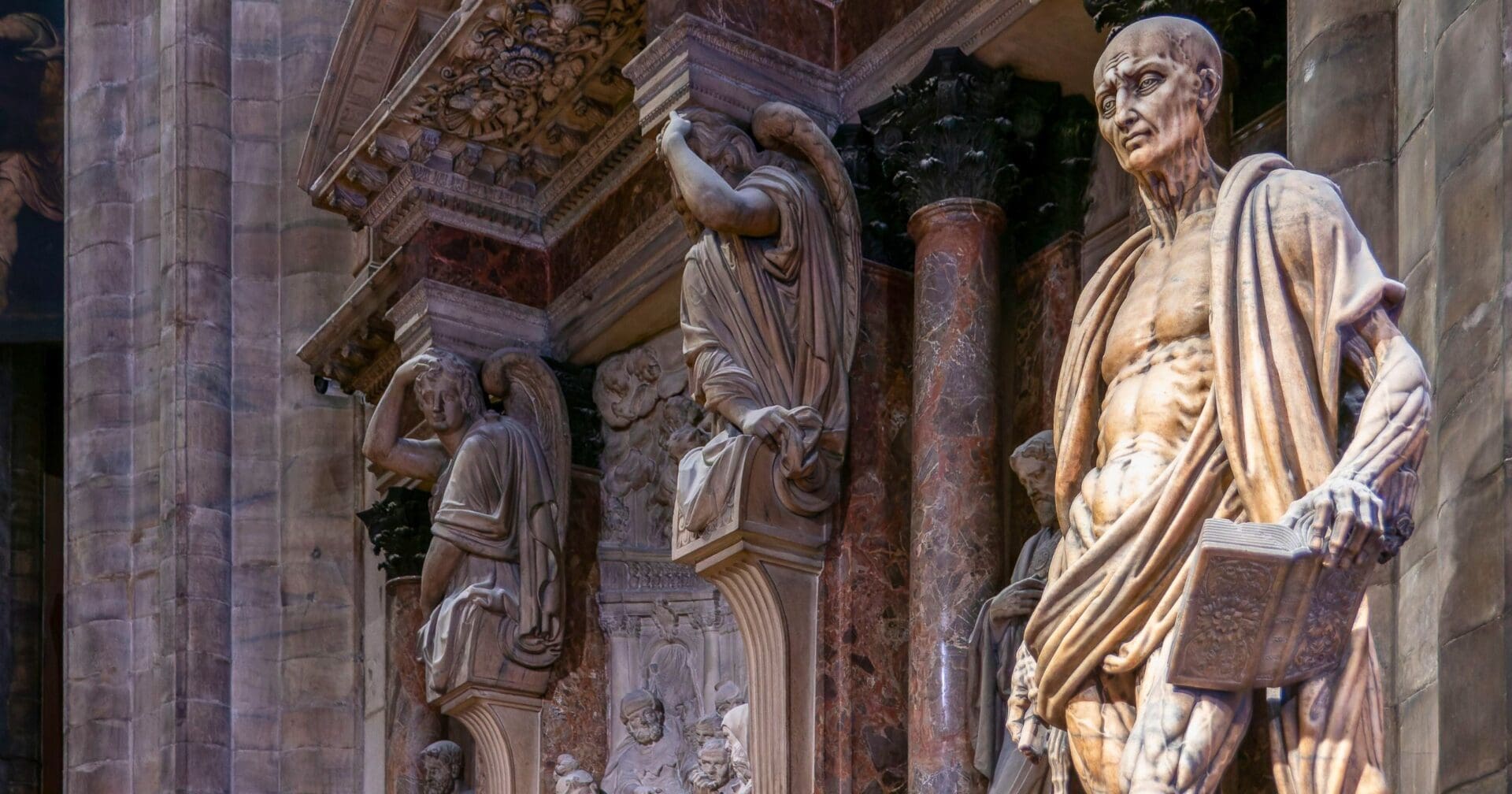
Photo credit: Luis Fraga / Shutterstock.com

Love uCATHOLIC?
Get our inspiring content delivered to your inbox every morning – FREE!

The post Saint Benedict the Moor appeared first on uCatholic.

Daily Reading


Daily Meditation


Good Friday sits solemnly within Holy Week, a day marked by fasting and penance, reflecting on Christ’s crucifixion and death. For believers, this day isn’t merely a historical remembrance but a profound contemplation on the sacrifice of Christ, central to Christian faith. The Catholic Catechism encapsulates this, attributing our justification to Christ’s Passion, where he, as a living sacrifice, pleasing to God, atones for humanity’s sins with his blood (CCC 1992), echoing St. Paul’s words on grace, redemption, and faith in Christ’s expiation (Romans 3:24-25).

This day’s customs and prayers deeply engage with the theme of Christ’s sacrificial love. From sunset on Good Friday, the Paschal Triduum’s second day begins. The primary services occur in the afternoon, around 3:00 PM, symbolizing the hour of Jesus’ passing. Western traditions for observing Good Friday include the Passion reading or singing from St. John’s gospel, particularly covering John 18:1-19:42 in the Catholic Church. Another widespread practice is the Veneration of the Cross, where the faithful show reverence to a wooden cross through kneeling or kissing.

The day also observes the “Mass of the Pre-Sanctified,” since no Masses are celebrated on Good Friday or Holy Saturday. Thus, the Eucharist from Maundy Thursday’s Mass is used. The Stations of the Cross, or the “Way of the Cross,” is a devotion commemorating fourteen events leading up to Jesus’ death, marked by stations throughout many Catholic churches.

Less common now, the “Tre Ore” or “Three Hours” service reflects on the seven last words of Christ, a tradition initiated by Jesuit Alphonso Messia in 1732 and embraced by many Protestant churches. Good Friday, alongside Ash Wednesday, remains a day of official fast in the Catholic Church.

The Eastern Churches observe “the Great Friday” with distinctive customs. The day starts with Matins, featuring the “Twelve Gospels” reading. The “Little Hours” follow, culminating in Vespers with the veneration of the epitaphion and concluding with Compline’s lamentation.

A symbolic burial of Christ is performed on Good Friday night. In some traditions, the customary greeting of “peace be with you” is replaced due to its association with Judas’ betrayal. In Russia, a silver coffin with a painted image of Christ is venerated by the faithful.

The practice of Good Friday observance traces back to ancient times, with some customs documented as early as the 4th century by Egeria. Its evolution into a day of penance and fasting commemorates Christ’s death, with the name “Good Friday” possibly originating from “God’s Friday.” The veneration of the cross likely began in Jerusalem between the 7th and 8th centuries, with references to pre-sanctified Masses dating back to the Quinisext Council in AD 692.

Good Friday’s observance transcends Catholic and Eastern Orthodox Christians, with Anglicans, Methodists, and Lutherans also marking the day in reverence and reflection.

Photo credit: jorisvo / Shutterstock.com

Love uCATHOLIC?
Get our inspiring content delivered to your inbox every morning – FREE!

The post Good Friday appeared first on uCatholic.

Daily Reading


Daily Meditation


On April 3, 304, in Thessalonica, Macedonia, the world witnessed the martyrdom of Saints Agape, Chionia, and Irene, three sisters who paid the ultimate price for their unwavering faith. A document from that era narrates their story, preserving their legacy.

The backdrop to their martyrdom was a decree by Emperor Diocletian in 303, criminalizing the possession of Christian scriptures. This decree placed the sisters in dire straits. Agape, Chionia, and Irene, daughters of pagan parents in Salonika, had hidden several sacred texts. Their devotion to these texts was profound; they lamented the lost opportunity to engage with them freely.

Their arrest wasn’t for the hidden scriptures but for their refusal to consume food sacrificed to pagan gods. Brought before Governor Dulcetius, they were interrogated. Agape spoke, embodying their steadfast faith: “I believe in the living God, and will not by an evil action lose all the merit of my past life.”

Agape and Chionia faced the death sentence, condemned to be burned alive. Irene, due to her youth, initially received a sentence of imprisonment. The execution of her sisters led to a search of their residence, uncovering the concealed scriptures.

Irene’s fate took a dark turn. Sent to a brothel for soldiers, she was subjected to indignities but remained untouched, a testament to her protected state. Her refusal to renounce her faith led to her execution, believed to be either by self-immolation or more likely, an arrow to the throat. The scriptures she and her sisters cherished were destroyed in a public spectacle.

Their feast is April 3rd.

Photo credit: Public Domain via Wikimedia Commons

Love uCATHOLIC?
Get our inspiring content delivered to your inbox every morning – FREE!

The post Saints Agape, Chionia, and Irene appeared first on uCatholic.

Daily Reading


Daily Meditation


Maundy Thursday, a pivotal day in Holy Week, marks the Eucharist’s origin, standing as Holy Week’s most ancient ritual. In Rome, this day gained additional rites: the holy oils’ consecration and penitents’ reconciliation, practices tied to Easter’s imminent arrival and the need for spiritual readiness.

Liturgical unity is a hallmark of Maundy Thursday. It celebrates the Liturgy’s institution on this day, with the Chrism Mass and penitents’ reconciliation emphasizing preparation for Easter. Rome observed these ceremonies by day, contrasting with Africa, where Eucharist observances mirrored the Last Supper’s timing, occurring post-dinner.

The Council of Carthage’s Canon 24 exempts believers from fasting pre-communion on this day, linking the custom to the traditional pre-communion bath, seen as incompatible with fasting. Augustine mentions this, noting the day’s dual Eucharist offerings to accommodate fasters and non-fasters alike.

Maundy Thursday unfolds through joyous rituals: neophytes’ baptism, penitents’ reconciliation, holy oils’ consecration, feet washing, and the Eucharist commemoration. These varied ceremonies give the day its many names, each reflecting a specific solemnity.

Catechumens, before baptism, would recite the creed, a practice known as Redditio symboli. The feet washing (Pedilavium), traced to ancient rites, symbolized humility and service, occurring in many churches on this day.

The Exomologesis, or reconciliation of penitents, involved absolution from sins, a ritual rooted in Rome’s early Christian practices, as evidenced by Pope Innocent I’s correspondence.

The Olei exorcizati confectio ceremony involved consecrating the chrism for baptizing the newly initiated, a tradition established by the fifth century and documented across various liturgical texts.

The Anniversarium Eucharistiae shifted over time from a nocturnal to a morning celebration, responding to evolving liturgical preferences and culminating in the Missa praesanctificatorum, where a portion of the sacrament was reserved for the following day.

Maundy Thursday also sees the halting of bell ringing, the stripping of the altar post-vespers, and the observance of Tenebræ, the night office, marking the day’s end.

Editorial credit: Macthia / Shutterstock.com

Love uCATHOLIC?
Get our inspiring content delivered to your inbox every morning – FREE!

The post Holy Thursday appeared first on uCatholic.

Daily Reading


Daily Meditation


Saint Francis of Paola, the progenitor of the Order of Minims, emerged into the world in 1416 at Paula, Calabria, Italy. Born to parents distinguished by their devoutness, Francis was their firstborn, arriving after years of their prayers for offspring, fervently invoking St. Francis of Assisi’s intercession. An affliction threatening his vision as a child was healed following his parents’ vow to St. Francis of Assisi, leading to a year spent in a Franciscan convent as per medieval custom, a decision marking the beginning of his path towards sanctity.

Early on, Francis exhibited profound spiritual depth. At thirteen, inspired by a vision of a Franciscan friar, he entered a convent, fulfilling his parents’ vow. His time there was marked by intense prayer, asceticism, humility, and obedience. Post this yearlong commitment, he undertook pilgrimages with his family to Assisi, Rome, among other sacred sites, before choosing a life of seclusion on his father’s land, eventually settling in a coastal cave for six years of solitary contemplation.

In 1435, his solitary practice ended as two individuals joined him, prompting the construction of a small monastic habitat. This modest beginning blossomed into a community under Francis’s guidance, leading to the founding of a sizable monastery around 1454 with Archbishop Pyrrhus of Cosenza’s blessing. The community’s growth mirrored the people’s growing devotion, fueled by Francis’s miracles and the monastery’s construction, a collective effort involving even the nobility.

The Minims’ lifestyle was defined by extreme austerity, perpetual fasting, and poverty, underscored by humility. Francis’s desire for his followers to remain humble and hidden was formalized when the order was named “Minims,” reflecting their ethos of being the least in the world.

Papal recognition came in 1474 from Sixtus IV, allowing Francis to establish a formal rule, later ratified by Alexander VI, who rebranded them as the Minims. The order’s expansion continued under Francis, with new monasteries in Calabria and Sicily and the creation of convents and a lay third order, drawing on St. Francis of Assisi’s example.

Francis spent his final months in solitude, focusing on death’s approach. He left his followers with messages of charity, rigor in their ascetic practices, and emphasized perpetual fasting. After imparting final instructions and appointing a successor, he died during a reading of St. John’s Passion on Good Friday, 1507. Canonized by Leo X in 1519, Francis’s remains faced desecration by the Huguenots in 1562, though some relics were salvaged by Catholics. While never widespread, the Minims had a presence across multiple countries, with their rules for both monks and nuns sanctioned by Julius II in 1506. St. Francis of Paola’s feast day is observed on April 2, commemorating the day of his passing.

Editorial credit: Renata Sedmakova / Shutterstock.com

Love uCATHOLIC?
Get our inspiring content delivered to your inbox every morning – FREE!

The post Saint Francis of Paola appeared first on uCatholic.

Daily Reading


Daily Meditation


Hugh of Grenoble, bishop from 1052 to 1132, found himself navigating a minefield of corruption upon assuming his role. The ecclesiastical landscape was marred by the sale of Church offices, disregard for clerical celibacy, secular appropriation of Church assets, and widespread religious apathy or ignorance. Barely two years into his bishopric, Hugh sought refuge in monastic life, only to be summoned back by the pope to spearhead reform.

It’s perhaps his deep Church devotion and formidable resolve that rendered Hugh an effective reformist. He stood unwavering in disputes pitting Church against state, staunchly backing the papacy. Hugh’s preaching was marked by eloquence. He undertook the restoration of his cathedral, initiated urban enhancements in his diocese, and endured a period of exile with grace.

Hugh’s legacy is notably linked to his support of St. Bruno and the founding of the Carthusian Order.

Passing in 1132, Hugh’s sainthood was affirmed by canonization merely two years posthumously.

Photo credit: Public Domain via Wikimedia Commons

Love uCATHOLIC?
Get our inspiring content delivered to your inbox every morning – FREE!

The post Saint Hugh of Grenoble appeared first on uCatholic.

Daily Reading


Daily Meditation


The Christians in Persia had enjoyed twelve years of peace during the reign of Isdegerd, son of Sapor III, when in 420 it was disturbed by the indiscreet zeal of Abdas, a Christian Bishop who burned the Temple of Fire, the great sanctuary of the Persians. King Isdegerd threatened to destroy all the churches of the Christians unless the Bishop would rebuild it.

As Abdas refused to comply, the threat was executed; the churches were demolished, Abdas himself was put to death, and a general persecution began which lasted forty years. Isdegerd died in 421, but his son and successor, Varanes, carried on the persecution with great fury. The Christians were submitted to the most cruel tortures.

Among those who suffered was St. Benjamin, a Deacon, who had been imprisoned a year for his Faith. At the end of this period, an ambassador of the Emperor of Constantinople obtained his release on condition that he would never speak to any of the courtiers about religion.

St. Benjamin, however, declared it was his duty to preach Christ and that he could not be silent. Although he had been liberated on the agreement made with the ambassador and the Persian authorities, he would not acquiesce in it, and neglected no opportunity of preaching. He was again apprehended and brought before the king. The tyrant ordered that reeds should be thrust in between his nails and his flesh and into all the tenderest parts of his body and then withdrawn. After this torture had been repeated several times, a knotted stake was inserted into his bowels to rend and tear him. The martyr expired in the most terrible agony about the year 424.

Photo credit: Public Domain via Wikimedia Commons

Love uCATHOLIC?
Get our inspiring content delivered to your inbox every morning – FREE!

The post Saint Benjamin the Deacon appeared first on uCatholic.

Daily Reading


Daily Meditation


Saint Peter Regaldo lived at a very busy time. The Great Western Schism (1378-1417) was settled at the Council of Constance (1414-1418). France and England were fighting the Hundred Years’ War, and in 1453 the Byzantine Empire was completely wiped out by the loss of Constantinople to the Turks. At Peter’s death the age of printing had just begun in Germany, and Columbus’s arrival in the New World was less than 40 years away.

Peter came from a wealthy and pious family in Valladolid, Spain. At the age of 13, he was allowed to enter the Conventual Franciscans. Shortly after his ordination, he was made superior of the friary in Aguilar. He became part of a group of friars who wanted to lead a life of greater poverty and penance. In 1442 he was appointed head of all the Spanish Franciscans in his reform group.

Peter led the friars by his example. A special love of the poor and the sick characterized Peter. Miraculous stories are told about his charity to the poor. For example, the bread never seemed to run out as long as Peter had hungry people to feed. Throughout most of his life, Peter went hungry; he lived only on bread and water.

Immediately after his death on March 31, 1456, his grave became a place of pilgrimage. Peter was canonized in 1746.

Photo credit: Public Domain via Wikimedia Commons

Love uCATHOLIC?
Get our inspiring content delivered to your inbox every morning – FREE!

The post Saint Peter Regalado appeared first on uCatholic.

Daily Reading


Daily Meditation


On Palm Sunday, also known as the Sunday of the Lord’s Passion, the Christian world steps into Holy Week, marking the commencement of a period steeped in profound religious significance. This day memorializes Christ’s majestic entry into Jerusalem, an event that saw the city’s inhabitants lay their garments on the streets, heralding him as their sovereign with shouts of “Hosanna to the Son of David; Blessed is he who comes in the name of the Lord!”

In the Western Church tradition, the observance of Palm Sunday begins with the blessing of palms. These palms, destined for the subsequent procession, are sanctified, setting the stage for the retelling of Jesus’ entry into Jerusalem. Should logistical constraints prevent an outdoor procession, a solemn entrance within the church suffices, maintaining the ceremonial essence.

The day’s hymns and psalms echo Christ’s kingly dignity, while Palm Sunday’s alternative moniker, Fig Sunday, hearkens back to the cursing of the fig tree by Christ, integrating a tradition of consuming figs. Across England, the day has borne various names like Olive or Branch Sunday and Sunday of the Willow Boughs, each reflecting local botanical substitutes for palms.

Customs around Palm Sunday have evolved distinctly across regions. In Slavic nations, for instance, the blessed palms traverse homes, fields, and outbuildings in a ritual seeking divine safeguarding and blessings on the land and its yield.

Historical accounts, such as that of the pilgrim Egeria, confirm the practice of Palm Sunday processions as far back as the 4th century in Jerusalem, indicating the deep-rooted tradition of commemorating this event. By the 8th century, texts like the Gallican Bobbio Missal already documented the palm blessing, symbolizing Christ’s triumph.

While the grandeur of the Middle Ages has given way to more subdued observances in the Western Church, the essence of Palm Sunday — reflective of Christ’s victory and anticipation of the Passion — remains unchanged. Notably, the ashes used on Ash Wednesday originate from the palms of the previous year’s Palm Sunday, linking the cycle of penitence and renewal to this significant day.

Editorial credit: jorisvo / Shutterstock.com

Love uCATHOLIC?
Get our inspiring content delivered to your inbox every morning – FREE!

The post Palm Sunday of The Lord’s Passion appeared first on uCatholic.

Daily Reading


Daily Meditation