

As Jesus draws closer to Jerusalem—and everything He knows that will take place while He is there—He tries to prepare his Apostles for what is coming. Despite His efforts, it seems that they still aren’t getting it. Jesus uses plain language to tell them that they will “hand him over to the Gentiles to be mocked and scourged and crucified” (Matthew 20:19). Yet even with this clear explanation, His Apostles just don’t get it.
The mother of James and John comes to Jesus to advocate for their place of prestige in Jesus’ Kingdom. We know that this request ultimately comes from James and John themselves because Jesus’ response is directed to them. The brothers still think that the kingdom that Jesus has come to establish will be a worldly one. They expect Jesus to have earthly authority, and they want to secure their place next to the future king.
Indeed, Jesus has come to establish a kingdom, but it is not what they are expecting. This Kingdom will be won not with the sword but by the King willingly giving his life. In this Kingdom, the first shall be last. Those who wield earthly power will be powerless. Those who seem weak and insignificant will have authority. In this new Kingdom, Jesus explains, “whoever wishes to be great among you shall be your servant; whoever wishes to be first among you shall be your slave.”
It is easy to judge the Apostles as we read this Gospel 2,000 years later. Jesus spoke so clearly to His followers, yet they just didn’t get it. We should hesitate before condemning their thoughts, because we can get caught in similar thinking. When things are going well in our lives, it’s easy to praise God. We may start to believe that God is blessing us because we deserve it. We think that so long as we continue to attend Mass, say our prayers, and live a holy life, the Lord will continue to bless us with earthly success and happiness.
When things don’t go according to our plans, when we realize that when we and our loved ones are suffering, we start to think that God has forgotten us. We might even think we have done something to deserve being forsaken by God. We, like the Apostles in today’s Gospel, can’t believe that God’s plan actually involves painful and awful realities. Just as Jesus dying on the cross was God’s will for His life, our suffering and struggles aren’t God rejecting us, but rather the path that the Lord uses to draw us to Himself.
When we embrace each cross we welcome the Kingdom of God. By choosing to take the lowest place and serve we are exalted. When we feel like we have nothing left, God gives us riches beyond our imagination. This Kingdom is worth more than any earthly thing, we simply have to accept that this won’t always look the way we expect.
A medida que Jesús se acerca a Jerusalén —y a todo lo que sabe que ocurrirá allí— intenta preparar a sus Apóstoles para lo que se avecina. A pesar de sus esfuerzos, parece que aún no lo comprenden. Jesús les dice con claridad que “va a ser entregado a los sumos sacerdotes y a los escribas, que lo condenarán a muerte y lo entregarán a los paganos para que se burlen de él, lo azoten y lo crucifiquen” (Mateo 20,19). Sin embargo, incluso con esta explicación tan clara, sus apóstoles no lo entienden.
La madre de Santiago y Juan se acerca a Jesús para interceder por ellos y pedirles que les otorguen un lugar de prestigio en su Reino. Sabemos que esta petición proviene, en última instancia, de los propios Santiago y Juan, porque la respuesta de Jesús va dirigida a ellos. Los hermanos aún creen que el reino que Jesús ha venido a establecer será terrenal. Esperan que Jesús tenga autoridad terrenal y quieren asegurarse un lugar junto al futuro rey.
En efecto, Jesús ha venido a establecer un reino, pero no es el que ellos esperan. Este Reino no se conquistará con la espada, sino con la entrega voluntaria de la vida del Rey. En este Reino, los primeros serán los últimos. Quienes ejercen el poder terrenal serán impotentes. Quienes parecen débiles e insignificantes tendrán autoridad. En este nuevo Reino, Jesús explica: “El que quiera ser grande entre ustedes, que sea el que los sirva, y el que quiera ser primero, que sea su esclavo”.
Es fácil juzgar a los Apóstoles al leer este Evangelio 2000 años después. Jesús habló con tanta claridad a sus seguidores, pero no lo comprendieron. Deberíamos reflexionar antes de condenar sus ideas, porque podemos caer en razonamientos similares. Cuando las cosas nos van bien, es fácil alabar a Dios. Podemos llegar a creer que Dios nos bendice porque lo merecemos. Pensamos que, mientras sigamos asistiendo a misa, rezando y llevando una vida santa, el Señor continuará bendiciéndonos con éxito y felicidad terrenales.
Cuando las cosas no salen como las planeamos, cuando nos damos cuenta de que nosotros y nuestros seres queridos sufrimos, empezamos a pensar que Dios nos ha olvidado. Incluso podríamos llegar a creer que hemos hecho algo para merecer su abandono. Al igual que los Apóstoles del Evangelio de hoy, nos cuesta creer que el plan de Dios implique realidades dolorosas y terribles. Así como la muerte de Jesús en la cruz fue la voluntad de Dios para su vida, nuestro sufrimiento y nuestras luchas no son un rechazo de Dios, sino el camino que el Señor usa para acercarnos a sí mismo.
Cuando aceptamos cada cruz, damos la bienvenida al Reino de Dios. Al elegir ocupar el lugar más humilde y servir, somos exaltados. Cuando sentimos que ya no nos queda nada, Dios nos da riquezas inimaginables. Este Reino vale más que cualquier cosa terrenal; simplemente debemos aceptar que no siempre se verá como esperamos.
 Maria Riley is a passionate Catholic author and speaker who loves volunteering or playing board games when she’s not writing or mom-ing around with her four daughters. Her award-winning Catholic children’s chapter book series, Adventures with the Saints, is endorsed by her bishop. Visit her at MariaRileyAuthor.com or on social media @mariarileyauthor. She and her family live in Kansas.
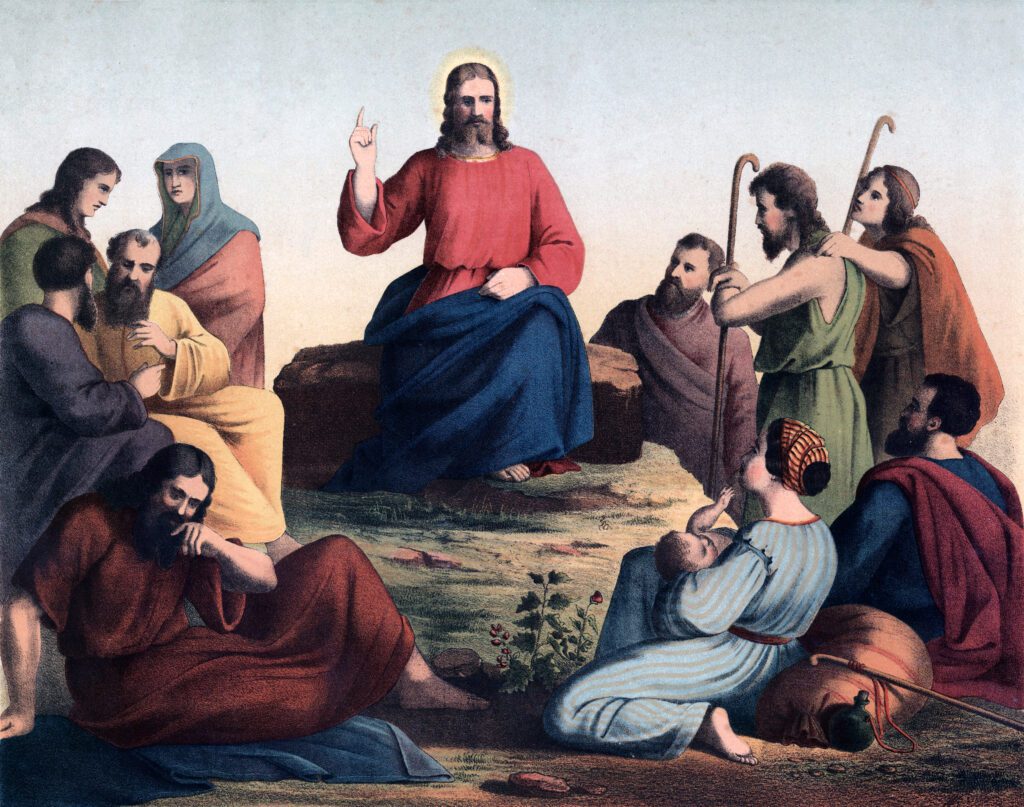
Feature Image Credit: Unknown Artist, art.diocesan.com/stock-photo/sermon-on-the-mount-19217/
The views and opinions expressed in the Inspiration Daily blog are solely those of the original authors and contributors. These views and opinions do not necessarily represent those of Diocesan, the Diocesan staff, or other contributors to this blog.
Daily Reading

Wednesday of the Second Week of Lent
Reading 1 Jeremiah 18:18-20 The people of Judah and the citizens of Jerusalem said,“Come, let us contrive a plot against Jeremiah.It will not mean the loss of instruction from the…
Saint of the Day

Saint Casimir
Saint Casimir (1458-1484) was a Polish prince known for his piety, chastity, and devotion, becoming a patron saint of Poland and Lithuania posthumously. The post Saint Casimir appeared first on