
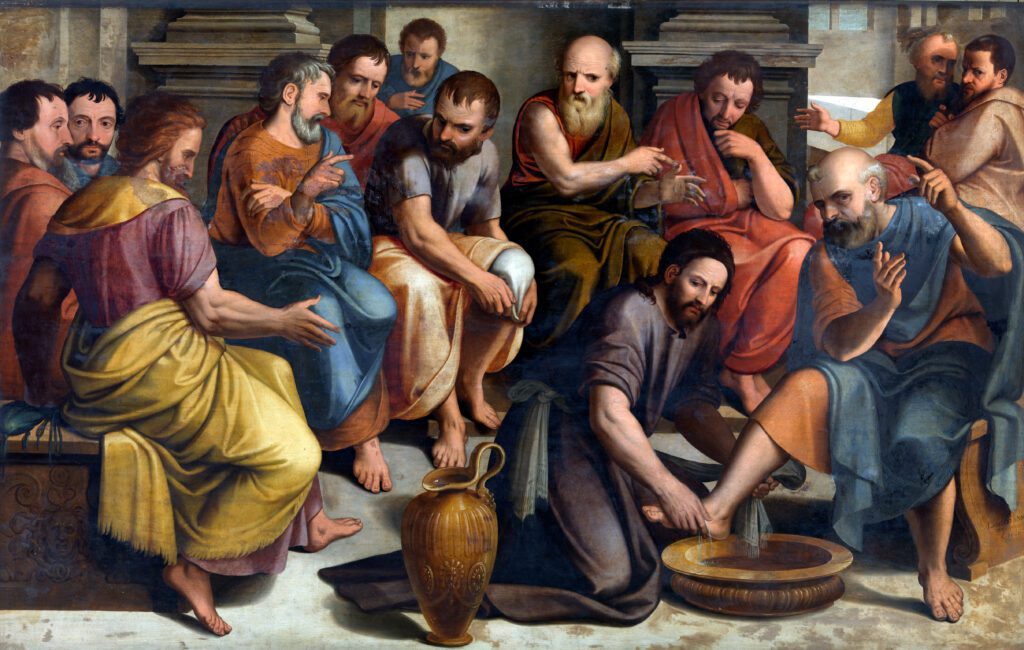
Today, Holy Thursday, we celebrate the Institution of the Eucharist, and we hear of the washing of the feet. The Eucharist is an unfathomable gift, God in the flesh, His Body and Blood, acting in us for our holiness and salvation. The washing of the feet was another gift, unfathomable to those who received it.
As Jesus said to Peter, “What I am doing, you do not understand now, but you will understand later” (John 13:7). Why was this so hard for Peter to accept? We know that washing feet was something more fit for a servant. Peter must have been embarrassed and ashamed, first expressing his bewilderment: “Master, are you going to wash my feet?” (John 13:6).
But Jesus insists. Let’s pause here. Jesus isn’t just doing a nice thing or giving an extraordinary gift. He’s saying something deeper. To wash another’s feet is, yes, to place oneself in the position of a servant. But it’s not just about humility. It’s an indication that the person being washed is worthy of being served.
Jesus confirms this when Peter shifts his intention: “Master, then not only my feet, but my hands and head as well” (John 13:9). Perhaps Peter thinks that Jesus is washing his feet because He believes that Peter is too sinful to proceed as His apostle and needs to be cleaned. Not so. Jesus says, “Whoever has bathed has no need except to have his feet washed, for he is clean all over; so you are clean, but not all” (John 13:10). John emphasizes the application of this statement to Judas, but we can also see that Jesus is acknowledging Peter’s cleanliness. He has bathed, so he only needs his feet washed. He is “clean all over.”
This is deeply affirming for Peter and for us. First, Peter thought it beneath Jesus to wash his feet, because he considered himself to be equal to a servant. Then he believes that Jesus is making a statement about his sinfulness, prompting him to ask to be washed all over rather than only in part, to make up for the filth that covers him completely. But Jesus revises his perception.
It is not that we are so depraved and sinful that God needs to stoop down and wash our feet, and it is not that we are so worthless that He can’t bring Himself to wash any more of us than that. It’s that He gives us the free gift of cleansing us because He made us good and worthy of such cleansing. We need His help not because we are hopeless, but because He desires to give to us and affirm the goodness in us, which is an echo of His infinite goodness.
The gift is freely given, and we are invited to freely accept it, as Peter did. Yes, God is infinitely greater than us. And yes, He made us good. And with His cleansing grace, we can be even better.
Hoy, Jueves Santo, celebramos la Institución de la Eucaristía y escuchamos el relato del lavatorio de los pies. La Eucaristía es un don incomprensible, Dios hecho carne, su Cuerpo y su Sangre, actuando en nosotros para nuestra santidad y salvación. El lavatorio de los pies fue otro don, incomprensible para quienes lo recibieron.
Como Jesús le dijo a Pedro: “Lo que estoy haciendo tú no lo entiendes ahora, pero lo comprenderás más tarde”. ¿Por qué le resultaba tan difícil a Pedro aceptar esto? Sabemos que lavar los pies era una tarea propia de un siervo. Pedro debió sentirse avergonzado y humillado, expresando primero su desconcierto: “Señor, ¿me vas a lavar tú a mí los pies?”
Pero Jesús insiste. Detengámonos aquí. Jesús no solo está haciendo una buena acción ni dando un regalo extraordinario. Está diciendo algo más profundo. Lavar los pies de otro es, sí, ponerse en la posición de un siervo. Pero no se trata solamente de la humildad. Es una indicación de que la persona a la que se le lavan los pies es digna de ser servida.
Jesús lo confirma cuando Pedro cambia de parecer: “En ese caso, Señor, no sólo los pies, sino también las manos y la cabeza”. Quizás Pedro pensó que Jesús le lavaba los pies porque creía que era demasiado pecador para seguir siendo su apóstol y necesitaba ser purificado. No es así. Jesús dice: “El que se ha bañado no necesita lavarse más que los pies, porque todo él está limpio. Y ustedes están limpios, aunque no todos”. Juan enfatiza la aplicación de esta afirmación a Judas, pero también podemos ver que Jesús reconoce la pureza de Pedro. Se ha bañado, por lo que solo necesita que le laven los pies. “[T]odo él está limpio”.
Esto es profundamente reconfortante para Pedro y para nosotros. Primero, Pedro pensó que era indigno de Jesús lavarle los pies, porque se consideraba igual a un siervo. Luego creyó que Jesús estaba haciendo una declaración sobre su pecaminosidad, lo que lo llevó a pedir que lo lavaran por completo, en lugar de solo en parte, para compensar la suciedad que lo cubría por completo. Pero Jesús corrige su percepción. No es que seamos tan depravados y pecadores que Dios tenga que humillarse para lavarnos los pies, ni que seamos tan indignos que Él no pueda lavarnos más que eso. La verdad es que Él nos ofrece gratuitamente la purificación porque nos creó buenos y dignos de tal purificación. Necesitamos su ayuda no porque seamos casos perdidos, sino porque Él desea darnos y afirmar la bondad que hay en nosotros, que es un reflejo de su bondad infinita.
El don se nos da gratuitamente, y estamos invitados a aceptarlo libremente, como lo hizo Pedro. Sí, Dios es infinitamente más grande que nosotros. Y sí, Él nos creó buenos. Y con su gracia purificadora, podemos ser aún mejores.
 David Dashiell is a freelance author, editor, and publisher in Hawaii. He has three children, a degree in theology, and enjoys writing poetry and discussing philosophy, culture, music, theology, and comedy. You can find his poetry blog, Poems at Twilight, on Substack, his publishing company, Ether Press, here, and his personal website here.
Feature Image Credit: Lambert van Noort, art.diocesan.com/stock-photo/christ-washing-the-feet-of-apostles-7533/
The views and opinions expressed in the Inspiration Daily blog are solely those of the original authors and contributors. These views and opinions do not necessarily represent those of Diocesan, the Diocesan staff, or other contributors to this blog.
Daily Reading

Holy Thursday – Chrism Mass
Readings for the Thursday of Holy Week Readings for the Holy Thursday-Evening Mass of the Lord’s Supper Reading I Isaiah 61:1-3a, 6a, 8b-9 The Spirit of the Lord GOD is…
Saint of the Day
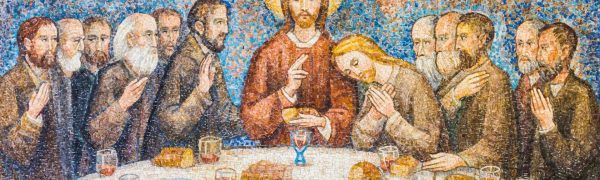
Holy Thursday
The feast of Maundy (or Holy) Thursday solemnly commemorates the institution of the Eucharist and is the oldest of the observances peculiar to Holy Week. The post Holy Thursday appeared