
I love the scene in The Chosen that tells the story in today’s Gospel. Peter makes no bones about how resentful he is of Matthew and his tax-collecting ways. As he grapples with this unavoidable relationship, he confides in Jesus. Jesus, loving both Matthew and Peter, sees both sides. He then shows Peter how his own sins contributed to the situation with Matthew. In the show, you can see it dawn on Peter that he, too, was at fault. He recognizes his need for forgiveness first, which then allows him to forgive Matthew.
The hurts of others can wound us. We can struggle to see the big picture. But Jesus sees it. Maybe this is why, in the Lord’s prayer, he tells us, “Forgive us our sins as we forgive those who sin against us”. I never realized it before, but this is one thought in one sentence. Forgiving and being forgiven must go together. Our own sins are entangled in sins against us. We do not get a pass on our sins simply because the other person’s sins may be worse. This means we must change our focus to see our own sins, no matter how small.
Jesus says to forgive seventy-seven times. When we are hurting, this can seem daunting. But think about how many times you have asked for God’s forgiveness. Think of how many times you have said the Lord’s Prayer last week. Last year. Your lifetime. How many times you have gone to confession. How many Acts of Contrition you have made. Has Jesus forgiven you seventy-seven times? We can get to that number quickly even just praying the Our Father each day. God is constantly forgiving us.
It does not mean that we have to live as if it never happened. Even in this Gospel, while the Master forgave his servant, he did not forget. The Lord’s Prayer tells us to forgive others, but says nothing about forgetting. Forgiveness is a decision made in the heart but it does not get rid of the wounds or the memory. In fact, we don’t possess the power to not feel an offense nor the “magic” to erase the hurt away from our mind and heart.
However, we can empower ourselves by practicing virtue. The repetitive act of forgiving people their smaller transgressions can strengthen our heart to tackle forgiving the hard things when they come. By cultivating the virtue of forgiveness, we can learn to let the faults of others slide over us. In this way, we can realize what we can control. We can gain peace. We can allow ourselves to be loved by our Lord and Savior. Soon, our wounds can begin to heal.
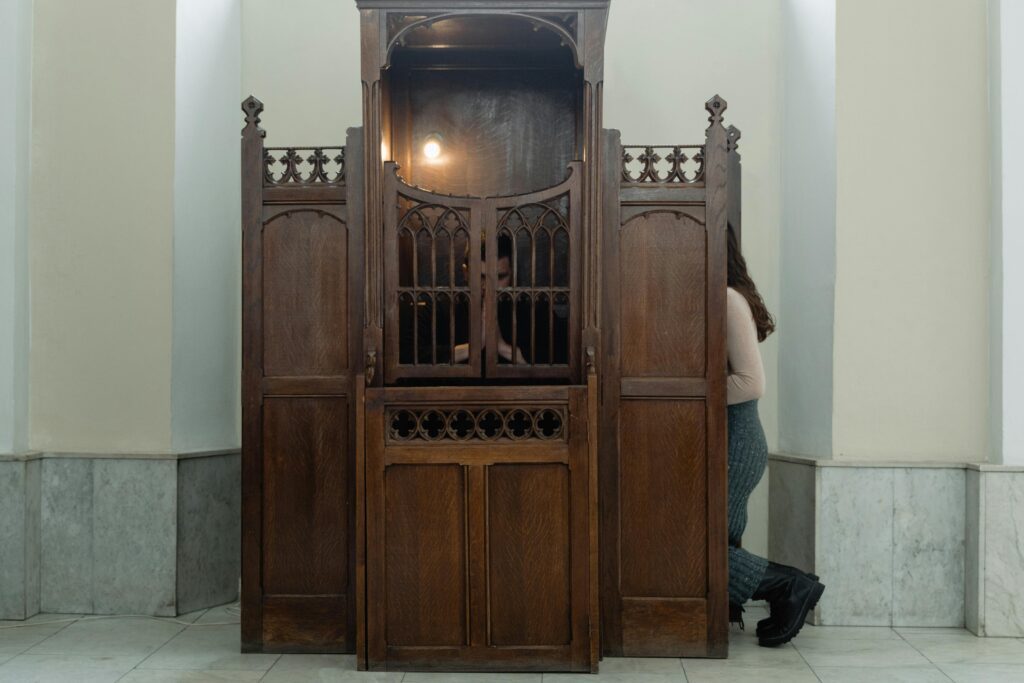
Is there someone in your life you struggle to forgive? We obtain grace when Jesus forgives us in the Sacrament of Reconciliation. I wonder if we can practice using that same grace to help us forgive others. Let’s resolve to think of one person to work on forgiving every time we pray the Our Father. Let’s see if it takes seventy-seven times.
Me encanta la escena en la serie The Chosen que cuenta la historia del Evangelio de hoy. Pedro no oculta su resentimiento hacia Mateo y su costumbre de recaudar impuestos. Mientras lidia con esta relación inevitable, lo conversa con Jesús. Jesús, que ama tanto a Mateo como a Pedro, comprende ambas perspectivas. Luego le muestra a Pedro cómo sus propios pecados contribuyeron a la situación con Mateo. En la serie, se puede ver cómo Pedro comprende que él también tuvo la culpa. Reconoce primero su necesidad de perdón, lo cual le permite perdonar a Mateo.
El dolor ajeno puede herirnos. A veces nos cuesta ver el panorama completo. Pero Jesús sí lo ve. Quizás por eso, en el Padrenuestro, nos dice: “Perdónanos nuestros pecados, como también nosotros perdonamos a los que nos ofenden”. Nunca me había dado cuenta, pero esto resume una idea en una sola frase. Perdonar y ser perdonado deben ir de la mano. Nuestros propios pecados están entrelazados con los pecados cometidos contra nosotros. No se nos exime de nuestros pecados simplemente porque los de otra persona sean peores. Esto significa que debemos cambiar nuestra perspectiva para reconocer nuestros propios pecados, por pequeños que sean.
Jesús dice que perdonemos setenta y siete veces. Cuando sufrimos, esto puede parecer abrumador. Pero piensa en cuántas veces le has pedido perdón a Dios. Piensa en cuántas veces has rezado el Padrenuestro la semana pasada, el año pasado, o a lo largo de tu vida. Piensa en cuántas veces te has confesado y cuántos actos de contrición has hecho. ¿Te ha perdonado Jesús setenta y siete veces? Podemos llegar a esa cifra rápidamente incluso rezando el Padrenuestro cada día. Dios nos perdona constantemente.
Esto no significa que tengamos que vivir como si nada hubiera pasado. Incluso en este Evangelio, aunque el Maestro perdonó a su siervo, no lo olvidó. El Padrenuestro nos dice que perdonemos a los demás, pero no dice nada sobre olvidar. El perdón es una decisión del corazón, pero no borra las heridas ni el recuerdo. De hecho, no tenemos el poder de no sentirnos ofendidos ni la “magia” para borrar el dolor de nuestra mente y corazón.
Sin embargo, podemos fortalecernos practicando la virtud. El acto repetitivo de perdonar las pequeñas faltas de los demás puede fortalecer nuestro corazón para perdonar las cosas difíciles cuando lleguen. Al cultivar la virtud del perdón, podemos aprender a dejar que las faltas de los demás no nos afecten. De esta manera, podemos darnos cuenta de lo que sí podemos controlar. Podemos alcanzar la paz. Podemos permitirnos ser amados por nuestro Señor y Salvador. Pronto, nuestras heridas comenzarán a sanar.
¿Hay alguien en tu vida a quien te cuesta perdonar? Recibimos la gracia cuando Jesús nos perdona en el Sacramento de la Reconciliación. Me pregunto si podemos practicar el uso de esa misma gracia para ayudarnos a perdonar a los demás. Propongámonos pensar en una persona que podemos intentar a perdonar cada vez que recemos el Padrenuestro. A ver si nos demoramos setenta y siete veces.

Margaret Gartlgruber longs to help women trade guilt for grace and know: You are enough! God delights not in your accomplishments but in YOU simply being you! Mom, wife, author, blogger, speaker, lay RC member, Margaret has published chapters in books: Cloud of Witnesses – St. Monica, and Crowned with Grace – Our Lady of Fatima. Read her blog: https://ruledbybananas.com/ and get free 15 Simple Morning Prayers.
Feature Image Credit: MART PRODUCTION, pexels.com/photo/a-person-inside-a-confessional-7219828/
The views and opinions expressed in the Inspiration Daily blog are solely those of the original authors and contributors. These views and opinions do not necessarily represent those of Diocesan, the Diocesan staff, or other contributors to this blog.
Daily Reading

Tuesday of the Third Week of Lent
Reading 1 Daniel 3:25, 34-43 Azariah stood up in the fire and prayed aloud: “For your name’s sake, O Lord, do not deliver us up forever,or make void your covenant.Do…
Saint of the Day

Saint Dominic Savio
Patron of choirboys, Dominic Savio: holy, youthful, prayerful, humble origins, aimed for God’s glory. The post Saint Dominic Savio appeared first on uCatholic.