

We often see or read on television or social media about people seeking justice for something that happened to them. I asked myself, what is justice? When I looked it up in the dictionary, I found this definition: “a moral principle that determines that everyone should live honestly.”
Today’s first reading says that we should not stray from justice because otherwise we commit evil, which causes us to fall into sin. At the same time, it recommends that if we make straight the path, accepting that we have sinned and reconciling ourselves to God, our sins will be forgiven. But how do we make straight the path to God? It’s simple: through the Sacrament of Reconciliation. We must examine our conscience and have the courage, strength, and humility to enter that tiny room where we come face to face with the priest, who is God’s intermediary for the forgiveness of our sins.
I remember going to confession as a teenager and the priest jokingly asking me, “How many sins are there?” Since I’m an introvert, it helped me to open up and speak more confidently through the mesh cloth that separated us.
In the Gospel, Matthew continues explaining what justice means to God, and that we must forgive our neighbors because otherwise we can also be condemned. One time, when I was coaching children’s soccer, my assistant wanted to separate the experienced players from the beginners. I knew this was unfair because we were all on the same team. My guard was up because we shouldn’t make any distinctions, especially toward those who are just starting out in a sport since it would make them feel bad. I had to speak up and confront my assistant so as not to fall into indifference and injustice.
Justice is about applying it to daily life and doing the best we can to avoid falling into sin. In today’s readings God is teaching us that we should be as just as possible in our daily lives, forgive our neighbors, and confess our sins, because we are not perfect beings. Remember that God is always waiting for you with open arms.
Muchas veces vemos o leemos por la televisión u otros medios de comunicación que las personas buscan justicia por alguna razón que les pasó en la vida. Me pregunto, ¿qué es la justicia? Al buscar en el diccionario encontré esta definición: “principio moral que lleva a determinar que todos deben vivir honestamente”.
En la primera lectura de hoy dice que no debemos apartarnos de la justicia porque si no cometemos maldad, lo cual nos hace caer en el pecado. A la vez nos recomienda que si enderezamos el camino, aceptando que hemos pecado y nos reconciliamos con Dios, nuestros pecados serán perdonados. Pero, ¿cómo enderezamos el camino hacia Dios? Es simple: con el Sacramento de la Reconciliación. Hay que hacer un examen de conciencia, y tener el valor, la fortaleza y la humildad para ir a confesarte en ese cuarto pequeño donde te vas a encontrar cara a cara con el sacerdote, que es el intermediario de Dios para perdonar nuestros pecados.
Me acuerdo cuando era adolescente e iba a confesarme, el sacerdote en forma de broma me decía “¿Cuántos pecados hay?” cómo soy introvertido, me ayudaba a poder hablar con más confianza a través de una malla que nos separaba entre él y yo.
En el evangelio, Mateo sigue explicando cual es la justicia para Dios, y que debemos perdonar al prójimo porque si no también podemos ser condenados. Una vez cuando era entrenador de soccer para niños, mi asistente tenía la intención de separar a los jugadores que jugaban bien y los que recién empezaban, lo cual lo vi cómo una injusticia porque todos éramos un solo equipo. Me puse en alerta porque no había que hacer ninguna diferencia y menos hacer sentir mal a los niños que recién empezaban en el deporte. Tuve que hablar con el asistente para no caer en la indiferencia y la injusticia.
La justicia se trata de aplicarla en la vida diaria y hacer lo mejor posible para no caer en el pecado. Dios nos está enseñando en las lecturas de hoy que debemos ser lo más justos posibles en la vida diaria, perdonar al prójimo y confesar nuestros pecados, porque no somos seres perfectos. Acuérdate que Dios siempre te espera con los brazos abiertos.
 Felix Urcia was born in Lima, Peru. He moved the U.S. to complete his college degree in Computer Science at Northern Kentucky University. He is passionate about his faith, his family, education and soccer. When he is not homeschooling and caring for his young children he enjoys personal programing projects and sports analysis. He and wife live in a small town in Western Michigan where they enjoy spending time with their five children.
Feature Image Credit: Steve Yang, unsplash.com/photos/walkway-at-middle-of-trees-FsC1wWCGWzg
The views and opinions expressed in the Inspiration Daily blog are solely those of the original authors and contributors. These views and opinions do not necessarily represent those of Diocesan, the Diocesan staff, or other contributors to this blog.
Daily Reading

Fifth Sunday of Lent
Reading I Ezekiel 37:12-14 Thus says the Lord GOD: O my people, I will open your graves and have you rise from them, and bring you back to the land of Israel.Then you…
Saint of the Day
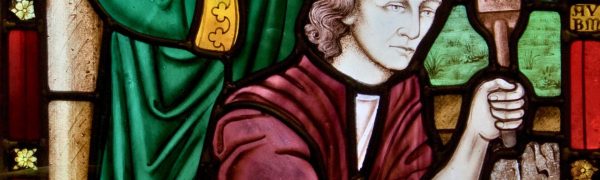
Saint Nicholas Owens
Nicholas Owens, “Little John,” built priest hideouts during England’s penal times, died tortured in 1606, canonized in 1970 as a martyr. The post Saint Nicholas Owens appeared first on uCatholic.