
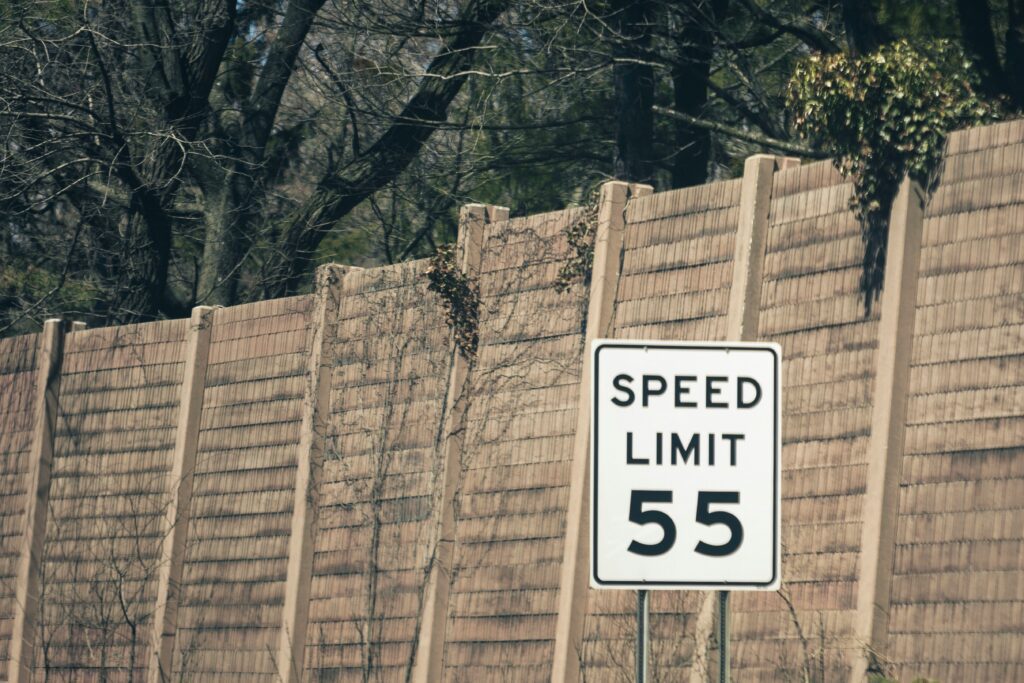
Remember when traffic signs used to mean something? OK, that’s a bit of an exaggeration, but the older I get, the more I think people have come to think that the red octagon with the white “STOP” on it actually means “Slow down, and if something is coming, stop; if not, roll on through.” The “Speed Limit 55” sign, for the 40-some years I have been driving, never really meant “Drive no faster than 55.” At first it was something like 58 or 60; but over the years it became 62, then 63 or 64. Now I think it means “See no police? Then see what you can get away with.”
Today’s readings are about words, but they’re also about signs. Jonah’s words to the Ninevites, “Forty days more and Nineveh shall be destroyed,” are pretty straightforward. Jonah is saying something is wrong, and Nineveh is in trouble because of it. For their part, the Ninevites take those words to heart, and they act upon them. But they also recognize the sign that Jonah is a foreigner preaching the will of God to them. They then display signs of their own: fasting, wearing sackcloth, sitting in ashes, and repenting of their sin and evil. The king’s words are a confession, and he knows Nineveh must turn away from evil and hope in God’s mercy. There was no “let’s see what we can get away with” in his response.
In the Gospel, Jesus reminds the crowd how Jonah was a sign to the Ninevites, and they recognized that sign as being sent from God. Yet what is Jonah’s preaching compared to the sign right before their eyes? Jesus is their stop sign, their speed limit, right there for them to see and easy to interpret. Yet he knows their reaction is “what can we get away with?” Love God with your whole heart, soul, mind, strength. Love your neighbor as yourself. Pick up your cross and follow Jesus. His burden is easy and His yoke is light.
The greatest sign of all has been shown to us. The message has been sent to us. Repent and believe in the Gospel. We have 40 days of Lent, which might not be 40 days until doomsday like Nineveh had, but our end will one day come. It’s never too late to repent, until it’s too late. Jesus is our sign. May we follow Him this Lent and always, for just like all those road signs out there, He always has our best interest in mind.
¿Recuerdan cuando las señales de tráfico significaban algo? Bueno, es una pequeña exageración, pero al transcurrir los años, más y más creo que la gente ha llegado a pensar que el octágono rojo con la palabra “STOP” (ALTO) significa en realidad: “Disminuya la velocidad, y si viene algo, deténgase; si no, siga adelante”. La señal de “Speed Limit 55” (Límite de Velocidad), durante más de 40 años que llevo manejando, nunca ha significado realmente: “No manejas a más de 55”. Al principio era algo así como 58 o 60; pero luego se convirtió en 62, luego en 63 o 64. Ahora creo que significa: “¿No hay policía por aca? Entonces voy a ver qué tan rápido puedo ir “.
Las lecturas de hoy se tratan de palabras, pero también de señales. Las palabras de Jonás a los ninivitas: “Dentro de cuarenta días Nínive será destruida”, son bastante directas. Jonás está diciendo que algo anda mal, y que Nínive está en problemas por ello. Por su parte, los ninivitas tomaron esas palabras en serio y las pusieron en práctica. Pero también reconocieron la señal de que Jonás era un extranjero que les predicaba la voluntad de Dios. Entonces mostraron sus propias señales: ayunaron, se vistieron de cilicio, se sentaron en ceniza y se arrepintieron de su pecado y maldad. Las palabras del rey son una confesión, y sabía que Nínive debía alejarse del mal y confiar en la misericordia de Dios. No hubo un “veamos cuánto podemos empujar los límites” en su respuesta.
En el Evangelio, Jesús le recuerda a la multitud cómo Jonás era una señal para los ninivitas, y ellos reconocieron esa señal como enviada por Dios. Sin embargo, ¿qué es la predicación de Jonás comparada con la señal que tenían ante sus ojos? Jesús es su señal de alto, su límite de velocidad, a la vista de todos y fácil de interpretar. Sin embargo, él sabía que su reacción era “¿cómo podemos empujar los límites?” Ama a Dios con todo tu corazón, alma, mente y fuerzas. Ama a tu prójimo como a ti mismo. Toma tu cruz y sigue a Jesús. Su carga es ligera y su yugo ligero.
La mayor señal de todas nos ha sido mostrada. El mensaje nos ha sido enviado. Arrepiéntanse y crean en el Evangelio. Tenemos 40 días de Cuaresma, que quizá no sean 40 días hasta el fin del mundo como los de Nínive, pero nuestro fin llegará algún día. Nunca es tarde para arrepentirse, hasta que sea demasiado tarde. Jesús es nuestra señal. Que lo sigamos esta Cuaresma y siempre, porque, al igual que todas esas señales de tráfico, él siempre tiene en mente nuestro bien mayor.
 Mike Karpus is a regular guy. He grew up in Michigan’s Upper Peninsula, graduated from Michigan State University and works as an editor. He is married to a retired Catholic school principal, raised two daughters who became Catholic school teachers at points in their careers, and now relishes his three young grandchildren. He serves on a Catholic school board and has served on pastoral councils, a building committee and a parish stewardship committee. He currently is a lector at Mass, a Knight of Columbus, vice president of a memorial scholarship committee and a board member of the local Habitat for Humanity organization. But mostly he’s a regular guy.
Feature Image Credit: Ray Reyes, unsplash.com/photos/white-and-black-speed-limit-55-sign-pafeEJXTDMI
The views and opinions expressed in the Inspiration Daily blog are solely those of the original authors and contributors. These views and opinions do not necessarily represent those of Diocesan, the Diocesan staff, or other contributors to this blog.
Daily Reading

Fifth Sunday of Lent
Reading I Ezekiel 37:12-14 Thus says the Lord GOD: O my people, I will open your graves and have you rise from them, and bring you back to the land of Israel.Then you…
Saint of the Day
Saint Nicholas Owens
Nicholas Owens, “Little John,” built priest hideouts during England’s penal times, died tortured in 1606, canonized in 1970 as a martyr. The post Saint Nicholas Owens appeared first on uCatholic.