

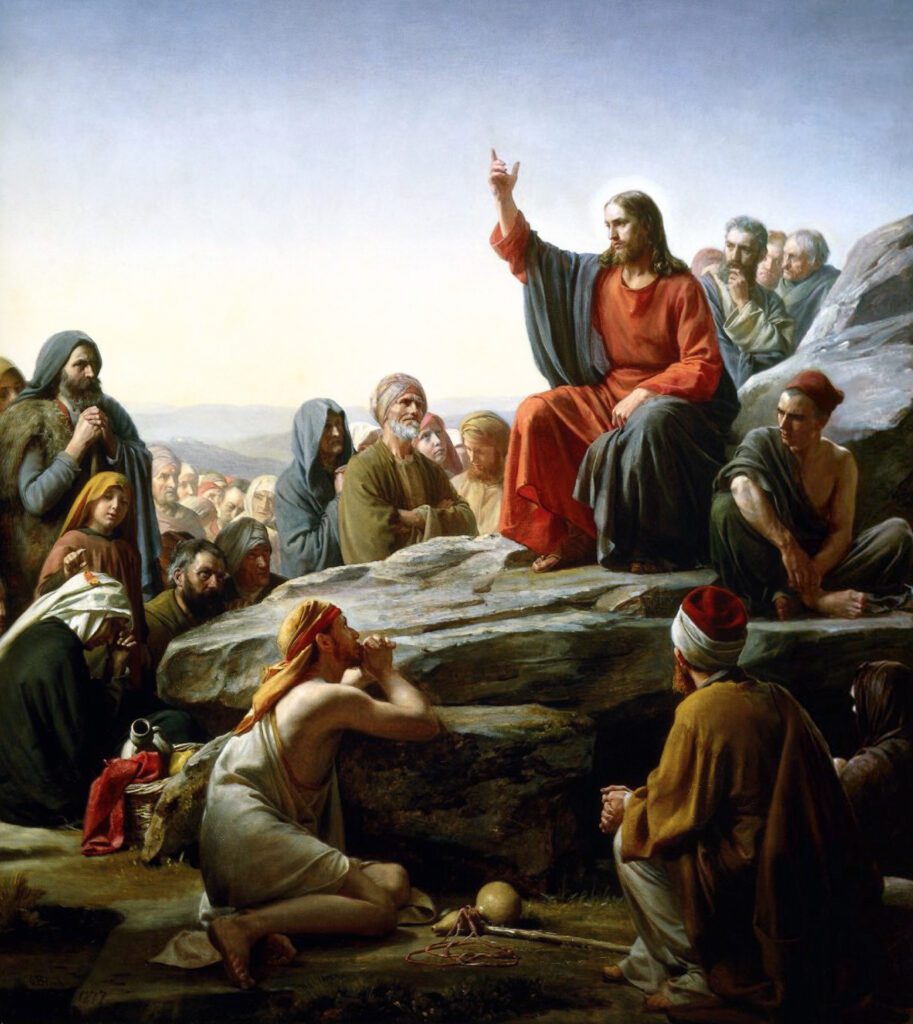
“You have heard that it was said, You shall love your neighbor and hate your enemy. But I say to you, love your enemies, and pray for those who persecute you, that you may be children of your heavenly Father, for he makes his sun rise on the bad and the good, and causes rain to fall on the just and the unjust” (Matthew 5:43-45).
Who are those people or groups that you tend to push away from your heart and your compassion? What stirs in you as you hear these words of Jesus and bring them near to your heart, as you look closely at these people and make yourself aware of the realities that are a part of their lives?
Jesus is not simply giving you a command here: grit your teeth and do the right thing. He is offering you an invitation to become whole, to grow into the fullness of your humanity by loving as God loves. Can you imagine yourself whole? Completely free from fear or resentment, complete in love, a love that pours itself on the “deserving” and the “undeserving” alike? What would feel different for you? What would be different? How would the world be different?
This is the world God is creating: a world without hatred, without division, without fear. A world of peace, of justice, of wholeness. Jesus is calling us to imitate the very love of God, a love that gives freely, indiscriminately, and unconditionally, “for he makes his sun rise on the bad and the good, and causes rain to fall on the just and the unjust.”
But such love is not within our reach by human effort alone. To love enemies is not a skill we can master through discipline or sheer will. To love in this way is to live now as citizens of God’s future Kingdom.
Those who first heard the Sermon on the Mount were astonished at Jesus’ teaching just as we are today each time it is proclaimed. It is beyond anything we, left to our own devices, could ever muster. Such a love can flow from our hearts if we receive the divine love that God extends to us, even though we don’t deserve it, often forget about it, and could never return it back to God in the same measure. This is the love out of which we were created and the love we were created for: a love with open hands and an open heart.
By loving in this way—by loving even our enemies and those who hate us—by imitating God, we make the love of the Kingdom of God a current reality, and we participate in building that reality here and now, in whatever situation we live in, and with whoever our “enemy” is.
“Han oído que se dijo: Ama a tu prójimo y odia a tu enemigo. Yo, en cambio, les digo: Amen a sus enemigos, hagan el bien a los que los odian y rueguen por los que los persiguen y calumnian, para que sean hijos de su Padre celestial, que hace salir su sol sobre los buenos y los malos, y manda su lluvia sobre los justos y los injustos” (Mateo 5,43-45).
¿Quiénes son esas personas o grupos que sueles alejar de tu corazón y de tu compasión? ¿Qué te conmueve al escuchar estas palabras de Jesús y acercarlas a tu corazón, al observar a esas personas de cerca y tomar conciencia de las realidades que forman parte de sus vidas?
Jesús no te está simplemente mandando: aprieta los dientes y haz lo correcto. Te invita a ser pleno, a crecer en la plenitud de tu humanidad amando como Dios ama. ¿Te imaginas siendo pleno? Completamente libre de miedo y resentimiento, lleno de amor, un amor que se derrama tanto sobre los que lo merecen como sobre los que no lo merecen. ¿Qué te sentiría diferente? ¿Qué de hecho sería diferente? ¿Cómo sería diferente el mundo?
Este es el mundo que Dios está creando: un mundo sin odio, sin divisiones, sin miedo. Un mundo de paz, de justicia, de plenitud. Jesús nos llama a imitar el amor mismo de Dios, un amor que da libremente, indiscriminadamente e incondicionalmente, “que hace salir su sol sobre los buenos y los malos, y manda su lluvia sobre los justos y los injustos”.
Pero ese estilo de amor no está a nuestro alcance con tan solo el esfuerzo humano. Amar a los enemigos no es una habilidad que podamos dominar con disciplina o pura voluntad. Amar de esta manera es vivir aquí y ahora como ciudadanos del futuro Reino de Dios.
Quienes escucharon por primera vez el Sermón del Monte se asombraron de la enseñanza de Jesús, igual que nosotros hoy cada vez que lo oímos proclamado. Va más allá que cualquier cosa que pudiéramos lograr por nuestro propio esfuerzo. Un amor así puede brotar de nuestros corazones si recibimos el amor divino que Dios nos extiende, aunque no lo merezcamos, a menudo lo olvidemos, y nunca podríamos volverselo con la misma intensidad. Este es el amor del que fuimos creados y para el que fuimos creados: un amor con las manos y el corazón abiertos.
Al imitar a Dios amando así, incluso a nuestros enemigos y a quienes nos odian, hacemos que el amor del Reino de Dios sea una realidad presente y lo edificamos aquí y ahora, en cualquier situación que vivamos y con quienquiera que sea nuestro “enemigo”.

Sr. Kathryn James Hermes, FSP, is an author and offers online evangelization as well as spiritual formation for people on their journey of spiritual transformation and inner healing. Website: www.touchingthesunrise.com My Books: https://touchingthesunrise.com/books/
Public Facebook Group: https://www.facebook.com/groups/srkathrynhermes/ HeartWork Spiritual Formation Group: https://touchingthesunrise.com/heartwork/
Feature Image Credit: Carl Bloch, Public domain, en.wikipedia.org/wiki/Sermon_on_the_Mount#/media/File:Bloch-SermonOnTheMount.jpg
The views and opinions expressed in the Inspiration Daily blog are solely those of the original authors and contributors. These views and opinions do not necessarily represent those of Diocesan, the Diocesan staff, or other contributors to this blog.
Daily Reading

Saturday of the First Week of Lent
Reading 1 Deuteronomy 26:16-19 Moses spoke to the people, saying:“This day the LORD, your God,commands you to observe these statutes and decrees.Be careful, then,to observe them with all your heart…
Saint of the Day
Pope Saint Hilarius
Pope Saint Hilarius, successor to Saint Leo, confirmed council works, combated Nestorianism, held Roman Councils, and enhanced church architecture; papal legate; died in 468. The post Pope Saint Hilarius appeared