
Reading 1 1 Peter 1:10-16

Beloved:
Concerning the salvation of your souls
the prophets who prophesied about the grace that was to be yours
searched and investigated it
investigating the time and circumstances
that the Spirit of Christ within them indicated
when it testified in advance
to the sufferings destined for Christ
and the glories to follow them.
It was revealed to them that they were serving not themselves but you
with regard to the things that have now been announced to you
by those who preached the Good News to you
through the Holy Spirit sent from heaven,
things into which angels longed to look.

Therefore, gird up the loins of your mind, live soberly,
and set your hopes completely on the grace to be brought to you
at the revelation of Jesus Christ.
Like obedient children,
do not act in compliance with the desires of your former ignorance
but, as he who called you is holy,
be holy yourselves in every aspect of your conduct,
for it is written, Be holy because I am holy.
 

Responsorial Psalm Psalm 98:1, 2-3ab, 3cd-4

R. (2a) The Lord has made known his salvation.
Sing to the LORD a new song,
for he has done wondrous deeds;
His right hand has won victory for him, 
his holy arm.
R. The Lord has made known his salvation.
The LORD has made his salvation known:
in the sight of the nations he has revealed his justice.
He has remembered his kindness and his faithfulness
toward the house of Israel.
R. The Lord has made known his salvation.
All the ends of the earth have seen
the salvation by our God.
Sing joyfully to the LORD, all you lands;
break into song; sing praise.
R. The Lord has made known his salvation.
 

Alleluia See Matthew 11:25

R. Alleluia, alleluia.
Blessed are you, Father, Lord of heaven and earth;
you have revealed to little ones the mysteries of the Kingdom.
R. Alleluia, alleluia.
 

Gospel Mark 10:28-31

Peter began to say to Jesus,
“We have given up everything and followed you.”
Jesus said, “Amen, I say to you,
there is no one who has given up house or brothers or sisters
or mother or father or children or lands
for my sake and for the sake of the Gospel
who will not receive a hundred times more now in this present age:
houses and brothers and sisters
and mothers and children and lands,
with persecutions, and eternal life in the age to come.
But many that are first will be last, and the last will be first.”
 

– – –

Lectionary for Mass for Use in the Dioceses of the United States, second typical edition, Copyright © 2001, 1998, 1997, 1986, 1970 Confraternity of Christian Doctrine; Psalm refrain © 1968, 1981, 1997, International Committee on English in the Liturgy, Inc. All rights reserved. Neither this work nor any part of it may be reproduced, distributed, performed or displayed in any medium, including electronic or digital, without permission in writing from the copyright owner.

Daily Meditation
 

Saint of the Day


Click here for daily readings

I’m writing this in the days following the shooting death of Charlie Kirk. Two weeks prior, a gunman killed children at Annunciation Church. It’s shocking to me that we live in a world where killing people who don’t believe the same as we do is an option. 

All of this to say that in today’s Gospel, we hear that by forsaking the world for the Word, we will suffer persecution. Jesus does not hide that. He showed us His own suffering and we saw Charlie Kirk give up his life for his beliefs that were more religious than political. He advocated for an end to abortion. He argued against the abuse of “gender affirming” treatments on children. He proclaimed Jesus as his Savior. Likely, he died because of these beliefs. 

Peggy Noonan, a columnist for the Wall Street Journal and a Catholic, wrote that despite the backlash we hear that offering prayers isn’t actionable enough, prayer is in fact one of the greatest actions we can take. Finding solace, strength, and fortitude through God helps us to continue living in a world that is increasingly hostile to religion. Praying for conversion for those who hate is necessary. 

Now is the time we have to assess where we stand. We must ask ourselves if we are willing to suffer and possibly die for Jesus, and if that answer is yes, boldly proclaim the truth we know. It’s easy to keep our opinions to ourselves. The opposing forces are loud and play dirty. Rather than staying silent and falling into despair, we need to take the risk, say the truth, and be willing to take what is hurled back at us.

We know that Jesus won the war. Are we willing to fight the battles?

Contact the author


Estoy escribiendo esta reflexión unos días después del asesinato a tiros de Charlie Kirk. Dos semanas antes, un pistolero mató a niños en la Iglesia de la Anunciación. Me resulta impactante vivir en un mundo donde matar a quienes no comparten nuestras creencias es una opción.

Todo esto comprueba lo que dice el Evangelio de hoy – que al renunciar al mundo por la Palabra, sufriremos persecución. Jesús no lo oculta. Nos mostró su propio sufrimiento, y vimos a Charlie Kirk dar su vida por sus creencias, que eran más religiosas que políticas. Abogaba por el fin del aborto. Se oponía al abuso de los tratamientos de “afirmación de género” en los niños. Proclamaba a Jesús como su Salvador. Probablemente, murió a causa de estas creencias.

Peggy Noonan, una columnista católica del Wall Street Journal, escribió que, a pesar de las críticas que escuchamos de que ofrecer oraciones no es suficiente, la oración es, de hecho, una de las acciones más importantes que podemos realizar. Encontrar consuelo, fuerza y ​​fortaleza en Dios nos ayuda a seguir viviendo en un mundo cada vez más hostil a la religión. Orar por la conversión de quienes nos odian es necesario.

Ahora es el momento de evaluar nuestra posición. Debemos preguntarnos si estamos dispuestos a sufrir y posiblemente morir por Jesús, y si la respuesta es sí, proclamar con valentía la verdad que conocemos. Es fácil guardar nuestras opiniones para nosotros mismos. Las fuerzas opositoras son ruidosas y actúan con malas intenciones. En lugar de permanecer en silencio y caer en la desesperación, debemos arriesgarnos, decir la verdad y estar dispuestos a afrontar las consecuencias.

Sabemos que Jesús ganó la guerra. ¿Estamos dispuestos a luchar en las batallas?

Comunicarse con la autora

Merridith Frediani loves words and is delighted by good sentences. She also loves Lake Michigan, dahlias, the first sip of hot coffee in the morning, millennials, and playing Sheepshead with her husband and three kids. She writes for Catholic Mom, new.diocesan.com/, and her local Catholic Herald. Her first book Draw Close to Jesus: A Woman’s Guide to Adoration is available at Our Sunday Visitor and Amazon. You can learn more at merridithfrediani.com.

Feature Image Credit: henry perks, unsplash.com/photos/person-in-brown-long-sleeve-shirt-NhbZCIyoI-s

The views and opinions expressed in the Inspiration Daily blog are solely those of the original authors and contributors. These views and opinions do not necessarily represent those of Diocesan, the Diocesan staff, or other contributors to this blog.

Daily Reading


Saint of the Day


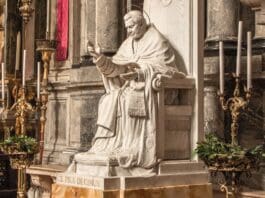
Saint Philip Neri (1515-1595) is known as the Apostle of Rome. With his distinctly joyous and personal manner, he was one of the influential figures of the Catholic Reformation. His special contribution was the creation of the Congregation of the Oratory.

Philip Neri was born in Florence on July 21, 1515, the son of a lawyer. As a boy, Philip befriended the Dominicans at the convent of S. Marco. In 1532 or 1533 he went to San Germano (Cassino) to learn business under the tutelage of an uncle, but, repelled by commercial affairs and feeling a pronounced desire for a life of close union with God, he left San Germano after a few months and went to Rome. There he studied philosophy and theology at Sapienza University and Sant’Agostino. He made friends easily and met regularly with some of them at the church of S. Girolamo della Carità for discussion, prayer, and the reception of Holy Communion. S. Girolamo became his home for 32 years. On May 23, 1551, after 18 years in Rome, Philip was ordained a priest. His room, the center for the intimate and prayerful meetings, became known about 1554 as the “Oratory.”

Philip, who dreaded formalism and loved spontaneity, gave his little groups a definite character. Scripture readings, short commentaries, brief prayers, and hymns were the usual program. Giovanni Palestrina wrote much of the musical setting for the scriptural texts, the motets, and the laudi spirituali, which gave rise to the term “oratorio.” This kind of apostolate suffered under the stern pontificates of Paul IV and Pius V. But Philip numbered among his friends some of the great saints of the age: Charles Borromeo, Francis de Sales, Felix of Cantalice, Camillus de Lellis, and Ignatius of Loyola. As more priests became his followers, Philip, who did not wish a tightly organized group united by religious vows, created a congregation of secular priests living in community. In 1575 Pope Gregory XIII approved the Congregation of the Oratory.

Philip’s famous walks especially won him the title Apostle of Rome. Surrounded by a laughing and joking group, he penetrated all corners of the city, radiating gaiety by his simple friendship and playful wit. Beneath his external life were the deep foundations of an intense spirit of prayer and love for the priestly offices of hearing confessions and offering the Mass. For hours at a time, he received an abundance of unusual supernatural gifts when he was wrapped in ecstasy. In 1575 S. Maria in. Vallicella became the Oratorians’ church. Philip moved there in 1583, and there he died on May 26, 1595.

Photo credit: Luis Fraga / Shutterstock.com

Love uCATHOLIC?
Get our inspiring content delivered to your inbox every morning – FREE!

The post Saint Philip Neri appeared first on uCatholic.
Daily Reading


Daily Meditation


Click here for daily readings

In certain languages such as French and Spanish, nouns are either feminine or masculine. It feels appropriate that the French word for church, “église”, and the Spanish word for church, “iglesia”, are both feminine. These languages are in harmony with the Church’s feminine assignment in relation to the Church. 

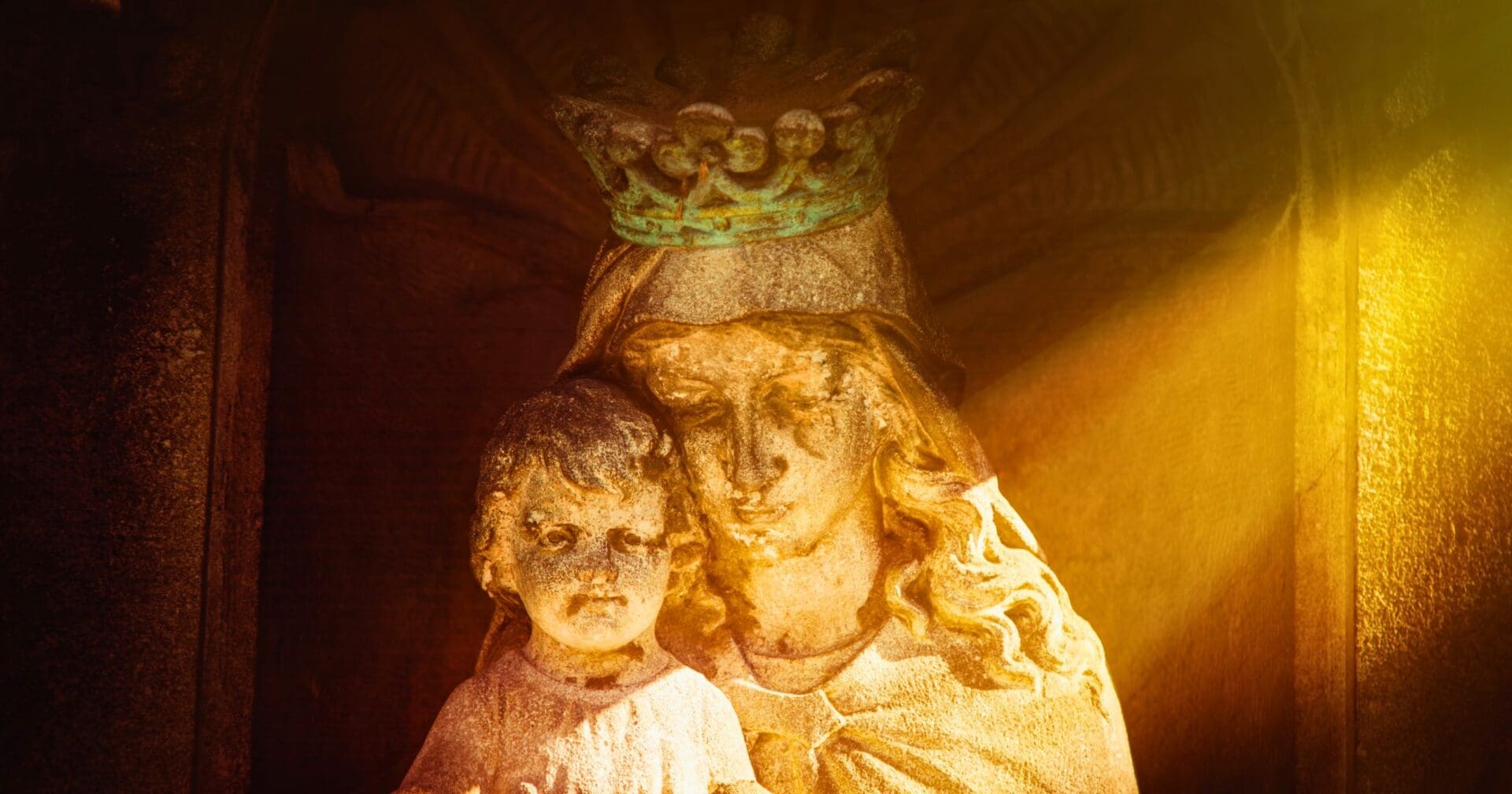
Today, the day after Pentecost, we celebrate the Memorial of the Blessed Virgin Mary, Mother of the Church. What a comforting image of the Church as a nurturing Mother. Although the Church has long recognized her in this title, a day memorializing Our Lady as Mother of the Church was not officially marked as such on the Liturgical Calendar until recently. 

In 2018, the late Pope Francis highlighted Mary’s maternal role in the Church. As Pentecost is considered the birthday of the Church, Pope Francis’s formal designation of her title for the day following Pentecost symbolizes her maternity to all the faithful.  

The Word-made-flesh Himself articulates His Mother’s maternal role: When Jesus saw His mother and the disciple there whom he loved, he said to his mother, “‘Woman, behold, your son.’ Then He said to the disciple, ‘Behold, your mother.’” (John 19:26-27).

Many Scripture scholars claim that John, the disciple whom Jesus loved, represents every person. At His death He declared His Mother the mother of the living, the mother of the faithful, and the mother of us all. When we invite Our Lady into our home, as John the Apostle did, not only does she become our Mother, a new discipleship begins.   

Mary, Mother of the Church, Pray for us!

Contact the Author


En algunos idiomas, como el francés y el español, los sustantivos son femeninos o masculinos. Resulta apropiado que la palabra francesa para iglesia, “église”, y la palabra española “iglesia”, sean ambas femeninas. Estos idiomas están en armonía con la designación femenina de la Iglesia.

Hoy, el día después de Pentecostés, celebramos la Memoria de la Santísima Virgen María, Madre de la Iglesia. ¡Qué imagen tan reconfortante de la Iglesia como una Madre cariñosa! Si bien la Iglesia la ha reconocido con este título desde hace mucho tiempo, sólo en los años recientes se ha incluido un día oficial en el Calendario Litúrgico para conmemorar a Nuestra Señora como Madre de la Iglesia.

En el 2018, el Papa Francisco destacó el papel maternal de María en la Iglesia. Dado que Pentecostés se considera el nacimiento de la Iglesia, la designación formal de su título por parte del Papa Francisco para el día siguiente a Pentecostés simboliza su maternidad para todos los fieles.

El mismo Verbo encarnado articula el papel maternal de su Madre: Cuando Jesús vio a su madre y al discípulo a quien amaba, le dijo a su madre: “Mujer, ahí está tu hijo”. Luego le dijo al discípulo: “Ahí está tu madre” (Juan 19,26-27).

Muchos estudiosos de las Escrituras afirman que Juan, el discípulo a quien Jesús amaba, representa a cada persona. En su muerte, declaró a su Madre la madre de todos los vivos, la madre de todos los fieles y la madre de todos nosotros. Cuando invitamos a Nuestra Señora a nuestro hogar, como lo hizo el apóstol Juan, no solo se convierte en nuestra Madre, sino que comienza un nuevo discipulado.

María, Madre de la Iglesia, ruega por nosotros.

Comunicarse con la autora


Frances Smit is a children’s book author, a Catechist (of the Good Shepherd), educator, and mom. She serves in-the-pews Catholics seeking MORE through stories that hold space for an encounter with God. She desires everyone to experience that with God, there is always MORE.   https://fbsmit.substack.com/  and  https://www.francessmit.com/

Feature Image Credit: MART PRODUCTION, pexels.com/photo/virgin-mary-statue-in-white-room-7220060/

The views and opinions expressed in the Inspiration Daily blog are solely those of the original authors and contributors. These views and opinions do not necessarily represent those of Diocesan, the Diocesan staff, or other contributors to this blog.

Daily Reading


Saint of the Day


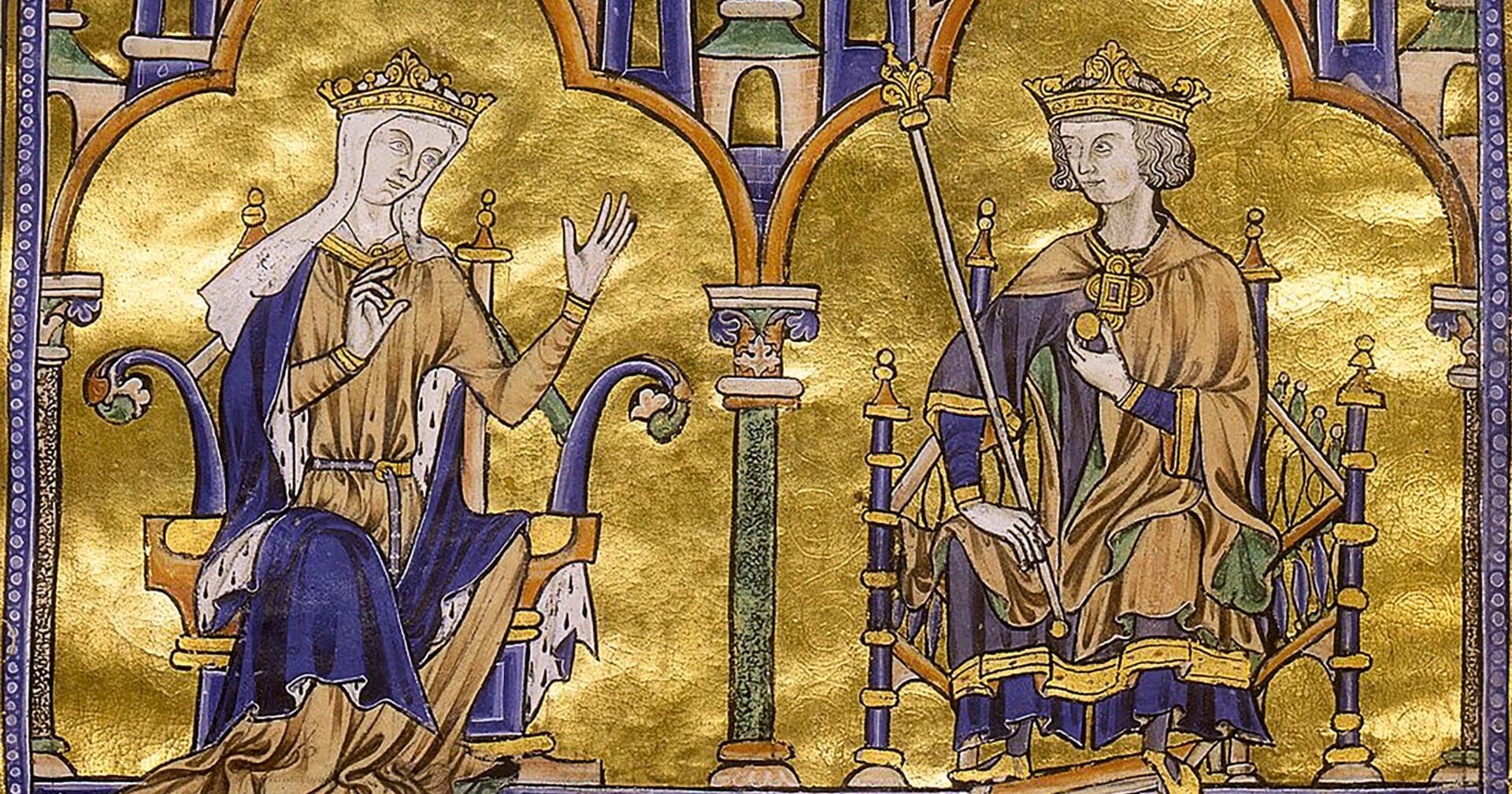
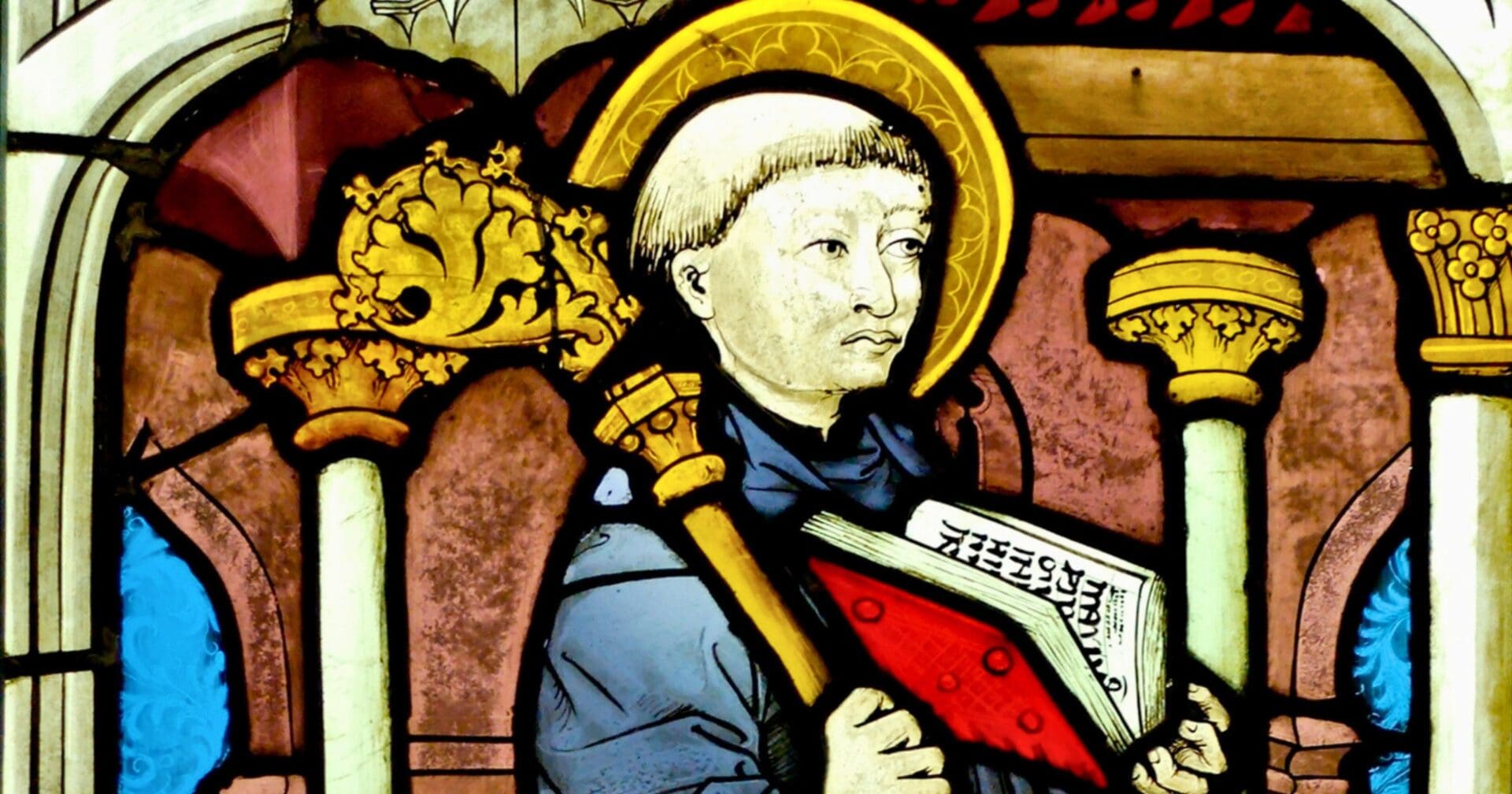
Saint Bede the Venerable was the first great English scholar. He was born in Northumbria (according to tradition, at Monkton, Durham, east of Newcastle) 672 or 673 and died at the monastery of Jarrow on May 25, 735. Almost all that is known of his life is contained in a notice added by himself to his great work Historia ecclesiastica (v, 24), which states that he was placed in the monastery at Wearmouth at the age of seven, that he became deacon in his nineteenth year, and priest in his thirtieth.

He was trained by the abbots Benedict Biscop and Ceolfrid, and probably accompanied the latter to Jarrow in 682. There he spent his life, finding his chief pleasure in being always occupied in learning, teaching, or writing, and zealous in the performance of monastic duties.

His works show that he had at his command all the learning of his time. He was proficient in patristic literature, and quotes from Puny the Younger, Vergil, Lucretius, Ovid, Horace, and other classical writers, but with some disapproval. He knew Greek and a little Hebrew. His Latin is clear and without affectation, and he is a skilful story-teller.

His works were so widely spread throughout Europe and so much esteemed that he won the name of “the teacher of the Middle Ages.”

Bede became known as Venerable Bede soon after his death, but this was not linked to consideration for sainthood by the Roman Catholic Church. His scholarship and importance to Catholicism were recognized in 1899 when he was declared a Doctor of the Church.

Photo credit: Public Domain via Wikimedia Commons

Love uCATHOLIC?
Get our inspiring content delivered to your inbox every morning – FREE!

The post Saint Bede the Venerable appeared first on uCatholic.
Daily Reading


Daily Meditation


Saint Joanna was the wife of Chuza, Herod’s steward (Lk. 8:3) and a disciple of Jesus, and mentioned in Luke (8.3) as providing for Jesus and the Apostles. According to Eastern tradition, when Herod had John the Baptist beheaded, he cast the head out into an unclean place. Joanna took the head and buried it with honour on the Mount of Olives, on Herod’s land. Later, in the reign of Constantine the Great, the head was found.

St. Joanna is also remembered because she was present at both the Passion and Resurrection of Christ. St. Joanna is one of the women Luke says (24.10) discovered the empty tomb on the first Easter when she went to anoint the body. She is especially venerated by the Jesuits.

Photo credit: Public Domain via Wikimedia Commons

Love uCATHOLIC?
Get our inspiring content delivered to your inbox every morning – FREE!

The post Saint Joanna appeared first on uCatholic.
Daily Reading


Daily Meditation


Pentecost Sunday is one of the most ancient feasts of the Church, celebrated early enough to be mentioned in the Acts of the Apostles (20:16) and St. Paul’s First Letter to the Corinthians (16:8). It is the 50th day after Easter (if we count both Easter and Pentecost), and it supplants the Jewish feast of Pentecost, which took place 50 days after the Passover and which celebrated the sealing of the Old Covenant on Mount Sinai.

The Acts of the Apostles recounts the story of the original Pentecost as well (Acts 2). Jews from all over were gathered in Jerusalem to celebrate the Jewish feast. On that Sunday, ten days after our Lord’s Ascension, the Apostles and the Blessed Virgin Mary were gathered in the Upper Room, where they had seen Christ after His Resurrection:

And suddenly there came a sound from heaven, as of a mighty wind coming, and it filled the whole house where they were sitting. And there appeared to them parted tongues as it were of fire, and it sat upon every one of them: And they were all filled with the Holy Ghost, and they began to speak with divers tongues, according as the Holy Ghost gave them to speak. [Acts 2:2-4]

Christ had promised His Apostles that He would sent His Holy Spirit, and, on Pentecost, they were granted the gifts of the Spirit. The Apostles began to preach the Gospel in all of the languages that the Jews who were gathered there spoke, and about 3,000 people were converted and baptized that day.

That is why Pentecost is often called “the birthday of the Church.” On this day, with the descent of the Holy Spirit, Christ’s mission is completed, and the New Covenant is inaugurated. It’s interesting to note that St. Peter, the first pope, was already the leader and spokesman for the Apostles on Pentecost Sunday (see Acts 2:14ff).

In years past, Pentecost was celebrated with greater solemnity than it is today. In fact, the entire period between Easter and Pentecost Sunday was known as Pentecost (and it still is called Pentecost in the Eastern churches, both Catholic and Orthodox). During those 50 days, both fasting and kneeling were strictly forbidden, because this period was supposed to give us a foretaste of the life of Heaven. In more recent times, parishes celebrated the approach of Pentecost with the public recitation of the Novena to the Holy Ghost.

Editorial credit: piosi / Shutterstock.com

Love uCATHOLIC?
Get our inspiring content delivered to your inbox every morning – FREE!

The post The Solemnity of Pentecost appeared first on uCatholic.
Daily Reading


Daily Meditation


Saint Julia was born of noble parents in North Africa. When she was still quite young, her city was conquered by barbarians. Julia was captured and sold as a slave to a pagan merchant, but she did not complain or feel sorry for herself. She accepted everything, and performed the most humble tasks with wonderful cheerfulness. For Julia loved God with all her heart. In her spare time, she read holy books and prayed fervently.

One day her master decided to take her with him to France. On the way, he stopped at an island to go to a pagan festival. Julia refused to even go near the place where they were celebrating. She did not want to have anything to do with those superstitious ceremonies.

The governor of that region was very angry with her for not joining in the pagan feast. “Who is that woman who dares to insult our gods?” he cried. Julia’s owner answered that she was a Christian. He said, too, that although he had not been able to make her give up her religion, still she was such a good, faithful servant that he would not know what to do without her.

“I will give you four of my best women slaves for her,” offered the governor, but her master refused. “No,” he said, “All you own will not buy her. I would willingly lose the most valuable thing in the world rather than lose her.”

When the merchant was asleep, however, the wicked governor tried to make Julia sacrifice to the gods. He promised to have her set free if she would, but she absolutely refused. She said she was as free as she wanted to be as long as she could serve Jesus. Then the pagan ruler, in great anger, had her struck on the face and her hair torn from her head. She was next put on a cross to hang there until she died. Her feast day is May 23rd.

Photo credit: Public Domain via Wikimedia Commons

Love uCATHOLIC?
Get our inspiring content delivered to your inbox every morning – FREE!

The post Saint Julia appeared first on uCatholic.
Daily Reading


Daily Meditation


Saint Rita of Cascia, Saint of the Impossible, led a life of many trials. Yet, during that life she also achieved many significant triumphs. She is also known as the ‘Peacemaker of Jesus’ for her many good deeds. She was the only child born to Antonio and Amata Lotti in a tiny hamlet near Cascia, Italy. St. Rita Miracles began the day she was baptized when bees swarmed around her cradle. They peacefully flew in and out of her mouth and all around her without harming her or anyone in her family.

By the age of twelve she wished to enter a convent but her parents felt she would be better protected if she married. They arranged a marriage for her to Paelo Mancini, a town watchman. The marriage was blessed with twin sons. Unfortunately, Paelo was an immoral, quick tempered man and Rita suffered his abuse for eighteen years before he was ambushed and stabbed to death. Their teenage sons wished to seek revenge against their father’s death. Through her prayers and interventions her sons did not act upon their revenge. Both sons died of illness within a year.

Left alone, St. Rita de Cascia sought the religious life but the Augustinian nuns in the monastery of Saint Mary Magadalen refused to let her enter the convent. Because some of their members belonged to the rival family responsible for Paelo’s murder, they feared for the peace of the convent.

Most stories of St. Rita agree she was transported to the convent by night through the intervention of her patron saints, St. John the Baptist, St. Augustine of Hippo and St Nicholas of Tolentino. When the nuns found her inside the convent walls the next morning they accepted her.

Another story of Saint Rita is that she confronted those responsible for her husband’s death and implored them to turn to lives of peace. It is said, in the end, the two rivaling families even signed a document declaring their war against each other was over.

Rita of Cascia the widowed mother who suffered great physical abuse at the hands of her husband and mental anguish at the revengeful seekings of her sons, became Sister Rita at the age of thirty-six.

St. Rita lived forty years as a practicing nun of poverty and doing works of mercy, charity and peace. When she entered the convent she was given one habit. She wore that habit one habit the remainder of her life and was buried in it.

One day, as Saint Rita was kneeling in prayer before a replica of the Crucified Christ. She implored, “Oh my Jesus, let me share in Thy suffering at least by one of Thy thorns.” A single thorn from the crown surrounding Jesus’ head speared directly into Sister Rita’s forehead. This wound bled until the end of her life.

The final four years of her life Saint Rita de Cascia was confined to bed as an invalid totally dependant upon the charity of her sisters. She ate little more than the Eucharist and she taught the younger sisters. In her final days, she had one request, that a cousin would bring to her a single rose from her family’s estate. It was the middle of January and the cousin thought this to be impossible. But when the cousin went to Rita’s former home she found a single rose in blossom on an otherwise bare bush in the family garden.

Saint Rita met her Divine Savior on May 22, 1457. She was Beatified by Pope Urban VIII in 1627 and Canonized by Pope Leo IV on May 22, 1900.

Because of her many trials and sacrifices throughout her life Rita the Saint is known as Rita Patron Saint of Impossible Causes and desperate situations. She’s often entreated by those suffering the afflictions of abuse, sickness, desperate causes, difficult marriages, widows and wounded people, also those suffering from sterility and infertility.

There are many stories about her acts of charity and obedience. One Saint Rita Story is that the Convent Mother, wishing to test the obedience of Rita, instructed her to water a dead and withered plant from the convent garden every day for a year. Sister Rita obediently did as she was instructed, every day. At the end of a year, to the great astonishment of her superiors, that dead plant brought forth leaves and flowers and became the most beautiful of all the grape vines in the garden. Today, 500 hundred years later, that same vine remains bountiful and beautiful. Its leaves are dried and powdered and sent all over the world to people who are suffering. Many cures have been reported by the grape leaves. Its fruit is sent to the Pope and to other Dignitaries.

The year 1450 was declared a jubilee year by Pope Nicholas V. When St. Rita asked to accompany the other nuns to Rome so she might gain the indulgences of the jubilee, her superiors told her they would permit her to go when the wound on her head healed. It is said, Saint Rita asked Jesus to heal the wound on her head so she might go to Rome with her sisters. God heard her prayer. Her forehead was healed and she was granted permission to accompany her sisters to Rome. When she returned, the moment she set foot in the chapel at Cascia the wound reappeared and remained until her death.

Photo credit: Public Domain via Wikimedia Commons

Love uCATHOLIC?
Get our inspiring content delivered to your inbox every morning – FREE!

The post Saint Rita of Cascia appeared first on uCatholic.
Daily Reading


Daily Meditation


Click here for daily readings

These final prayers of Jesus are so precious to read. Jesus is praying after sharing the Last Supper discourses with his Apostles. He turns His attention from instruction to prayer and we are able to pray alongside Him. 

Jesus asks the Father to make all people one, as He and the Father are one. The mystery of the Trinity is the central teaching of the Church. In Jesus’ prayer, we receive an incredible glimpse into the life of the Trinity and even more amazingly, are invited to share in that life. 

The Catechism states: “The ultimate end of the whole divine economy is the entry of God’s creatures into the perfect unity of the Blessed Trinity. But even now we are called to be a dwelling for the Most Holy Trinity: ‘If a man loves me’, says the Lord, ‘he will keep my word, and my Father will love him, and we will come to him, and make our home with him’” (#260).

It’s really difficult to achieve a goal if we don’t know what that goal is. I could be wrong, but I think it would be quite difficult to train for a marathon without knowing how long the marathon is. We’ve got to know what we are aiming for in order to plan, prepare, train, create, and orient our life in the proper direction. 

The same is true for our spiritual life. We can say we want to be holy, but what does that mean? Does it just mean being a good person? Someone who cares for others? Prays a lot? To be holy is a good start to be sure, but we can be more specific and Jesus offers us a map in this final prayer. The goal is complete unity with God, in the life of the Trinity. 

But how do we get there? Jesus tells us. It begins with union with him, because when we are one with Jesus we are then one with the Trinity. We experience this moment every time we receive the Eucharist at Mass. We enter into the life of the Trinity, transformed into Christ as we become what we consume. May this prayer by St. Elizabeth of the Trinity inspire us to ponder the incredible gift of Trinitarian life we receive when we come to the Eucharist.

O my God, Trinity whom I adore, help me forget myself entirely so to establish myself in you, unmovable and peaceful as if my soul were already in eternity. May nothing be able to trouble my peace or make me leave you, O my unchanging God, but may each minute bring me more deeply into your mystery! Grant my soul peace. Make it your heaven, your beloved dwelling and the place of your rest. May I never abandon you there, but may I be there, whole and entire, completely vigilant in my faith, entirely adoring, and wholly given over to your creative action. Amen.

Contact the author


Estas últimas oraciones de Jesús son preciosas de leer. Jesús ora después de compartir los discursos de la Última Cena con sus apóstoles. Dirige su atención de la enseñanza a la oración, y nosotros podemos orar junto a Él.

Jesús pide al Padre que todos sean uno, como Él y el Padre son uno. El misterio de la Trinidad es la enseñanza central de la Iglesia. En la oración de Jesús, recibimos una visión increíble de la vida de la Trinidad y, aún más asombroso, somos invitados a participar en esa vida.

El Catecismo afirma: “El fin último de toda la economía divina es la entrada de las criaturas en la unidad perfecta de la Bienaventurada Trinidad. Pero desde ahora somos llamados a ser habitados por la Santísima Trinidad: ‘Si alguno me ama —dice el Señor— guardará mi Palabra, y mi Padre le amará, y vendremos a él, y haremos morada en él’” (CIC 260).

Es realmente difícil alcanzar una meta si no sabemos cuál es esa meta. Puedo estar equivocado, pero creo que sería bastante difícil entrenar para una maratón sin saber cuánto dura la maratón. Debemos saber a qué aspiramos para poder planificar, prepararnos, entrenar, crear y orientar nuestra vida en la dirección correcta.

Lo mismo ocurre con nuestra vida espiritual. Podemos decir que queremos ser santos, pero ¿qué significa eso? ¿Significa simplemente ser una buena persona? ¿Alguien que se preocupa por los demás y que ora mucho? Ser santo es un buen comienzo, sin duda, pero podemos ser más específicos, y Jesús nos ofrece un mapa en esta oración final. La meta es la unidad completa con Dios, en la vida de la Trinidad.

Pero, ¿cómo llegamos allí? Jesús nos lo dice. Comienza con la unión con Él, porque cuando somos uno con Jesús, somos uno con la Trinidad. Experimentamos este momento cada vez que recibimos la Eucaristía en la Misa. Entramos en la vida de la Trinidad, transformados en Cristo al convertirnos en lo que consumimos. Que esta oración de Santa Isabel de la Trinidad nos inspire a reflexionar sobre el increíble don de la vida trinitaria que recibimos cuando nos acercamos a la Eucaristía. 

Oh Dios mío, Trinidad a quien adoro, ayúdame a olvidarme completamente de mí mismo para establecerme en Ti, inmutable y en paz, como si mi alma ya estuviera en la eternidad. Que nada perturbe mi paz ni me aparte de Ti, oh Dios mío inmutable, sino que cada instante me sumerja más profundamente en tu misterio. Concede paz a mi alma. Haz de ella tu cielo, tu morada amada y el lugar de tu descanso. Que nunca te abandone allí, sino que permanezca en Ti, íntegro y completo, plenamente vigilante en mi fe, enteramente adorador y totalmente entregado a tu acción creadora. Amén.

Comunicarse con la autora

Kate Taliaferro is an Air Force wife and mother. She is blessed to be able to homeschool, bake bread and fold endless piles of laundry. When not planning a school day, writing a blog post or cooking pasta, Kate can be found curled up with a book or working with some kind of fiber craft. Kate blogs at Faith Through a Focolare Focus and the link is https://katetaliaferro.substack.com.

Feature Image Credit: Andrei Rublev, en.wikipedia.org/wiki/Trinity_%28Andrei_Rublev%29#

The views and opinions expressed in the Inspiration Daily blog are solely those of the original authors and contributors. These views and opinions do not necessarily represent those of Diocesan, the Diocesan staff, or other contributors to this blog.

Daily Reading


Saint of the Day