

I remember going to Mass at my parish during Advent and hearing Father sing “Prepare Ye the Way of the Lord” (from the musical Godspell) to start his homily. I was completely confused because the singing felt like it came out of nowhere. But he went on to explain how that song summed up the Advent season. We are preparing the way of the Lord.
In today’s Gospel, we see that John the Baptist knew that Jesus’s ministry was coming, saying “I am baptizing you with water, for repentance, but the one who is coming after me is mightier than I. I am not worthy to carry his sandals. He will baptize you with the holy Spirit and fire.” He was helping people repent so they could be ready for Jesus’ world changing ministry. As ridiculous as he might’ve sounded, the people who listened were able to repent and prepare. Just like actors and actresses practice for the big show, preparing themselves to perform, we need to prepare ourselves for his Second Coming.
This can also apply to modern-day society. While we are preparing for the Christmas parties and all the gift giving, we sometimes forget, myself included, what we are truly preparing for. One thing that helps is remembering to fit in the Sacrament of Reconciliation to repent of my sins and be fully present to celebrate Jesus’ birthday.
As we prepare for the Lord, I pray that each of you can truly enjoy the Advent season and the Christmas season. Let’s also take time to pray for those who aren’t practicing Christians, that this Christmas season can help them see the good that God can do in each one of our lives.
Recuerdo ir a misa en mi parroquia durante el Adviento y escuchar al Padre cantar “Preparen el Camino del Señor” (del musical Godspell) para comenzar su homilía. Estaba completamente confundido porque el canto parecía surgir de la nada. Pero continuó explicando cómo esa canción resumía el tiempo de Adviento. Estamos preparando el camino del Señor.
En el Evangelio de hoy, vemos que Juan el Bautista sabía que el ministerio de Jesús se acercaba, diciendo: “Yo los bautizo con agua, en señal de que ustedes se han convertido; pero el que viene después de mí, es más fuerte que yo, y yo ni siquiera soy digno de quitarle las sandalias. Él los bautizará en el Espíritu Santo y su fuego”. Estaba ayudando a la gente a arrepentirse para que estuvieran listos para el ministerio transformador de Jesús. Por ridículo que pudiera parecer, quienes lo escucharon pudieron arrepentirse y prepararse. Así como los actores y actrices practican para el gran espectáculo, preparándose para actuar, nosotros también debemos prepararnos para su Segunda Venida.
Esto también aplica a la sociedad moderna. Mientras preparamos para las fiestas navideñas y todos los regalos, a veces nos olvidamos, yo incluido, para qué nos estamos preparando realmente. Algo que ayuda es recordar incluir el Sacramento de la Reconciliación para arrepentirme de mis pecados y estar plenamente presente para celebrar el cumpleaños de Jesús.
Mientras nos preparamos para el Señor, le pido a Dios que cada uno de ustedes pueda disfrutar verdaderamente del Adviento y la Navidad. Dediquemos también un tiempo a orar por quienes no son cristianos practicantes, para que esta Navidad les ayude a ver el bien que Dios puede hacer en cada una de nuestras vidas.
 Ben Hooper is originally from Maryland, having been adopted from Korea and growing up in the Catholic faith. He went to Franciscan University to dive deeper into his faith and eventually graduated with a degree in Business Management. He loves musical theater, sports, spending time with his wife Lily and their dog Kolbe.
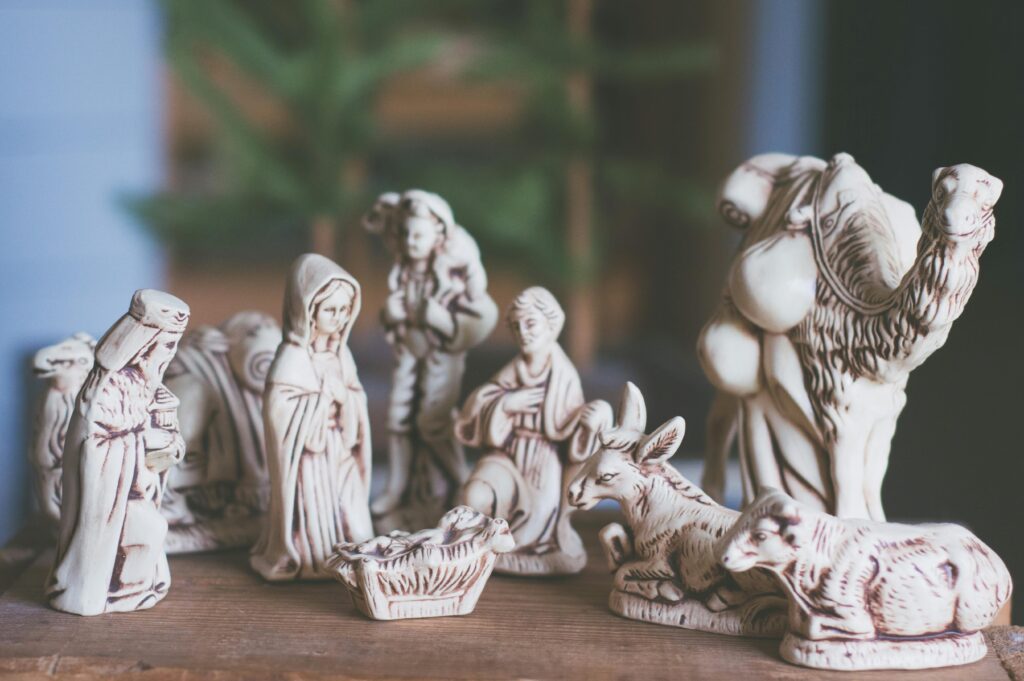
Feature Image Credit: Jessica Lewis, thepaintedsquare, pexels.com/photo/nativity-scene-table-decor-1652405/
The views and opinions expressed in the Inspiration Daily blog are solely those of the original authors and contributors. These views and opinions do not necessarily represent those of Diocesan, the Diocesan staff, or other contributors to this blog.
Daily Reading

The Fifth Day in the Octave of Christmas
Reading 1 1 John 2:3-11 Beloved: The way we may be sure that we know Jesus is to keep his commandments. Whoever says, “I know him,” but does not keep…
Saint of the Day
Holy Innocents
Holy Innocents Feast date: Dec 28 The Holy Innocents are the children mentioned in the gospel of Matthew, chapter 2:16-18. Herod, perceiving that he was deluded by the wise men, was exceeding angry,