
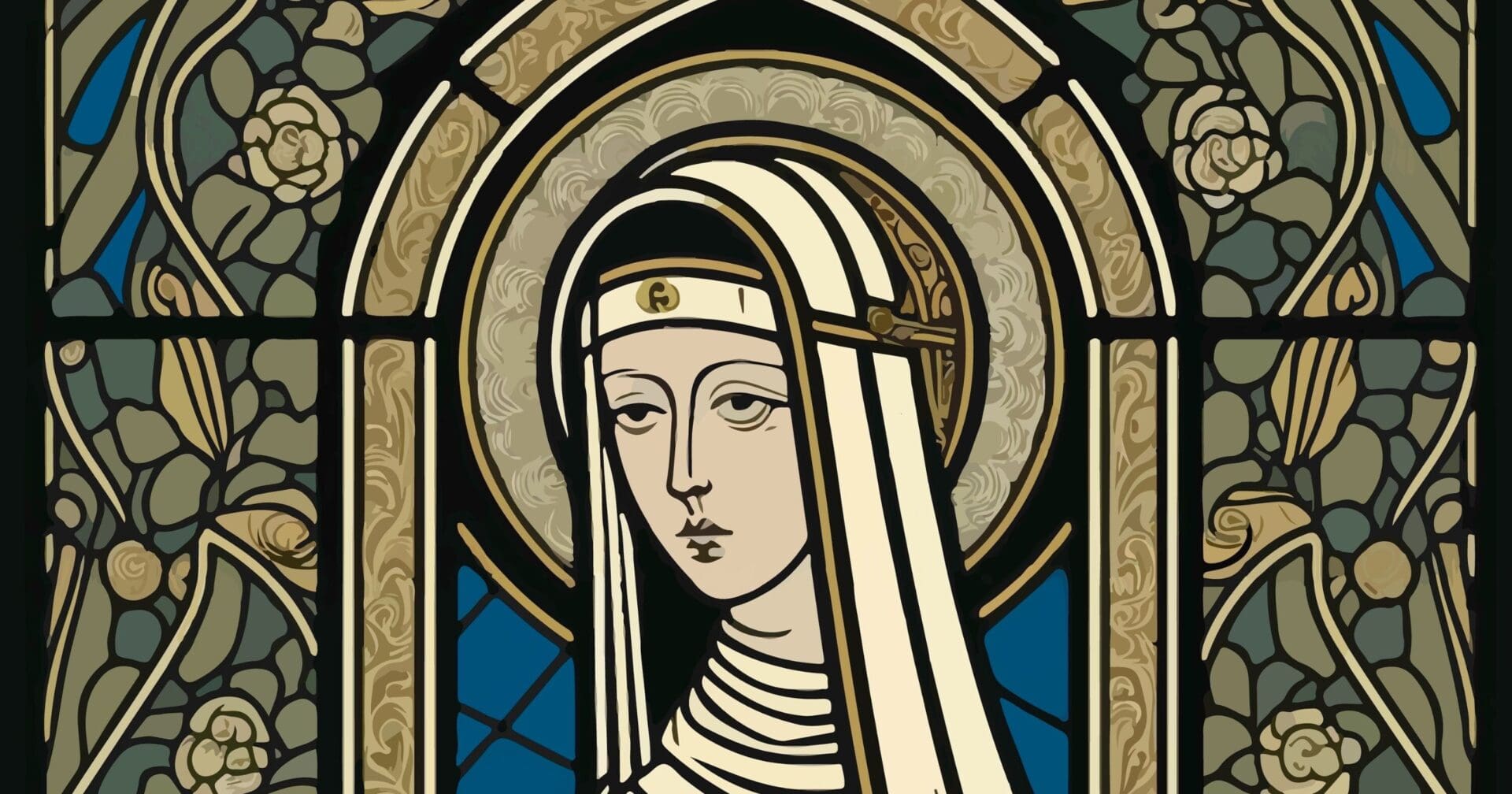
Saint Hildegard of Bingen, often referred to as the “Sybil of the Rhine,” was an extraordinary figure in the Middle Ages. Born in 1098 into a noble and affluent family at Bermersheim, Alzey, she displayed brilliance in numerous fields during a time when women seldom gained prominence or respect.
At just eight years old, Hildegard entered the Benedictine Abbey of Disibodenberg as an oblate. By 1115, she committed herself to a religious life there. She became the leader, or magistra, of her religious community around 1136 after the passing of Jutta of Sponheim. Guided by the Benedictine Rule, which advocates for spiritual equilibrium and moderate asceticism, Hildegard founded a monastery near Bingen around 1150. Later, in 1165, she established another across the Rhine river, overseeing both as the Abbess.
Inside her monastic communities, Hildegard prioritized the well-being, both spiritual and material, of her sisters. She emphasized the importance of community, culture, and the liturgy. Beyond the monastic walls, she played a dynamic role in bolstering Christian faith and practices, confronting heretical movements like the Cathars, and promoting ecclesiastical reforms. Her significant influence led her to preach in various cathedral churches across cities such as Cologne, Trier, and Bamberg. Even Popes Hadrian IV and Alexander III recognized her contributions, inviting her for vital apostolic missions.
Hildegard’s writings, derived from profound mystical experiences, offer deep insights into divine revelations, expressing God’s love with clarity. From childhood, she experienced visions that she transcribed with the assistance of her spiritual advisor, the Benedictine monk Volmar, and fellow religious, Richardis von Stade. Saint Bernard of Clairvaux and Pope Eugene III, both contemporaries, acknowledged and encouraged her spiritual writings.
Her vast and varied oeuvre encompasses theology, mysticism, medicine, and natural sciences. She communicated with a broad spectrum of individuals, from laypeople to popes, through around four hundred letters that have survived. Additionally, Hildegard made notable contributions to sacred music. Among her principal works are the Scivias, Liber Vitae Meritorum, and the Liber Divinorum Operum, which detail her visions and the divine instructions she received. She also penned 58 sermons directed towards her religious sisters.
Hildegard’s unparalleled contributions, spanning theology to music, set her apart as one of the Middle Ages’ most prolific female authors. She passed away in 1179.
Photo credit: HappySloth / Shutterstock.com
The post Saint Hildegard of Bingen appeared first on uCatholic.
Daily Reading

Wednesday of the Twenty-eighth Week in Ordinary Time
Reading 1 Galatians 5:18-25 Brothers and sisters:If you are guided by the Spirit, you are not under the law.Now the works of the flesh are obvious:immorality, impurity, licentiousness, idolatry,sorcery, hatreds,…
Daily Meditation
Lead with Love
Listen to this reflection in EnglishEscuchar esta reflexión en español Click here for daily readings A few months after graduating college and moving into her new apartment, my daughter called…